The Most Guarded Places on Earth You Can’t Visit
There are places on this planet designed so that virtually no one can get in—where trespassing can land you in a federal prison, trigger a response from heavily armed tactical teams, or even lead to deadly force. From deep underground bunkers to classified desert perimeters, these are the world’s most heavily guarded locations and the extreme security measures protecting them.
Pine Gap (Australia)
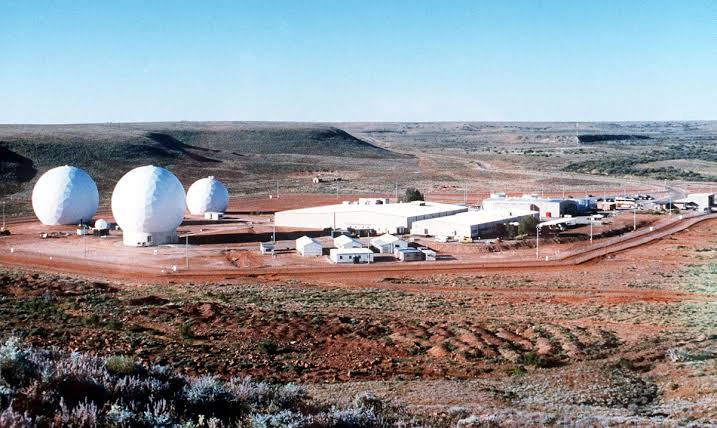
Right in the center of Australia, hours from the nearest city, sits a cluster of white spheres behind layers of desert fencing. This is Pine Gap, a joint facility run by the United States and Australia. For decades, the Australian government wouldn’t even confirm what happened inside, labeling it a generic space research facility. Today, we know those white spheres are radomes—protective covers built around satellite dishes to hide the exact angle and direction each dish is pointed, preventing outsiders from figuring out who or what is being monitored. As one of the most vital satellite surveillance stations on Earth and a key hub of the Five Eyes Alliance, Pine Gap intercepts signals ranging from phone calls and radio transmissions to missile launch data.
To protect the site, a cylinder of restricted airspace extends 18,000 feet directly above the facility, prohibiting even drone flights. On the ground, the perimeter is guarded by specialized, heavily armed tactical police. Because the base is protected under a Cold War–era National Security Act, simply stepping over the fence line can result in up to 7 years in federal prison. Inside, security measures are even stricter. Personal electronics like smartphones and smartwatches are strictly banned to prevent accidental transmissions, and most of the roughly 1,000 employees hold clearance levels so high that their own families don’t know the details of their work.
Area 51 (United States)
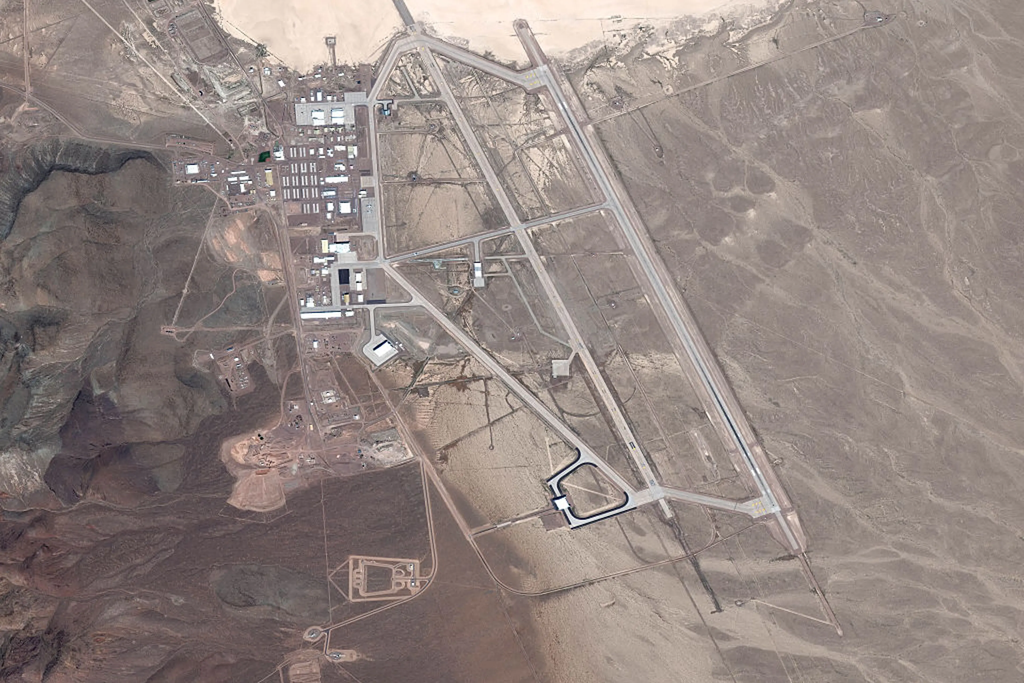
While pop culture focuses on what might be hidden inside Nevada’s Area 51, the extreme measures taken to keep people out are just as remarkable. The airspace above the base, known to military pilots as “The Box,” is so restricted that an unauthorized aircraft—even a military one—can be shot down, and any pilot who accidentally crosses the boundary faces the immediate end of their career.
The ground is even stranger because long stretches of the boundary have no physical fence. Instead, the desert floor is embedded with hidden high-tech sensors sensitive enough to distinguish a walking human from a coyote. Crossing a sensor alerts private security contractors, known as the “camo dudes,” who watch the perimeter from white pickups parked on nearby ridgelines. Operating unmarked vehicles, they observe intruders using parabolic microphones and video cameras. If an intruder ignores the “Deadly Force Authorized” signs and continues forward, contractors draw weapons, detain the trespasser face-down in the dirt, and hold them for the local county sheriff while confiscating all recording equipment. Meanwhile, employees commute daily via unmarked white Boeing 737s with a single red stripe, departing from a guarded private terminal in Las Vegas under the callsign “Janet.”
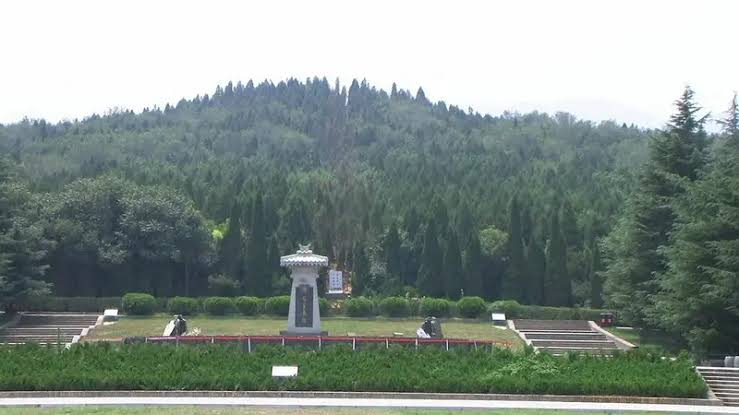
The Tomb of Qin Shi Huang (China)
In 1974, farmers digging a well in central China uncovered broken pieces of fired clay—the first hint of the famous Terracotta Army. Thousands of detailed clay soldiers stand in formation a mile east of a large man-made hill, symbolically guarding the unopened tomb of Qin Shi Huang, the first emperor to unify China. According to the ancient historian Sima Qian, roughly 700,000 workers built an entire underground palace featuring a ceiling set with pearls to represent the night sky, mechanically driven rivers of liquid mercury, automated crossbow traps, and whale-oil lamps meant to burn indefinitely. Craftsmen who knew the layout were reportedly sealed inside upon completion.
Soil tests starting in the 1980s revealed mercury concentrations far above regional norms, matching the pattern of the described rivers, and ground-penetrating radar has mapped an intact, sealed chamber underneath. The perimeter is monitored by cameras, thermal imaging, and motion sensors, while armed officers of China’s People’s Armed Police guard the site, where looting can carry life imprisonment or the death penalty. When the Terracotta Army was first excavated, the painted colors on the figures curled and peeled away within minutes of exposure to the air, so the Chinese government has chosen to keep the central tomb sealed until technology exists to preserve whatever lies inside.
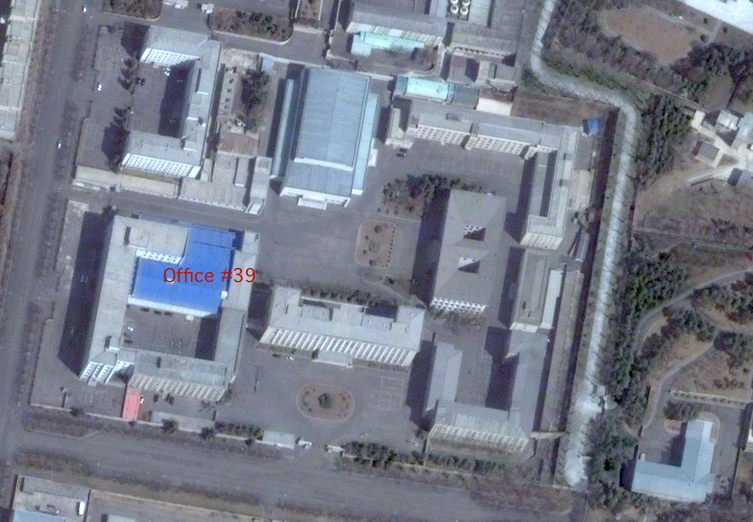
Room 39 (North Korea)
In 1989, the U.S. Secret Service began intercepting high-grade counterfeit $100 bills known as “Supernotes.” Printed on the correct paper with precise engraving, they were traced back not to a criminal syndicate, but to a state-run operation in Pyongyang, North Korea: Room 39. Established in the late 1970s under Kim Jong Il to generate foreign currency when North Korea could no longer borrow on international markets, Room 39 answers directly to the ruling Kim family.
Intelligence agencies and defectors report that Room 39 manages over 100 front companies and foreign bank accounts, bringing in an estimated $500 million to $2 billion annually. Aside from trade in gold and agricultural goods, Room 39 has been linked to methamphetamine production, arms sales, weapons proliferation, and cyber warfare, including the 2014 Sony Pictures hack and cryptocurrency thefts. Operating from an upper floor of the ruling party headquarters, its existence is shielded from the general North Korean public, with details known only to a tight circle of top leadership and defectors.
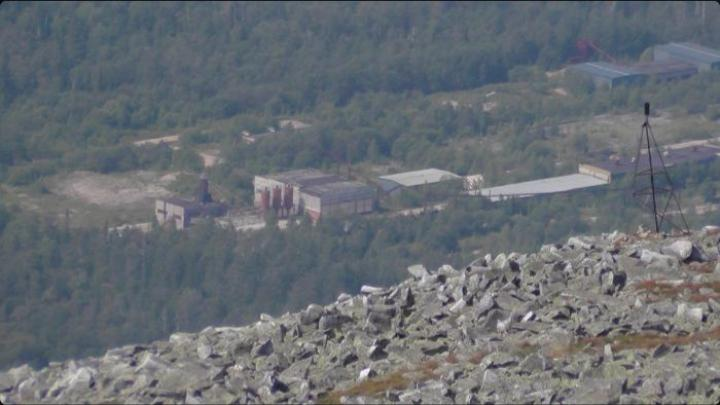
Mezhgorye (Russia)
Deep in Russia’s Ural Mountains sits Mezhgorye, a “closed city” that officially exists to support a local mining operation. However, its true purpose remains one of Russia’s tightest secrets. In the 1990s, U.S. spy satellites revealed massive excavation work inside nearby Mount Yamantau, complete with heavy-vehicle roads and military-grade ventilation shafts, pointing toward an extensive underground complex rather than a standard mine.
U.S. officials have long suspected the facility serves as a nuclear-hardened bunker designed to preserve Russian leadership during a global conflict. Russian authorities have dismissed these claims as exaggerated, offering foreign diplomats limited tours restricted strictly to surface facilities. The town remains heavily restricted and guarded by armed checkpoints, meaning anyone trying to bypass them would have to survive the brutal winter weather and dense taiga forests of the Urals.
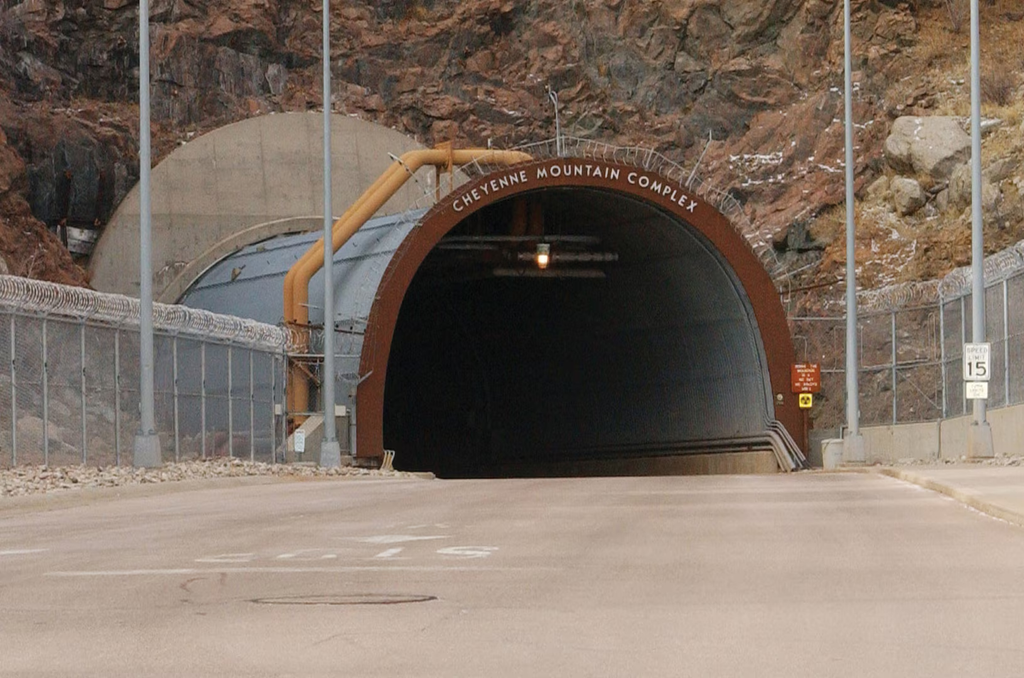
Cheyenne Mountain Complex (United States)
Carved out of solid granite under 2,000 feet of Colorado rock during the Cold War, the Cheyenne Mountain Complex was engineered as a nuclear-bunker city for North American air defense (NORAD). The complex consists of 15 separate steel buildings mounted on over 1,000 massive steel springs, allowing the structures to shift and absorb the kinetic shock wave of a nearby nuclear detonation without collapsing.
The main entrance is sealed by two 25-ton blast doors, each three feet thick, yet balanced so precisely that a single person can swing them shut. The facility features internal power systems and underground reservoirs holding millions of gallons of drinking water. Operated by the U.S. Space Force and Air Force Security Forces, the exterior perimeter utilizes vehicle barriers, K9 units, and tactical response teams. While many operations shifted to nearby Peterson Space Force Base in 2006, equipment moved back into the mountain a decade later due to its unmatched natural shielding against Electromagnetic Pulse (EMP) attacks.
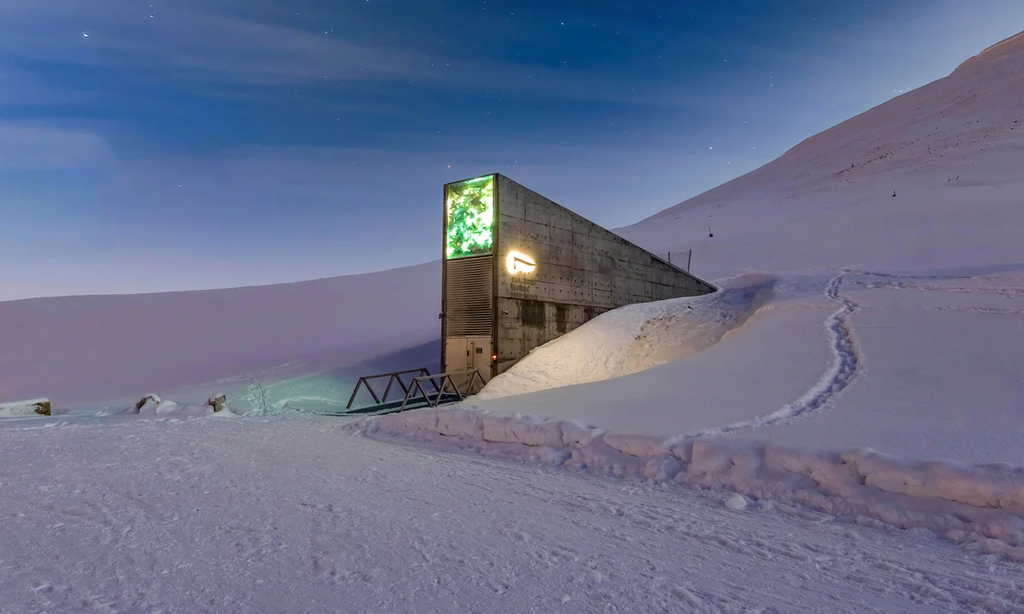
Svalbard Global Seed Vault (Norway)
Located on a remote frozen island between mainland Norway and the North Pole, the Svalbard Global Seed Vault extends 400 feet into a mountain to protect over one million seed samples—acting as the ultimate backup copy for world agriculture. Surrounded by permafrost, the interior stays frozen even if all mechanical cooling fails, while its elevation protects it against extreme sea-level rise projections, and roaming polar bears serve as a natural deterrent to unauthorized visitors.
No permanent staff resides inside, and the facility is monitored remotely by the Norwegian government using motion and seismic vibration sensors behind four sets of locked security doors. No single country or entity—including Norway—has the authority to open another nation’s seed boxes. To verify contents without opening them, incoming shipments are x-rayed at the local airport. The vault opens only a few times a year for new deposits, with withdrawals remaining exceptionally rare, such as in 2015 to replace a damaged seed bank in Aleppo, Syria.
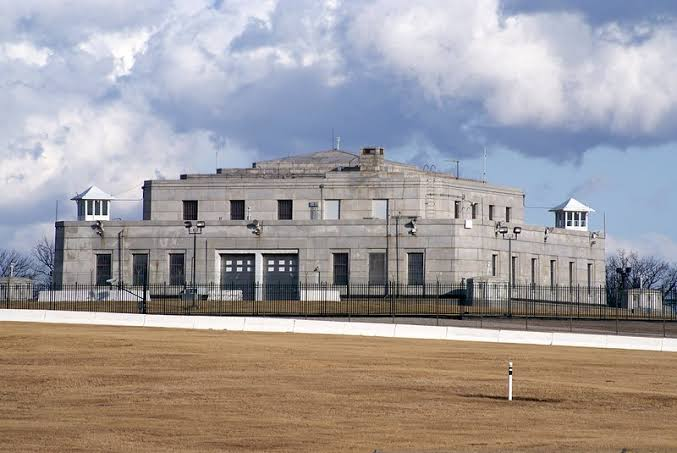
Fort Knox (United States)
Housing the largest portion of the official U.S. gold reserves, the United States Bullion Depository at Fort Knox, Kentucky, sits inside an active U.S. Army post. Before even reaching the vault, any intruder would have to cross an active military base that historically trained thousands of soldiers, armored units, and attack helicopters daily.
The outer building consists of granite lined with concrete and reinforced with 750 tons of structural steel. The interior vault is an independent structure featuring a 20-ton door designed to resist drilling and explosives. No single person holds the full combination to the vault door; multiple officials must enter separate codes simultaneously. The door also operates on an absolute time-lock mechanism, making it impossible to open outside pre-set hours. The depository possesses its own power plant, water supply, and dedicated police force, and because individual gold bars weigh roughly 27 pounds, rapid manual transport is virtually impossible.
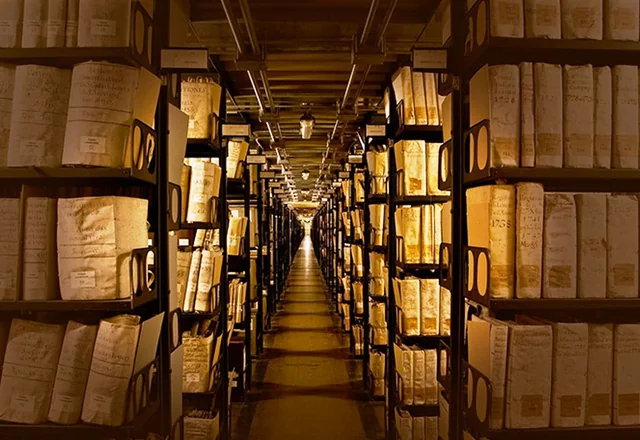
The Vatican Secret Archives (Vatican City)
Spanning over 50 miles of shelving and holding over a thousand years of historic records—including trial documents from Galileo Galilei and Henry VIII’s request for an annulment—the Vatican Archives sit in a secure vault under Vatican City. The facility is completely closed to the general public, with access restricted exclusively to qualified scholars and historians who undergo an extensive accreditation process and request specific documents created prior to 1958.
In 1980, the Vatican constructed a two-story subterranean concrete bunker beneath the Pine Cone Courtyard to preserve fragile parchment and ink within climate-controlled environments. Above ground, access points are heavily guarded by Swiss Guard personnel and Vatican gendarmes, with strict protocols governing how documents are handled within monitored reading rooms.