
The Nine Levels of Hell, Explained (Dante’s Inferno)

Dante’s Inferno is usually read as a poem, but it works more like a floor plan: nine nested levels of Hell, each punishment built to match the sin that sent the soul there, all the way down to a frozen lake at the center of the Earth.
From a gentle eternity of sighing where Plato keeps company with unbaptized babies, to a three-faced Lucifer chewing on history’s most famous traitors, here are the nine levels of Hell as The Paint Explainer walks through them.
1. Limbo

The first level barely counts as punishment. Limbo is basically Earth minus death — no fire, no torture, just the knowledge that this mild, gray afterlife will never change. Dante defined it as the place where, instead of screaming, there is sighing, and it’s where two groups end up: unbaptized babies and the righteous who were born before Christ.
That includes figures like Plato and Socrates, plus Old Testament characters such as Adam, Abel, Noah, and Moses. Some of them actually got out: when Jesus died, he passed through Limbo and carried the Old Testament faithful up to heaven. Julius Caesar stayed behind, though — Dante was a huge fan of ancient Rome, but even he couldn’t justify sending a pre-Christian emperor to paradise.
2. Lust
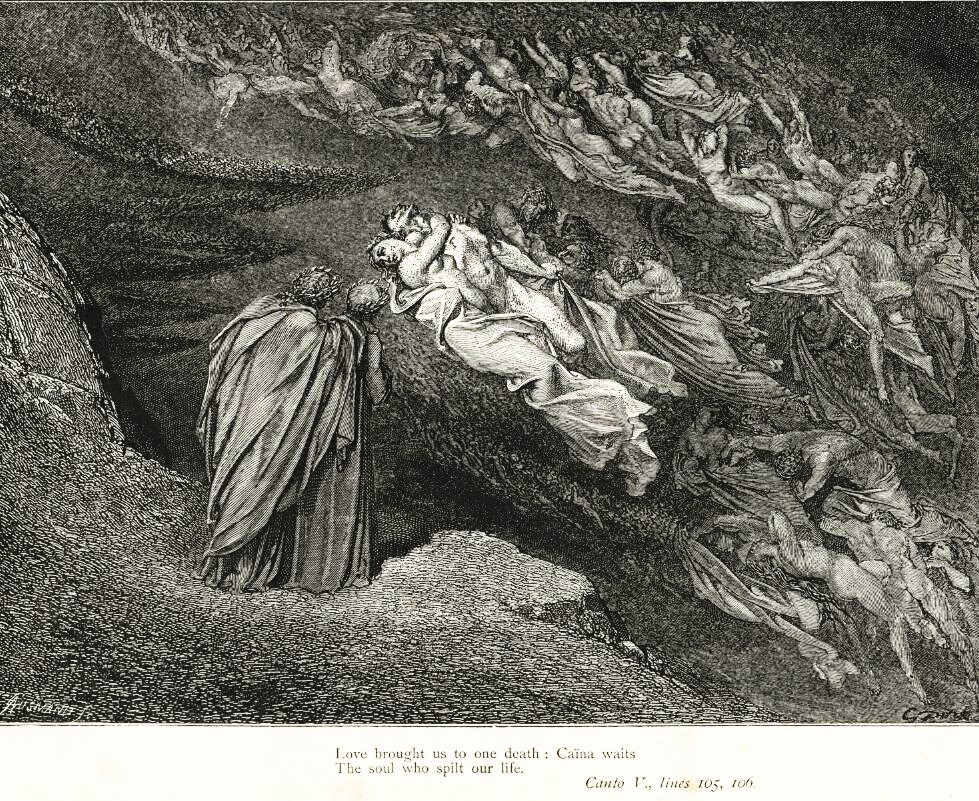
Before sinners reach the second level, they meet Minos, the figure from Greek mythology who judges where everyone needs to go in the Underworld based on their actions. He doesn’t really choose the sentence so much as read it — and whoever comes into contact with him can’t help but tell the truth.
Level two is for sexual sins, and the punishment is a hurricane-force wind that never stops, pushing people back and forth with no chance to rest. It’s the cleanest example of contrapasso, Dante’s principle that every punishment has to resemble or contrast with the sin itself. People who spent their lives blown around by passion are now blown around by actual winds.
Famous figures crowd this level too, including Dido, Paris, and Cleopatra — the last not only for her affairs but because she was an enemy of Rome.
3. Gluttony
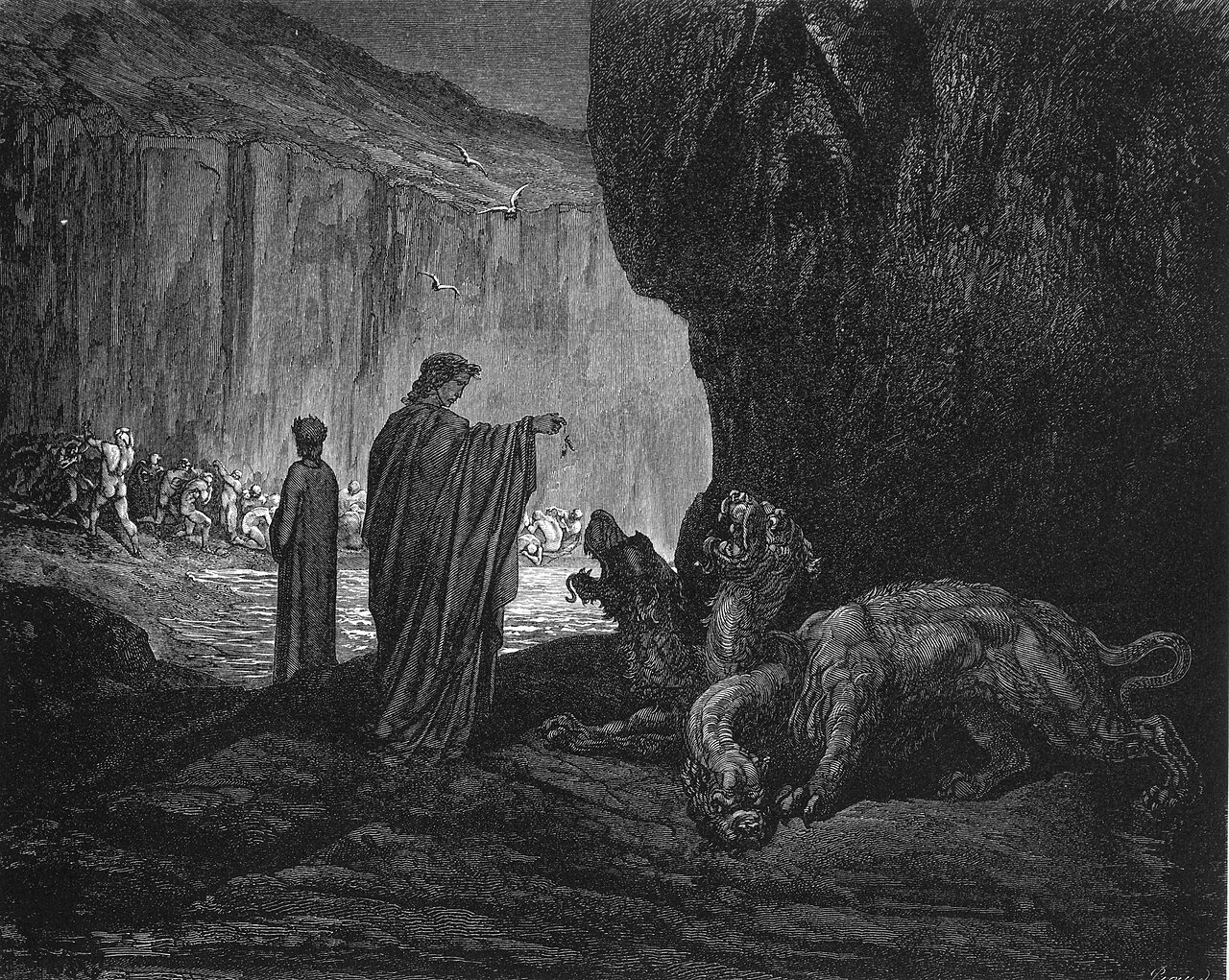
The third level never stops raining — a disgusting mixture of rain, sleet, snow, and hail pelting the souls where they lie. Lording over the mess is Cerberus, the three-headed dog from Greek mythology, who shreds people on sight. Since they can’t die, they either regenerate straight back into the loop of suffering or just lay there forever, playing dead.
When the dog went for Dante, his guide Virgil simply threw dirt into its three mouths and distracted it. Contrapasso runs the show again: those who always ate are now being eaten.
This level also drops a big piece of theology: on Judgment Day, every soul will be reunited with its body in a state of perfection. In heaven that sounds wonderful. In hell, perfection means perfect suffering.
4. Greed
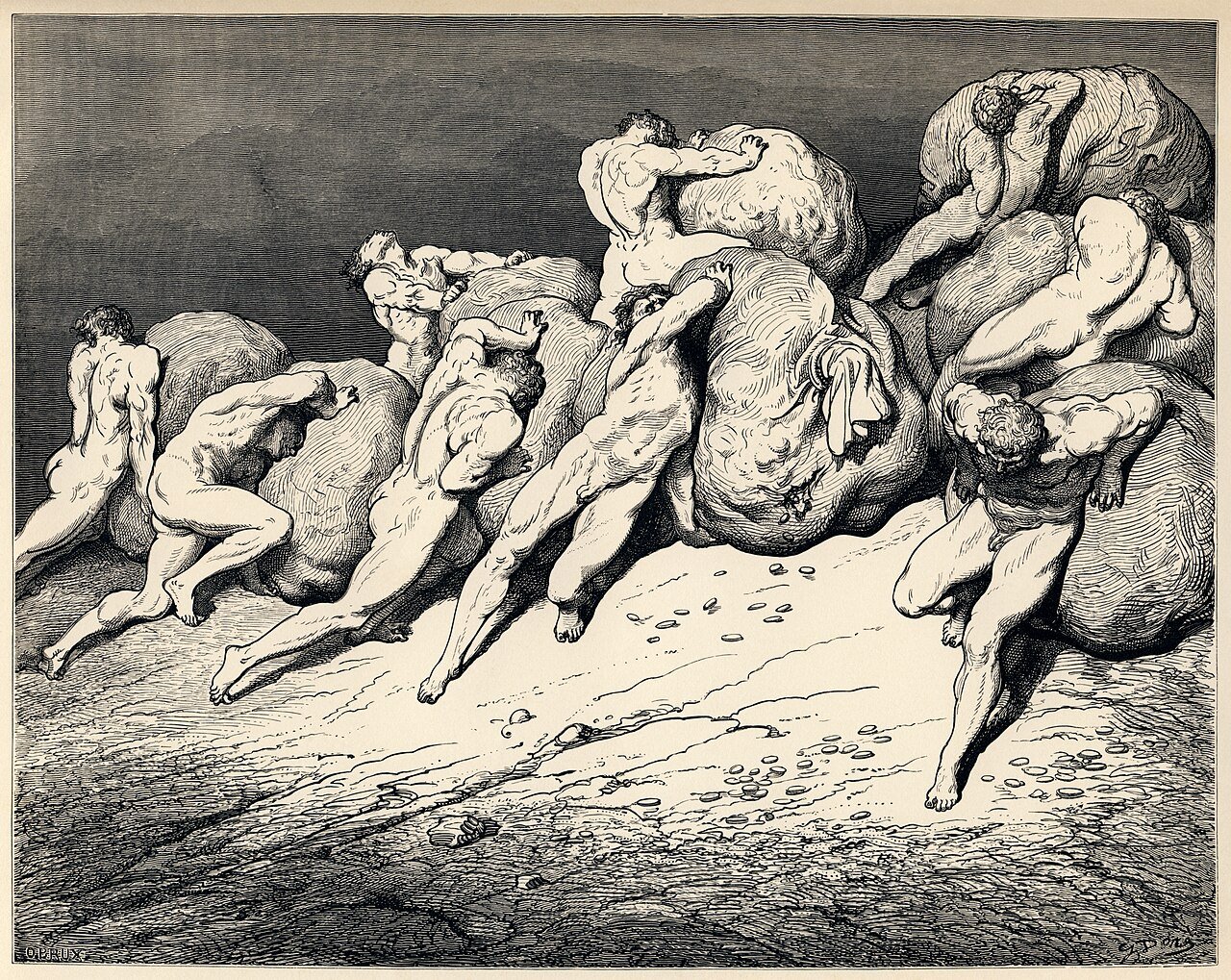
The entrance to level four is a sea of people crashing into each other like waves and beating one another with big money bags. Dante notices a crowd of bald runners and asks Virgil whether they’re clergy — and Virgil confirms that half of them are indeed members of the church, while the rest simply fought to hoard wealth on Earth.
Now they’re forced to literally fight for nothing, just as they fought for useless earthly wealth. And unlike every other level, you can’t pick out the famous faces here: centuries of pummeling have left every soul completely disfigured and unrecognizable.
5. Wrath
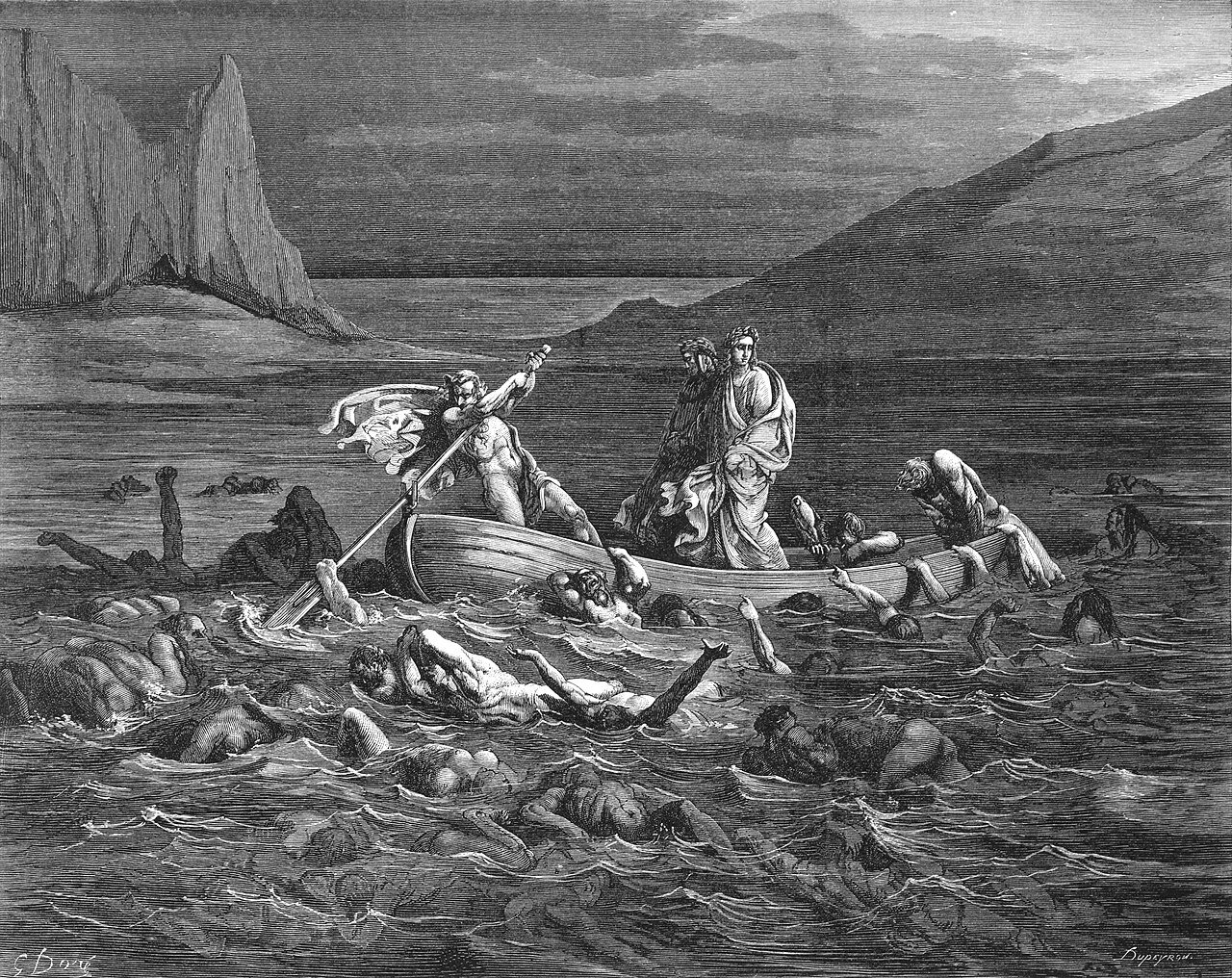
This one isn’t to be confused with violence — it’s for people who were simply mean and angry all the time. They wade through a sea of mud, constantly pushing each other down to come out on top, while bubbles rise from the sullen souls beneath the Styx, eternally gurgling their lamentations.
Dante and Virgil cross the river on Phlegyas’s boat, the mythological boatman who ferries souls to the lower circles. Then Dante sees a red glow ahead: the fortified, fiery city of Dis, which encompasses circles six through nine. Fallen angels slam the gates shut in their faces, and the three Furies — covered in blood and snakes — start shrieking for Medusa, forcing Dante and Virgil to cover their eyes.
Then a heavenly angel descends from heaven with a huge roar, walking across the Styx as the sea of souls parts to make room. The angel touches the gates and they fly open, revealing the fallen angels cowering behind them. The warning is simple: Dante and Virgil are on a mission from God, and anyone who hinders the journey will suffer greatly.
6. Heresy

The sixth level is a turning point: the first layer where people actively sinned against someone else. From here down, souls get active torture instead of mere misery. The heretics lie in tombs cut out of rock along each other, constantly stoked with flames, while fallen-angel guards make sure everybody stays down and properly suffering.
King Frederick II is found here, since he belonged to the opposite faction of Dante’s during the war between the pope and the emperor.
7. Violence

The seventh level is divided into three parts. The outer ring punishes violence against others: the river Phlegethon, made of boiling blood, where centaur guards make sure nobody escapes. The river gets deeper toward the center, so some souls are buried completely while others can still lift their heads to breathe. Alexander the Great is here, since he killed so many people.
The middle ring is for violence against the self: a dark forest of dead trees full of harpies. Dante hears screaming but sees nobody, until Virgil tells him to pull off a branch — and the branch bleeds and screams, because the trees are people who committed suicide. Having wanted to get rid of their bodies, they now spend eternity inside something that isn’t one, and the harpies eat the fruit that grows from their own flesh. On Judgment Day their lifeless bodies will hang from the branches, so they remember forever.
The inner ring punishes violence against God: a sand pit where fire keeps falling onto scorching-hot sand. Lie down from exhaustion and you stay there for a hundred years, burning. The giant Capaneus lies flat and laughs it off, refusing to let the god who killed him see him suffer. Nearby are the usurers, hunched over their purses — people who defied God’s law that effort should produce results by making no effort and getting rich anyway.
8. Fraud
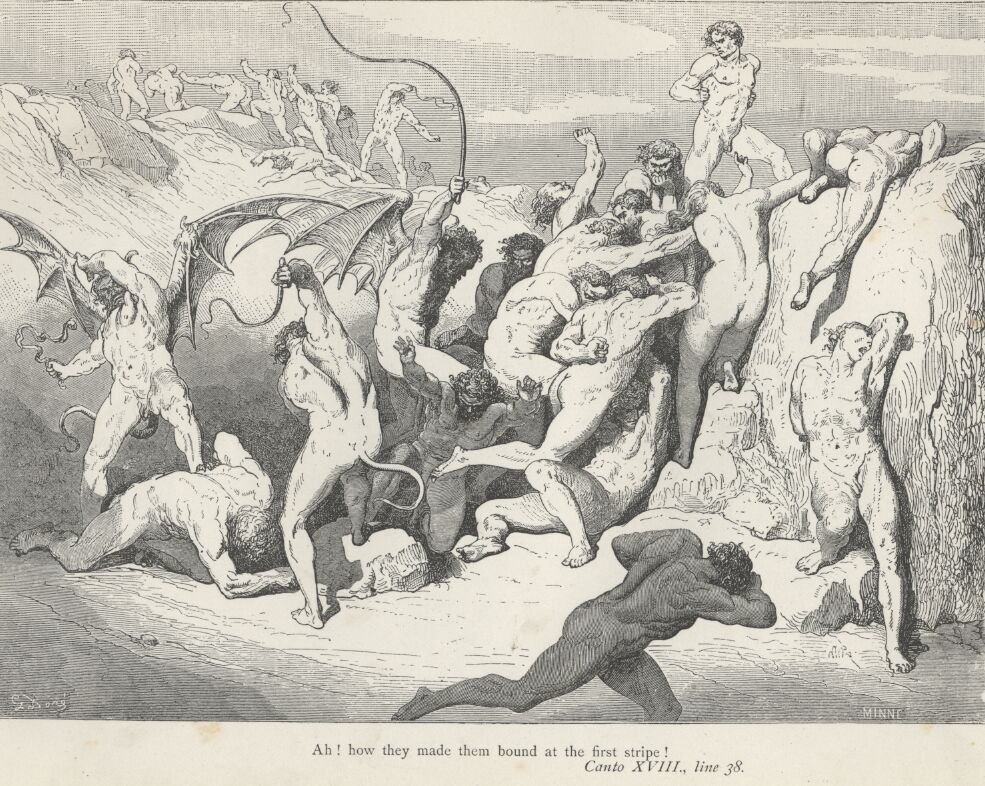
Level eight is the biggest of all, split into ten trenches called the Malebolge, each with its own brand of fraud. Traitors to love sprint end to end under devil whips; deceptive speakers wade through what is essentially a giant pit of excrement; and the simoniacs — those who sold sacred goods like pardons — burn over hot coals, dodging into ground holes that leave their feet sticking out. Pope Nicholas III is down there, promising Dante that each successor will simply have to dig deeper to make room.
The list keeps going. Sorcerers and seers walk with their heads twisted backwards for eternity. Barrators bubble in boiling tar. Hypocrites wear gorgeous robes that are actually heavy lead, and the high priest Caiaphas — who advised the Pharisees to crucify Jesus — lies crucified on the trench floor, getting stepped on by all of them. Thieves morph back and forth with serpentlike creatures that sting them into ash, only for them to regenerate in an endless loop.
The last trenches hold evil leaders and counselors, visible only as will-o’-the-wisps while their souls burn underneath — including Ulysses, who sailed past what people then believed was the edge of the world. Then come the sowers of discord in a sea of carnage that looks like every war in history, torn apart by demons and reassembling forever, and finally the liars and falsifiers, stuck pitch-black among diseases far worse than anything on Earth.
9. Treason
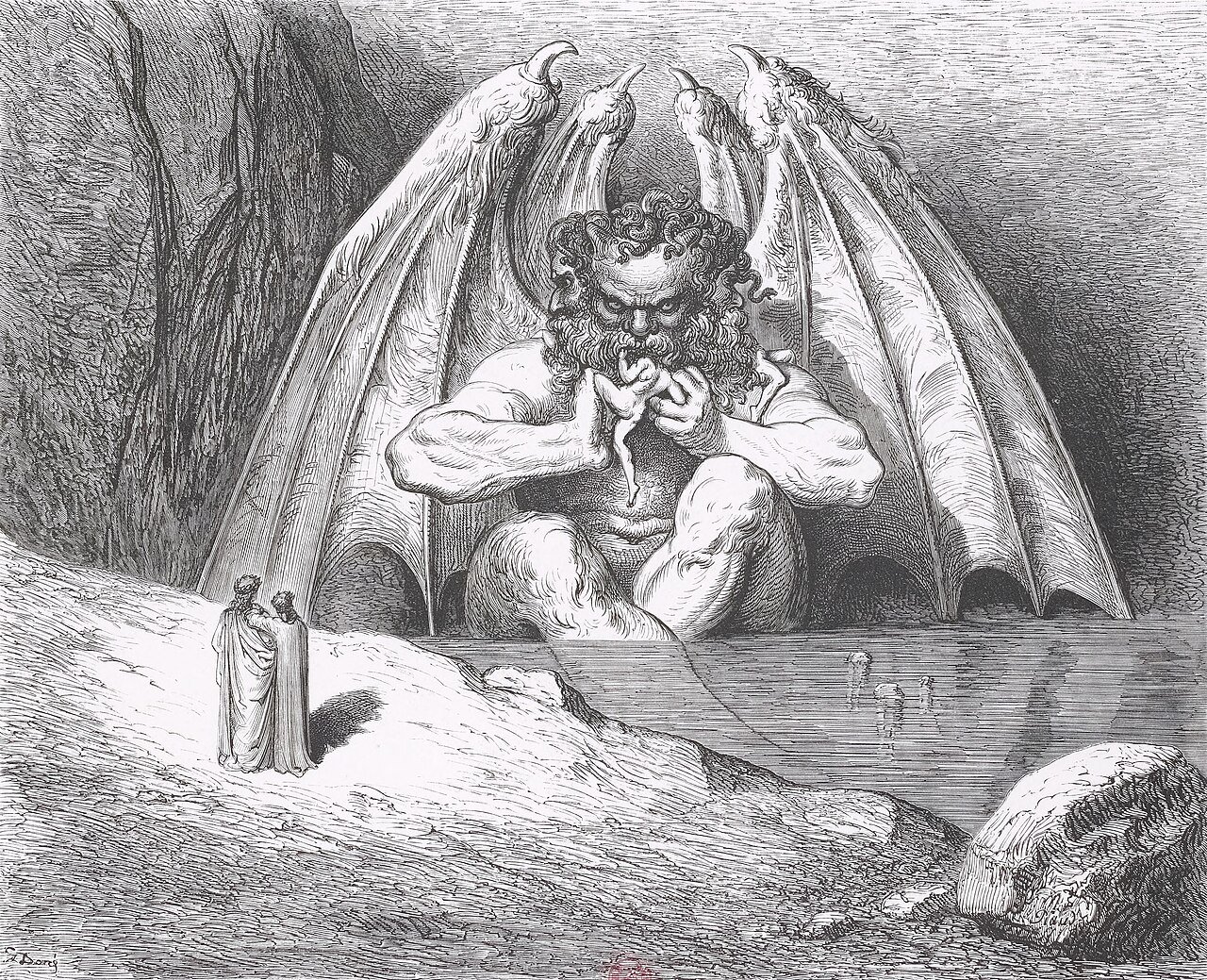
The ninth and deepest level is a frozen lake called Cocytus, divided into four regions by who the souls betrayed: kindred and family, country, guests and friends, and God. Their heads pop out of the ice and stay frozen from the neck down, with their own tears hardening around them. The center of this lake is the center of Hell itself.
Dante encounters Brother Alberigo, someone he knew personally, who is somehow there while his body is still alive on Earth. Alberigo explains the loophole: commit a sin bad enough and your soul drops straight into the ninth level while a demon possesses your body — which is how demonic possession happens. He earned his spot by inviting a friend to dinner and murdering him.
At the absolute center, the wind comes from Lucifer’s wings. He’s described as massive, three-faced — dark black on the right, deep blood red in the middle, bright burning yellow on the left — with blood and tears pouring from every face. Brutus and Cassius hang from the side heads, chewed for eternity for conspiring against Caesar, while Judas Iscariot, the apostle who betrayed Jesus, hangs upside down inside the middle mouth with his spine exposed. Lucifer landed at the center of the Earth because, when he fell from heaven, the land moved rather than touch him, and he shot straight through, stuck flapping forever.
What Comes Next?
Strip away the demons and Dante’s Hell is really a thesis about morality: punishment always answers the crime, and the sins of cleverness — fraud and betrayal — drop you further than simple rage ever could.
That engine runs from the first sigh in Limbo to the last flap of Lucifer’s wings, and after eight hundred years, Dante’s Inferno is still the most detailed map of the afterlife anyone has ever drawn.
Image Credits
- Botticelli’s Map of Hell by Sandro Botticelli — Public domain
- Inferno, Plate 11 (Canto IV — Limbo) by Gustave Doré — Public domain
- Inferno, Plate 16 (Canto V — Francesca da Rimini) by Gustave Doré — Public domain
- Inferno Canto 6 — Cerberus by Gustave Doré — Public domain
- Inferno, Plate 22 (Canto VII — Hoarders and Wasters) by Gustave Doré — Public domain
- Inferno Canto 8 — The Styx by Gustave Doré — Public domain
- Ad Astra — Inferno Canto IX by Margaret Neilson Armstrong & Helen Maitland Armstrong — Public domain
- The Inferno, Canto 12 by Gustave Doré — Public domain
- Inferno Canto 18 — verse 38 by Unknown artist — Public domain
- Lucifer by Gustave Doré — Public domain