The Most Guarded Places on Earth You Can Visit (Pt. 3)
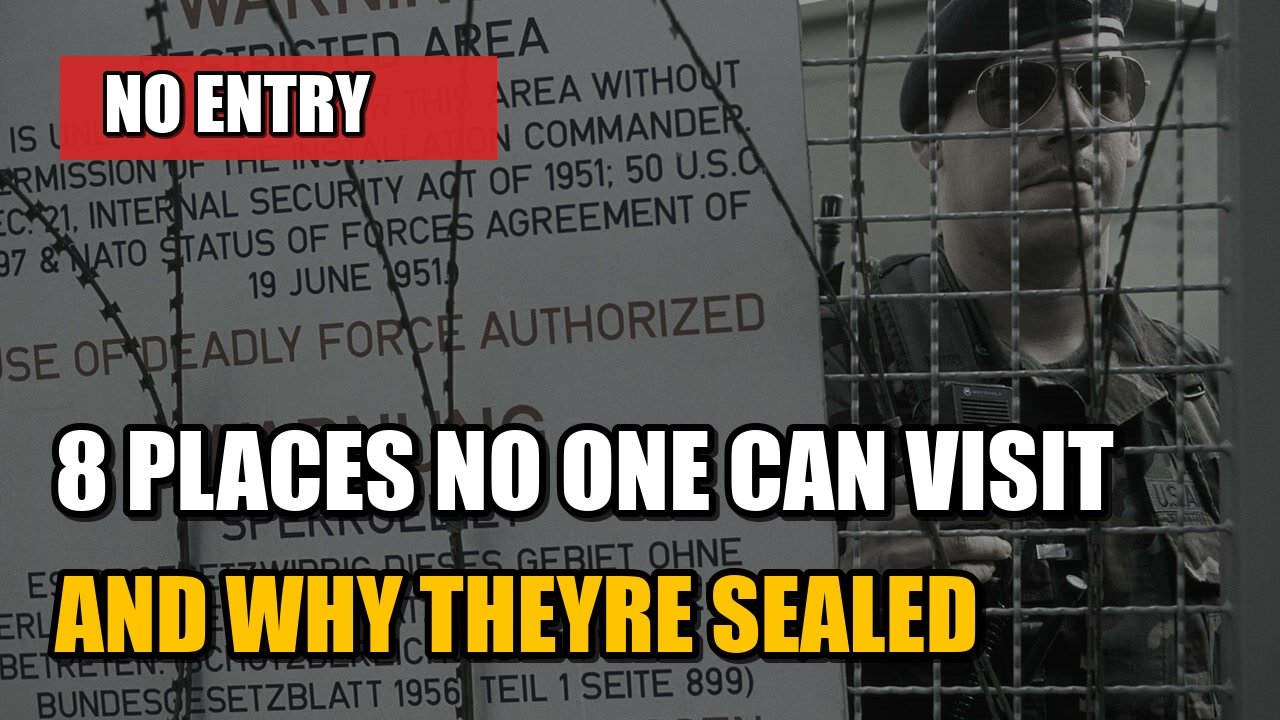
A city that appears on no map. An island where weaponised anthrax was released into the open air for forty years. A chapel in Ethiopia that exactly one living person is allowed to step inside — and once he takes the job, he never leaves again.
The Paint Explainer walks through eight of the most restricted places on Earth, and the interesting part is that they are sealed for two completely different reasons. Some are guarded to keep a secret in. Others are guarded to keep the world out — and in two cases, the people inside voted to shut the gate on themselves.
1. Ozersk (City 40)

For decades, families across the Soviet Union were told their sons and daughters were dead. They were not. They were simply in a city that did not exist.
- The address: between 1946 and 1994 there was a place in the Ural Mountains that appeared on no map, without a name or road signs pointing to it. It had only a postal code, Chelyabinsk 40, which is why people came to call it City 40. Around 100,000 people lived there.
- The trick: the workers sent to build it were told they were going somewhere important, but not where. Once they arrived, most could not leave, and contact with the outside was cut.
- The comfort: while the rest of the Soviet Union queued for basic goods, City 40 had full shops with food and fruit, better apartments, good schools, theaters and sports facilities. The comfort was the point — the state needed them to stay and keep quiet, because they were producing the plutonium for the Soviet Union’s first atomic bomb at a top secret complex called Mayak.
- The river: for years Mayak discharged its liquid radioactive waste straight into the Techa River. People downstream drank from it and washed in it. Tens of thousands were exposed before anyone was evacuated.
- 1957: on the 29th of September, an underground tank of boiling radioactive waste lost its cooling system and overheated. It detonated with the power of dozens of tons of TNT, blowing off its concrete lid and hurling a radioactive cloud over a region home to 270,000 people. Some villages were evacuated within days; others waited more than a year, moved out without being told what had happened to them or why their livestock was being killed in front of them.
- The ranking: it is one of the worst nuclear accidents ever recorded, placed behind only Chernobyl and Fukushima — and for 32 years the Soviet government did not admit it had happened.
- Today: Ozersk was never abandoned. It is still a closed city, with a fence and a checkpoint. You need permission from the Russian Security Service to pass, and foreigners are almost never granted it. The plant still operates, reprocessing nuclear fuel, and about 80,000 people live inside.
- Lake Karachay: nearby, used for decades as a dump for high-level waste, it had been measured as one of the most radioactive places on the planet by the time it was filled in with rock and concrete. In the 1990s the borders were briefly opened. The residents voted to close them again.
2. Vozrozhdeniya

In the early 1990s, the authorities told the people living on Vozrozhdeniya Island to pack for a simple evacuation drill. None of them ever went back.
- The town: Kantubek had 1,500 residents, including children, a few miles from an open-air testing range where the Soviet Union released weaponised anthrax, plague and smallpox into the wind. These were not samples in a freezer — they were released into open air, and the island itself was the containment.
- The assumption: back then the Aral Sea was the fourth-largest lake on Earth, big enough that the island sat dozens of miles from any shore. Anything released, it was reasoned, would disperse and die long before it reached the mainland.
Then, in 1971, the wind blew an invisible cloud from a weapons test straight into the path of a passing research ship that had never been told a test was happening. A young technician on deck was infected, carried it back to the mainland city of Aralsk, and people there began falling ill with smallpox. Three of them died. The Soviet response was to vaccinate tens of thousands, quarantine the city, and bury the incident so thoroughly that it stayed hidden for more than thirty years.
- The self-inflicted part: starting in the 1960s the Soviets dammed the rivers feeding the Aral Sea to irrigate cotton fields hundreds of miles away, and the shoreline pulled further back every year. In 2001 it retreated far enough that Vozrozhdeniya touched the mainland.
- Getting in: entry is illegal in both Uzbekistan and Kazakhstan, and the only thing physically stopping anyone is miles of dried seabed. Scavengers have stripped the metal out of Kantubek, and photographers have walked through it.
- What is still down there: tons of anthrax were buried in pits on the island in 1988. A US-Uzbek team went in in 2002 and cleaned up: 20 buildings dismantled, 11 anthrax burial pits decontaminated. That sounds like an ending until you notice what it means — eleven known pits, on a site where biological agents were released into the open for forty years. It is highly likely that contaminated pits remain that nobody knows about.
3. Project Iceworm

In 1959, the US Army carved an entire city beneath the Greenland ice sheet. It was called Camp Century, and it had dormitories, a hospital, a chapel and even a library, all powered by a portable nuclear reactor. Around 200 men lived inside.
- The cover story: the Army filmed the base and broadcast it to the public as a groundbreaking polar research station. It was a lie. The real program was Project Iceworm, and Camp Century was only the prototype.
- The real plan: 2,500 miles of tunnels under northern Greenland, holding up to 600 nuclear missiles aimed at the Soviet Union. The missiles would be shuttled around on rails so that no launch site ever stayed loaded for long. The Soviets would know the missiles were somewhere under the ice but have no way of knowing where — and you cannot destroy a target you cannot find.
- Someone else’s country: Denmark governed Greenland, and had declared itself nuclear-free two years earlier. It stayed oblivious for over 30 years, until a researcher going through declassified American files found the program in 1995.
- Why it stopped: the shifting ice began crushing the tunnels almost immediately. The Army pulled the reactor and abandoned the base — but left nearly everything else, including millions of liters of wastewater, highly toxic PCBs and significant low-level radioactive waste. The thinking at the time was simple: snow falls endlessly over Greenland, so each winter would bury the waste deeper.
- Why it is a problem now: a 2016 study found that by the end of the century the ice sheet could melt faster than new snow falls. Once that happens the process flips — instead of burying the waste forever, the melting glacier will slowly push it back to the surface.
- Nobody’s job: the original agreements never accounted for what got left behind, so the US, Denmark and Greenland cannot agree on who should pay for the cleanup.
4. Metro-2

In 1991, the United States Department of Defense published a report on the Soviet military, and buried inside it was a description of a whole secret subway line running out of central Moscow that nobody had heard of before. The Pentagon never gave it a name. Russians already had one: Metro-2.
- The story: Stalin ordered it in the 1940s, the KGB gave it the code name D6, and it was built to move a few hundred people out of the city center in a hurry.
- The depth: it is rumored to run up to 650 feet underground — much, much deeper than the public subway.
- The network: the lines allegedly connect the Kremlin directly to FSB headquarters, the VIP terminal at the international airport, and an enormous subterranean bunker beneath the Ramenki district, designed to keep 15,000 military and political elites alive for months.
- The explorers: in the early 1990s a group of urban explorers led by Vadim Mikhailov spent years moving through Moscow’s tunnels. They said they reached sections that did not belong to the public system — and that in those sections they were turned back by people who were clearly not maintenance staff. None of them came back with any footage.
- The corroboration: high-ranking KGB defectors have told Western intelligence about the network, and a former minister under Boris Yeltsin once slipped up in an interview and admitted the emergency network exists.
- The official line: in the eighty years this story has existed, the Russian state has never confirmed nor denied Metro 2. Asked about it, officials quickly change the subject or say nothing at all.
5. Trementina Base

Cut into the desert floor of northern New Mexico are two overlapping circles, each with a diamond through the middle, hundreds of feet across. In 2005 a local news helicopter flew over and filmed them, and the pictures went everywhere. There is no sign saying what they are.
- Who owns it: the marker belongs to the Church of Spiritual Technology, part of the Church of Scientology, and it has been up there since the 1980s.
- What is inside: tunnels sealed behind heavy vault doors hold an archive of the writings and recorded lectures of L. Ron Hubbard, Scientology’s founder, sealed inside titanium capsules filled with argon, a gas that does not corrode them.
- It is not a library: nobody goes in to read. It is a time capsule built to outlast whatever happens above it, and it is not the only one — the same organization has built similar vaults in remote parts of California.
- The official explanation: the church says the vaults exist to preserve the material in case of war or disaster, and that the giant ground markers are simply navigational guides so pilots can spot the private runway.
- The other explanation: a former CST executive who worked on the project has offered a different reading, which the church has not endorsed — that the markers are there for Scientologists to find the vaults again when they come back in future lives, since the religion teaches that a person is an immortal spiritual being who lives many lifetimes.
- Today: the site is heavily guarded by private security, motion sensors and surveillance cameras.
6. The Chapel of the Tablet

In the northern Ethiopian town of Axum, behind an iron fence, there is a small gray chapel with a domed roof, built in the 1960s and not especially remarkable from the outside. Only one living person is allowed inside it, and once he takes the job, he never leaves again.
- The claim: the Ethiopian Orthodox Church says the chapel holds one of the most important relics in Christianity — the Ark of the Covenant, the gold-covered wooden chest that held the stone tablets of the Ten Commandments, and which was lethal to anyone who touched it without permission.
- The gap: the Ark ended up in the temple in Jerusalem, and then the record simply stops. There is no account of it being destroyed or moved anywhere.
- Ethiopia’s answer: in a book written down around 700 years ago, the Queen of Sheba visits King Solomon and they have a son called Menelik. When Menelik is grown he travels to Jerusalem to meet his father and brings the Ark home with him. Millions of people believe that is exactly what happened.
- The guardian: he is the only person in the world permitted to see inside. He must stay there until he dies; when he feels his death approaching, he names the man who replaces him. Not even the head of the Ethiopian church or the prime minister may enter.
- 2020: war reached Ethiopia and fighting came to Axum, where hundreds of people were killed. Reports came out of residents gathering unarmed around the chapel, prepared to die rather than let anyone reach it. Afterwards some church officials said the Ark had been moved somewhere safe, while others insisted it had never left — the accounts still contradict each other.
- The only outside account: in 1941, during the Second World War, a British officer named Edward Ullendorff got into the old sanctuary. Decades later he claimed he examined what was inside, only to find an empty medieval wooden box.
7. North Sentinel Island

There is a body on a beach about 30 miles off the coast of India, and no government on Earth is willing to go and collect it. It has been there since November 2018. The Indian authorities made several attempts, then stopped.
- The population: the best guess is somewhere between 50 and 200 people, called the Sentinelese. We know basically nothing about them — not even how long they have been there, though the estimate runs into thousands of years.
- The line: India has drawn a boundary around the island that is patrolled by the Indian Navy, and crossing it is illegal.
- Why people assume: in 2004, after the Indian Ocean tsunami, a helicopter flew low over the island to check whether anyone had survived. Someone walked out onto the sand and fired an arrow at it.
- Why that is not the whole story: in 1991 a small Indian team anchored offshore and floated coconuts toward the beach. Instead of firing arrows, the Sentinelese waded into the water to collect the fruit, eventually taking coconuts directly from the researchers’ hands and even touching the boat. They do allow some sort of contact.
- The real reason: contact stopped to preserve the islanders’ own safety. The Sentinelese have been isolated so long that their immune systems have never met the ordinary illnesses the rest of us carry, like the common cold. On nearby islands, other groups were contacted and infected, and their populations collapsed — one fell from thousands to a few dozen survivors.
- The policy now: watch from a distance and leave them entirely alone, because a single sneeze from a friendly stranger could end an entire people.
- The body: in 2018 a 26-year-old American named John Allen Chau paid fishermen to take him close, wanting to convert the Sentinelese to Christianity. He knew about the risks and the law, and went anyway. He was killed on the sand, and the fishermen watched from the water as his body was dragged up the beach. His remains are still there.
8. Ikh Khorig
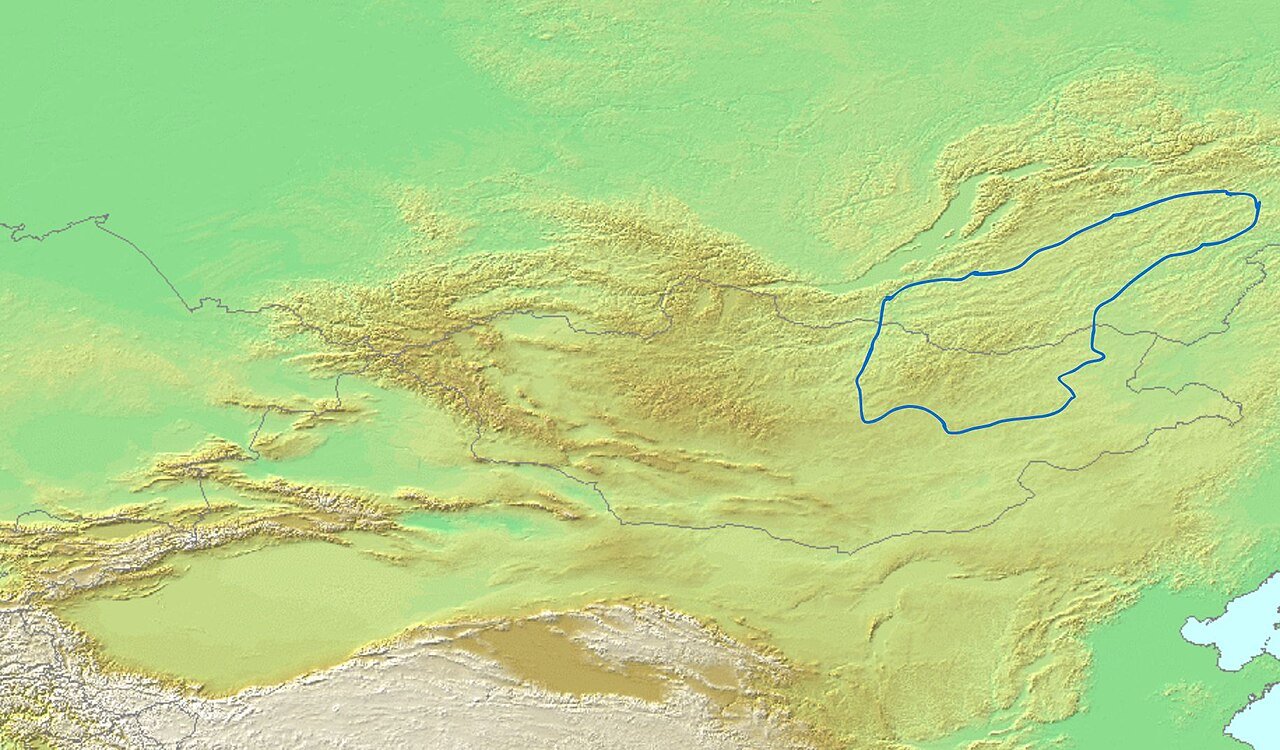
For roughly 800 years there was a stretch of land in Mongolia where the rule was simple: if you went in, you were killed. It is called the Ikh Khorig — the Great Taboo.
- The burial: in 1227, Genghis Khan died after building the largest connected land empire in history, and was buried somewhere nobody today knows. That was not an accident. The men carrying his body were said to have killed anyone who saw them on the road, the soldiers who dug the grave were killed once it was filled in, and a thousand horses were driven back and forth until the ground looked like every other part of the steppe.
- The family business: a group of families, the Darkhad, were given one job — keep people away from that land. They were excused from taxes and military service in exchange, and did it generation after generation, long after the empire that assigned the task had broken apart.
- The Soviet twist: you would expect the forbidden zone to be broken open when Mongolia came under Soviet control and the Soviets set out to erase Genghis Khan from history. The opposite happened. The area was declared a restricted military zone with a Soviet tank base nearby, and ordinary Mongolians were kept out for another 70 years.
- The search: in 1990 the Soviet system collapsed and outsiders finally went looking. A Mongolian and Japanese project surveyed the region with ground-penetrating radar in the early 1990s and found hundreds of graves — none of them his.
- Why it stopped: most Mongolians do not want people to find the tomb. The grave is considered sacred, and disturbing it is widely believed to bring catastrophe. The example people point to is Tamerlane, another conqueror, whose tomb in Uzbekistan was opened by Soviet scientists in June 1941 — Germany invaded the Soviet Union two days later.
- Today: in 2015 the mountain and the land around it became a UNESCO World Heritage Site, protected as a sacred landscape.
| Site | Where | What keeps it closed |
|---|---|---|
| Ozersk | Urals, Russia | Security Service checkpoint; residents voted to close the borders |
| Vozrozhdeniya | Aral Sea | Illegal in two countries; buried anthrax pits |
| Project Iceworm | Greenland | Abandoned beneath a melting ice sheet |
| Metro-2 | Moscow | Never confirmed nor denied by the state |
| Trementina Base | New Mexico, USA | Private security on private land |
| Chapel of the Tablet | Axum, Ethiopia | One guardian, appointed for life |
| North Sentinel Island | Bay of Bengal | Navy patrol line; a single illness |
| Ikh Khorig | Mongolia | Sacred zone, UNESCO listed |
What All Eight Have in Common
Read down the list and the reasons split cleanly in two. Metro-2, Project Iceworm and Trementina Base are guarded to keep something in — a network, a missile plan, an archive. Vozrozhdeniya and North Sentinel Island are guarded to keep the world out, one because of what is buried in the ground, the other because of what a visitor carries in their bloodstream. And in two cases the arrangement is stranger still: the people of Ozersk voted to shut their own borders again, while most Mongolians would rather the Great Taboo stayed unbroken than have the truth dug up.
The detail worth noticing is how often the fence outlives its reason. Camp Century’s tunnels were cut to hide six hundred missiles, and now they hold waste that three governments argue over. The Ikh Khorig was set up to conceal a burial and stayed forbidden through a foreign ideology that wanted the buried man erased from history entirely. North Sentinel’s line has almost nothing to do with the Sentinelese, who once waded out for coconuts — it is a fence drawn around a disease they have never met. The guards change. The reasons change. The line stays where it is.
Image Credits
- DF-ST-87-11851 A sign in German and English warns that the area is restricted to authorized personnel only. by Ssgt Fernando Serna — Public domain
- 20161114 Bus station in the city of Ozersk by ScriptMaster — CC BY-SA 4.0
- Aral Sea, Vozrozhdeniya Island and Komsomolsky, Konstantin, Bellinsgauzena, Lazareva islands, LandSat-1 satellite image, 20-SEP-1972 by NASA — Public domain
- Camp Century trench deformation by U.S. Army Materiel Command — Public domain
- Moscow Kremlin at night (2001) 02 by Godot13 — CC BY-SA 4.0
- Scientology Trementina by USDA — Public domain
- ET Axum asv2018-01 img33 StMary of Zion Church by A.Savin — FAL
- North Sentinel Island from flight (88139) by PJeganathan — CC BY-SA 4.0
- Khentii mountains by Mongolgpt — CC0