
Every Greek Philosopher Explained
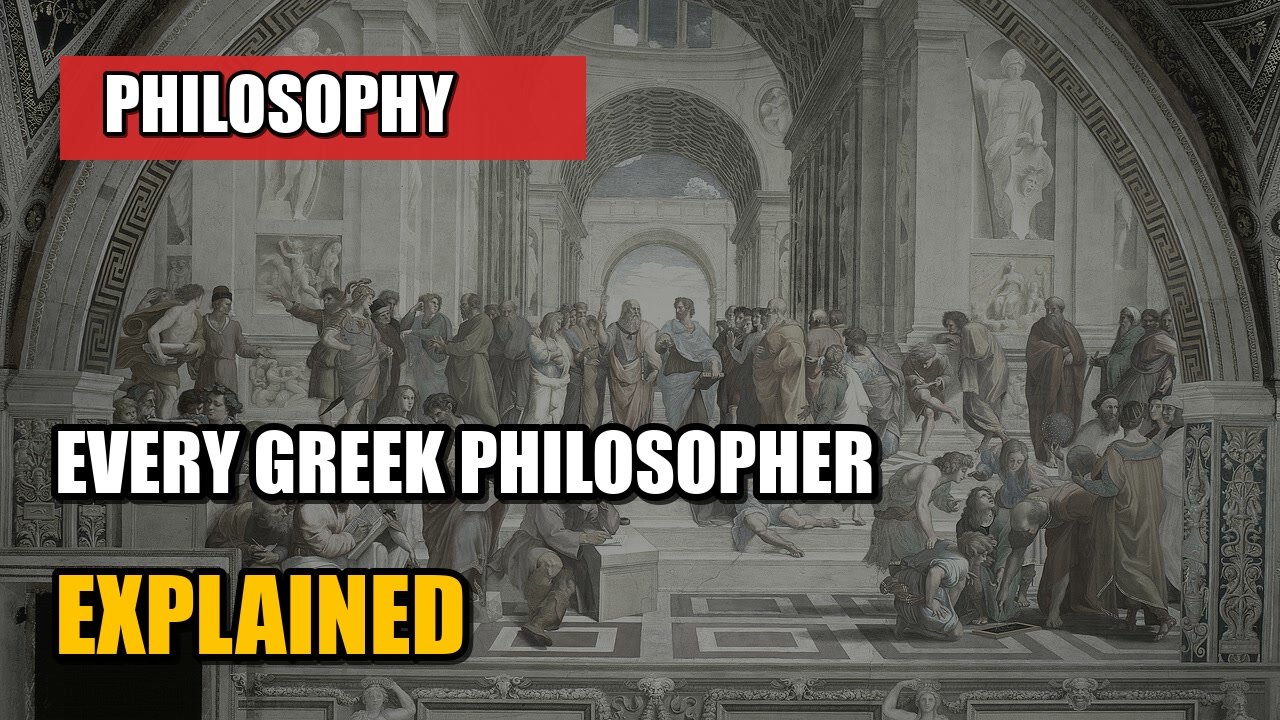
Socrates never wrote a word. Plato wrote it down, Aristotle argued back, Epicurus made death a non-problem, Pythagoras turned the cosmos into numbers, and Diogenes told a king to step out of his light. Six Greek philosophers, six answers to one question: how is a person supposed to live?
The Paint Explainer paints through the classical canon in order: the Socratic method, the theory of forms and the cave, immanent realism, atomism, the immortality of the soul, and cynicism pushed to its shameless extreme.
1. Socrates
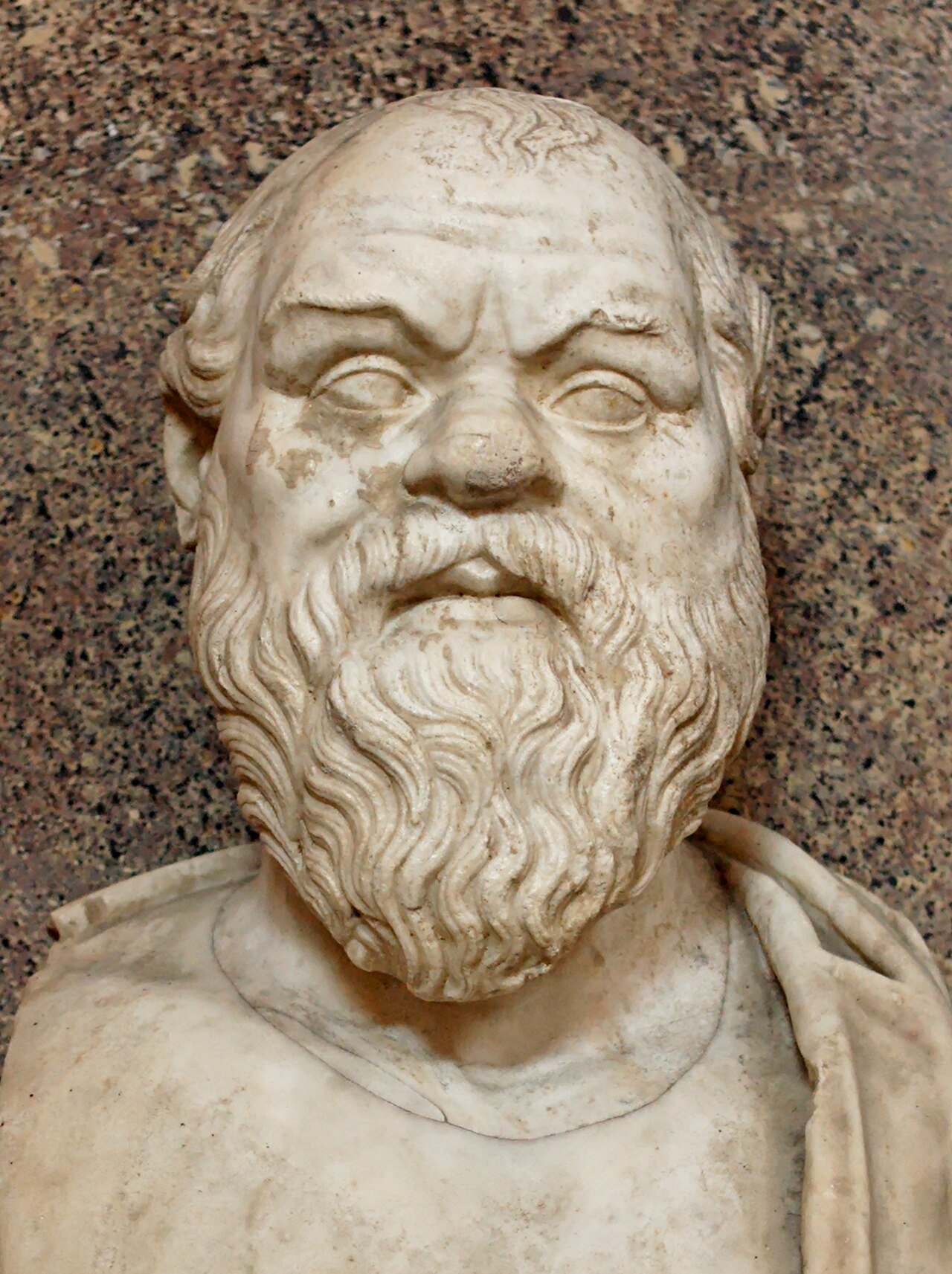
Socrates never wrote a text. Everything we have from him is second-hand, mainly from his student Plato, who turned their conversations into dialogues. The Socratic method is a dialogue built from short questions and answers, in which Socrates and his interlocutors examine an issue or an abstract meaning and find themselves at an impasse, completely unable to define what they thought they understood.
The companion trick is Socratic irony: Socrates would pretend to be ignorant of the topic under discussion in order to draw out the inherent nonsense in other people’s arguments. On ethics he was just as direct. His theory of virtue holds that all virtues are essentially one, because they are a form of knowledge — the reason a person is not good is that they lack knowledge, which is where the dictum that no one does wrong willingly comes from. The line he is remembered for is shorter: I know that I know nothing.
2. Plato
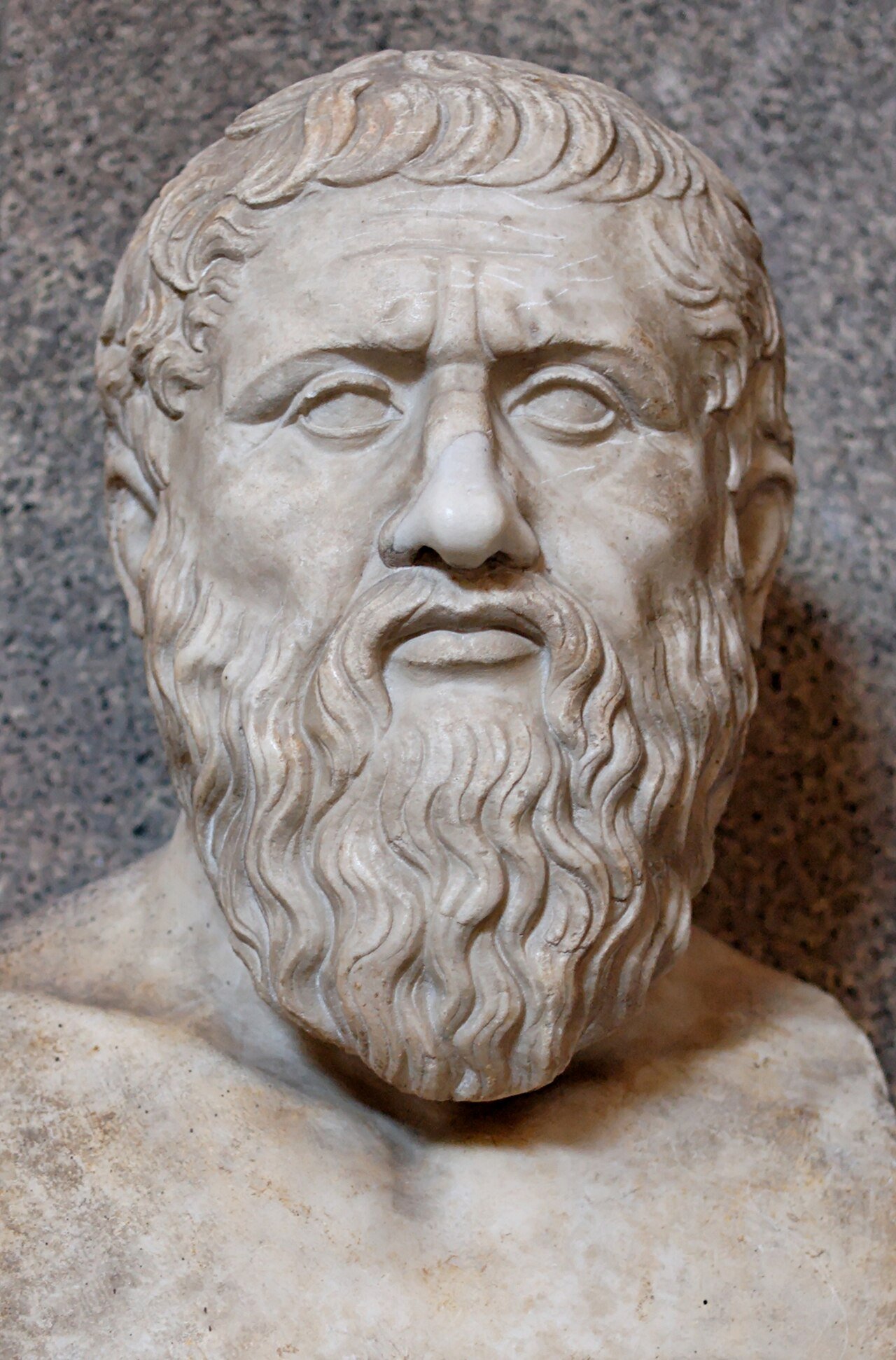
Plato is best known for his theory of forms, which denies the reality of the material world and treats it as nothing more than an image or copy of the real world. We may see many individual trees of different species, but each one is a different imitation of the form of the tree: not any particular tree, but a perfect, unchanging ideal tree, carrying all the qualities that could ever make something identifiable to us as a tree.
The theory is usually explained with the allegory of the cave. A group of people have lived chained to a cave wall all their lives, facing a blank wall, watching shadows projected from objects passing in front of a fire behind them, and giving names to those shadows. The shadows are the prisoners’ reality, but they are not accurate representations of the real world. Shadows stand for the fragment of reality our senses can normally reach, while the objects near the fire stand for the true forms, which we can only perceive through reason.
3. Aristotle
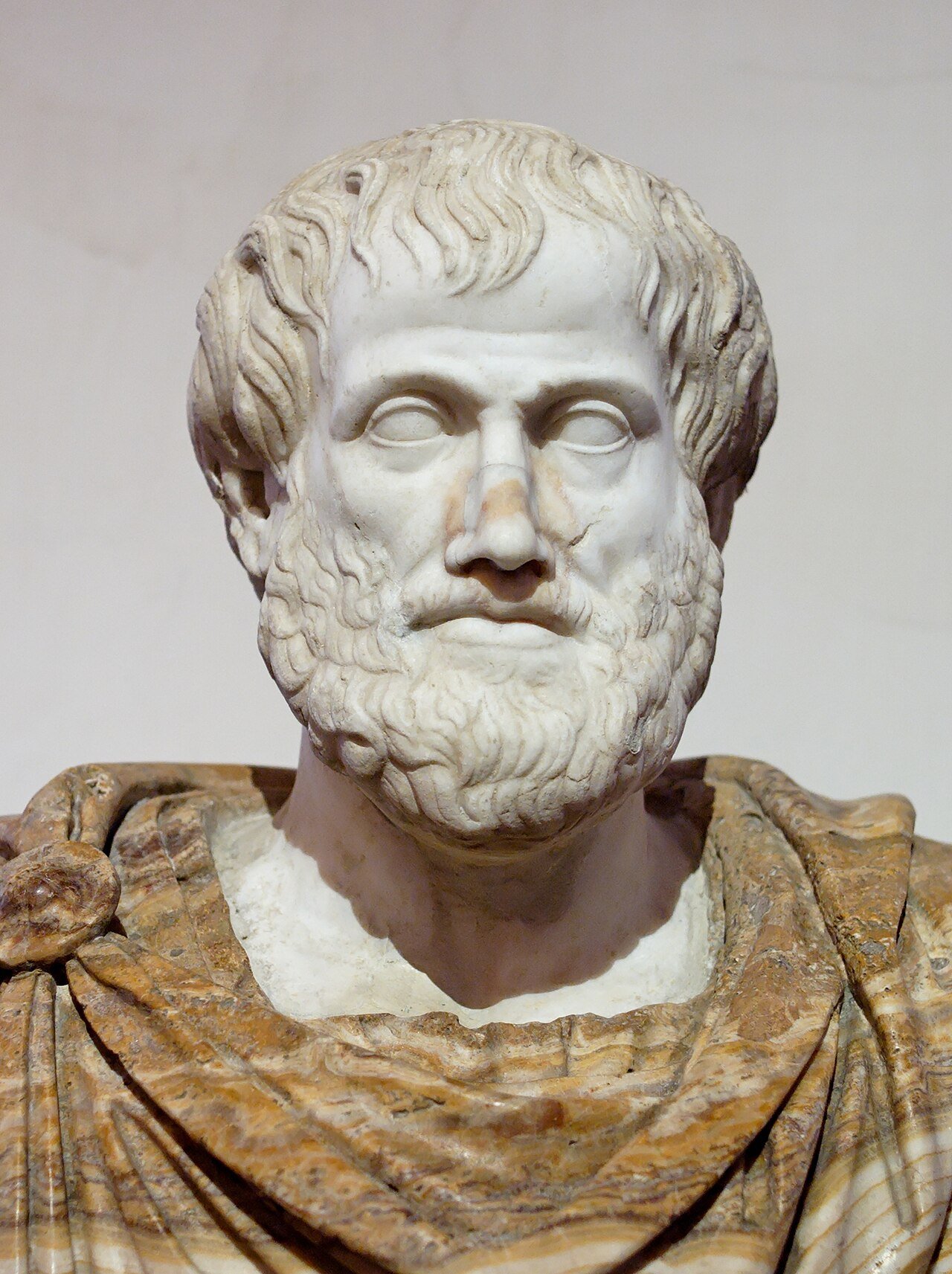
Aristotle kept the forms and then moved them. For Plato the form is separate from the actual thing it imitates; for Aristotle the form is still what phenomena are based on, but it is instantiated in a particular thing. Plato allowed that some forms are not part of particular things — perhaps no particular good exists, yet good is still a proper form — and Aristotle disagreed on both counts: every form is instantiated at some point in time, and no form is unattached to existing things.
The second dispute is about location. Plato spoke of the forms as existing separately from the things that participate in them; Aristotle maintained that forms exist within each thing on which the form is predicated, so the form of an apple exists within each apple rather than in a world of forms. The idea is called immanent realism. He also held that the world is made of five elements — earth, water, fire, air and ether — evenly distributed in every corner of the universe, and that these are what the heavenly spheres and the stars are made of.
4. Epicurus
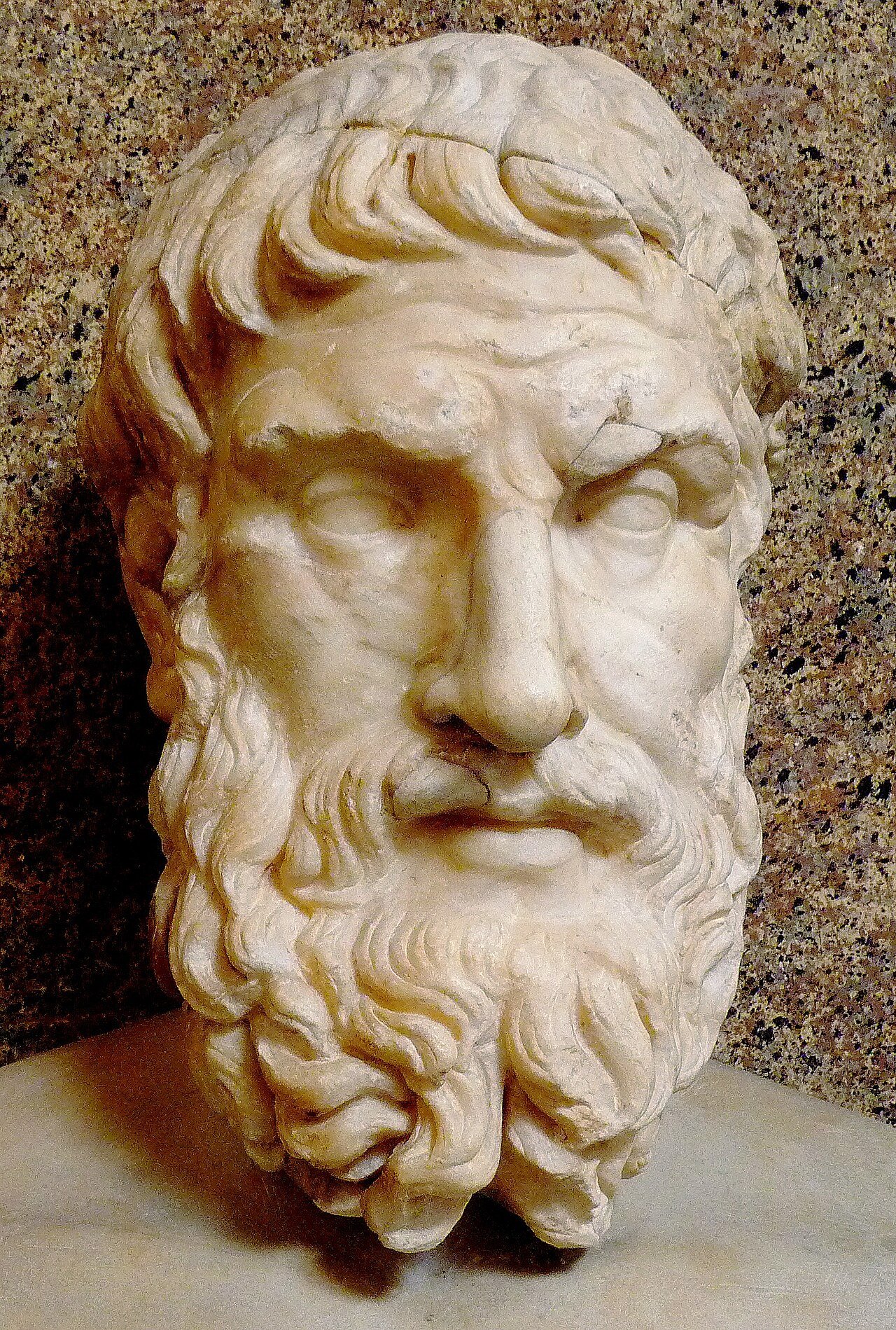
Epicurus asserted that philosophy has one purpose: to live, and to help others live, happy and tranquil lives, removing pain and fear along the way. The biggest enemy of happiness is the fear of death, and he thought it was also the main reason humans invented philosophy in the first place.
His answer fits in a sentence: when we exist, death does not exist, and when death exists, we do not exist. His physics is just as stripped down. The universe consists of two things, matter and void, and matter is made of atoms — tiny bodies with only unchanging qualities of shape, size and weight. Whatever the universe is ultimately made of cannot itself be changed, or the universe would be destroyed. So there is an infinite supply of atoms but only a finite number of types, an infinite amount of void, and from that infinite supply come an infinite number of worlds.
Senses rely on the same machinery. Every object continually emits particles that interact with the observer: sight, smell and sound all depend on them. The particles are not themselves colored or audible, but are emitted in a manner that causes the observer to experience, say, the color red. Because Epicurus leans so heavily on the senses, he can be labelled an empiricist.
5. Pythagoras
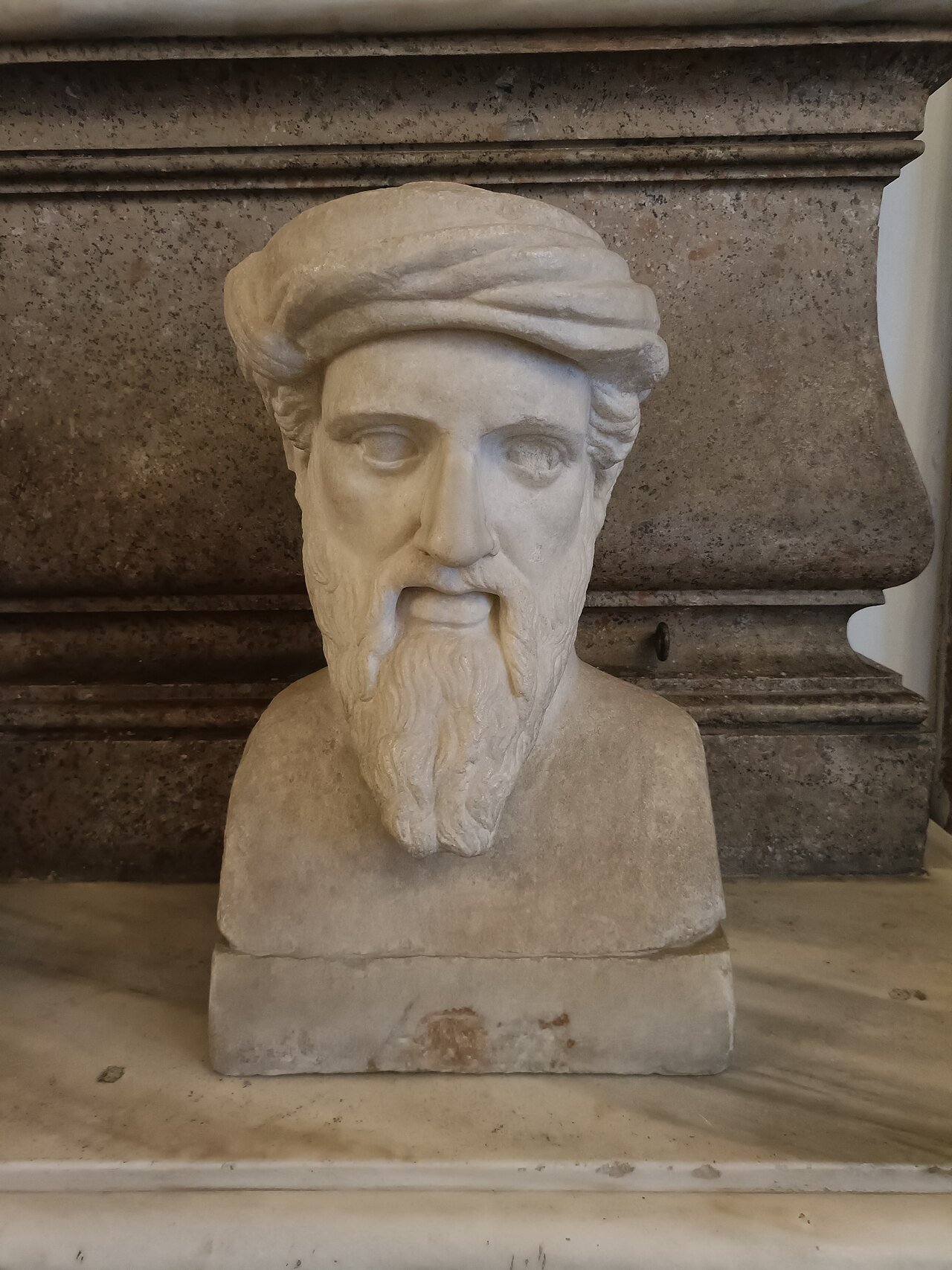
Pythagoras was a mathematician who believed the universe could be explained through numbers and their relationships. The Pythagoreans were committed to the search for abstract principles, which promoted the formation and development of the ancient Greek idealist philosophy.
- Numbers first: the cosmos is read as relationships between quantities rather than as stuff in motion.
- The soul: the school preached the immortality of the soul and reincarnation.
- The theorem: the most famous contribution of Pythagoreanism is the Pythagorean theorem.
6. Diogenes

Diogenes is one of the founders of cynicism, a philosophy that says money, power, fame and all other conventional desires are the wrong things to chase, and that virtue leads to true happiness. Happiness is reached by living in agreement with nature: following one’s natural sense of reason, living simply and shamelessly, free from social constraints.
So cynics live with the bare minimum and practice shamelessness, breaking social norms on purpose. Diogenes himself owned only a cloak, a staff and a knapsack, and he used to defecate and urinate in public without any worry about what the public thought of him. The cynics are said to have invented the idea of cosmopolitanism: asked where he came from, Diogenes replied that he was a citizen of the world.
What Comes Next?
Lined up, the six read as one argument about knowledge and desire. Socrates makes virtue a form of knowledge, Plato splits the world into what we see and what is real, Aristotle bolts the two back together, Epicurus removes the fear that ruins every calculation about pleasure, Pythagoras gives it a numerical spine, and Diogenes tests it by throwing away everything except it.
Each one answers the one before: Plato sets the template his student spends a career rebuilding, Epicurus attacks the fear that makes every other question feel academic, and Diogenes checks the whole theory against a man with nothing but a cloak. The question the video opens with — how should a person live? — is the only one none of them closes.
Image Credits
- “The School of Athens” by Raffaello Sanzio da Urbino by Raphael — Public domain
- Socrates Pio-Clementino Inv314 by Unknown artist — Public domain
- Plato Pio-Clemetino Inv305 by Unknown artist — Public domain
- Aristotle Altemps Inv8575 by After Lysippos — Public domain
- Bust of Epicurus by Dudva — CC BY-SA 4.0
- Bust of Pythagoras at the Capitoline Museum by Cmick25 — CC BY-SA 4.0
- Jean-Léon Gérôme – Diogenes – Walters 37131 by Jean-Léon Gérôme — Public domain