
The Deadliest Sea Animal From Every Single Period
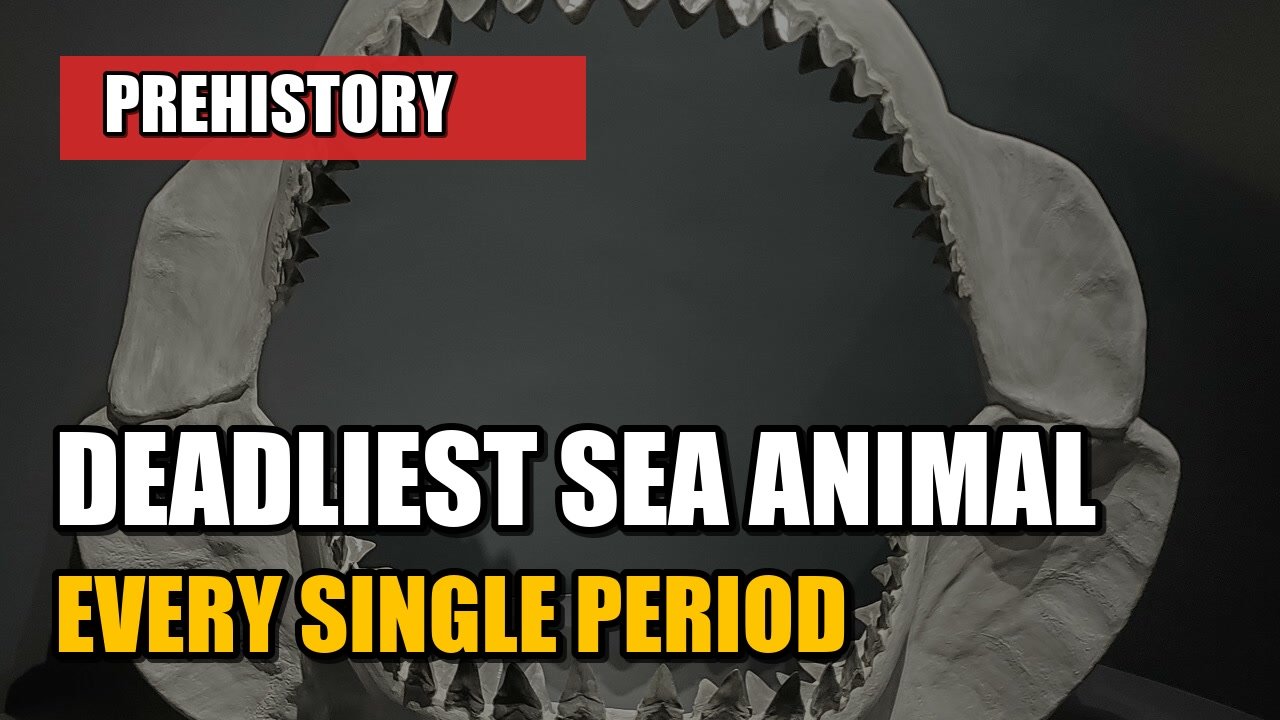
A worm with a circular mouth ringed in teeth, a squid relative in a 20-foot shell, and a shark that bit with a spiral buzzsaw. Twelve geologic periods, twelve apex predators — and something new waiting at the end of every single one.
The Paint Explainer walks through them period by period, from the Cambrian seafloor to the orcas of today: how each ruler hunted, how big it grew, and exactly what knocked it off the top.
1. Cambrian

During the Cambrian period, most creatures were small and slow, crawling along the seafloor. But in the waters near what is now China, a group of strange worm-like animals was starting to grow bigger and bigger. One in particular would become something the ocean had never seen before: Omnidens, a name that literally means “all teeth.”
When scientists found its mouth — a strange circular opening ringed with rows of sharp teeth — it became clear Omnidens wasn’t as small as the rest. It could grow up to 6.5 feet long, roughly the length of a human, and around its mouth were claw-like spines that could trap struggling prey and drag them into that toothed circle to be shredded apart. This absolute monster ruled the seas for millions of years until catastrophic drops in ocean oxygen disrupted food webs across the globe; for a massive predator that needed huge amounts of food and oxygen just to stay alive, that ultimately led to its extinction.
2. Ordovician

The seas were warmer and much more crowded now, full of creatures like trilobites and early corals. The real power in these oceans belonged to a new kind of animal: the nautiloids, early relatives of squids and octopuses. One in particular became the most important creature at the time — Endoceras, encased in a long, straight, cone-shaped shell that could stretch nearly 20 feet long, roughly the length of a full-size pickup truck.
Inside that shell was a soft body armed with powerful tentacles that likely secreted a sticky adhesive to grip its victims. Once caught, a sharp beak crushed straight through the armor of animals below, passing the meal to an inner tooth-lined tongue to slice it apart. Instead of chasing prey across the seafloor, Endoceras likely hovered above the bottom, using its massive shell for balance and striking down when animals wandered too close. Eventually, though, the planet turned against it: temperatures dropped, massive ice sheets spread across the southern pole, locking up water, draining shallow seas, and plunging ocean temperatures — disastrous for Endoceras and its prey alike.
3. Silurian

The Silurian seas were shallower and often mixed with rivers, lagoons, and salty estuaries, where the water was murky and food was easy to find. It’s here that a new group of hunters began to thrive: eurypterids, better known as sea scorpions — distant cousins of today’s scorpions. Many were only a few inches long, but one family grew into one of the largest arthropods that ever lived: the pterygotids, which could stretch past 6 feet in length.
At the front of their bodies were massive, tooth-lined claws built to grab prey and puncture and crush them, and they needed their large, forward-facing eyes for sharp depth perception — letting them judge distance and strike with precision. However, the fish sharing those murky waters were evolving too: some were slowly growing thicker plates of bone across their heads and stronger jaws to defend themselves. This continued for millions of years until one line of armored fish became a war machine — so heavily plated and powerful that even a 6-foot sea scorpion could no longer stop it.
4. Devonian
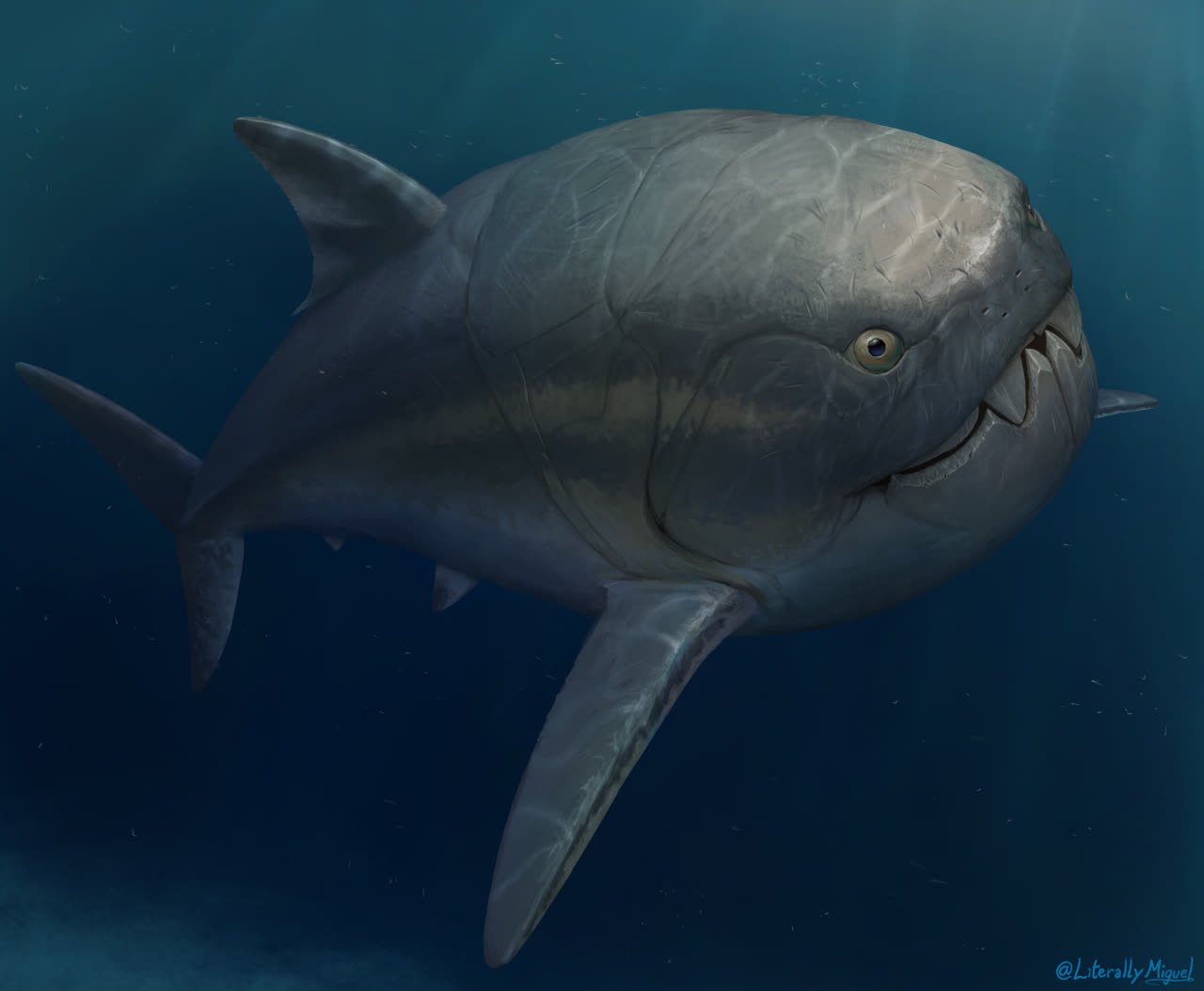
By now the oceans were richer than ever, filled with early sharks, coiled ammonites, and fish of every shape. But one group stood out: the placoderms, fish covered in thick, bony armor plates instead of scales. The most terrifying species of the group was Dunkleosteus, modern estimates place it at about 13 feet long, roughly the size of a small car.
Its most terrifying part, however, is its mouth. Instead of teeth, it had sharp, bony jaw plates that stayed permanently razor sharp as they wore down, working like built-in blades. Its bite was one of the strongest of any fish in history — strong enough to snap through heavy shells and bite clean through the armor of other placoderms — and a unique joint system let it drop its lower jaw in just 20 milliseconds, creating a vacuum that sucked prey directly into its mouth before those plates snapped shut. Quite literally, a living guillotine. When a mass extinction struck at the end of the Devonian after sea levels dropped and oxygen collapsed, it hit the placoderms hardest of all, leaving a massive void in the ocean.
5. Carboniferous
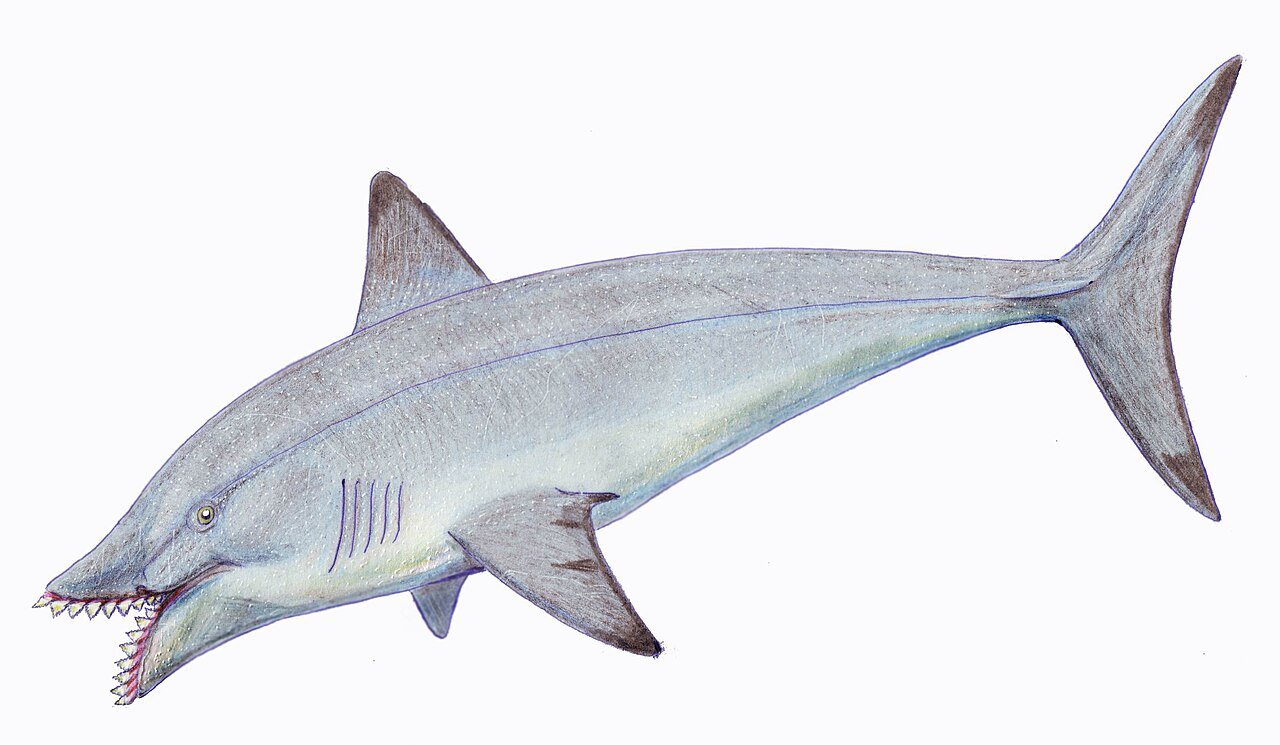
By the Carboniferous, vast forests and swampy coastlines were pumping huge amounts of oxygen into the air and sea, and sharks took full advantage — exploding in diversity so much that this period is often called the golden age of sharks. One of the weirdest and most dangerous shark-like creatures was Edestus: up to 20 feet long, close to the size of a modern great white shark, and possessing something no animal alive today has — a single straight row of teeth in each jaw.
It likely used a sort of two-gear system, pulling its bottom jaw upward to create both a slicing and dragging effect that pulled prey deeper into its mouth while slicing it up. Rather than chewing normally, Edestus likely thrashed its head up and down, using those long blades to slash into its prey. The teeth never fell out and never stopped growing: instead of shedding them, older teeth were pushed further out of the mouth, protruding forward like an open pair of scissors.
6. Permian
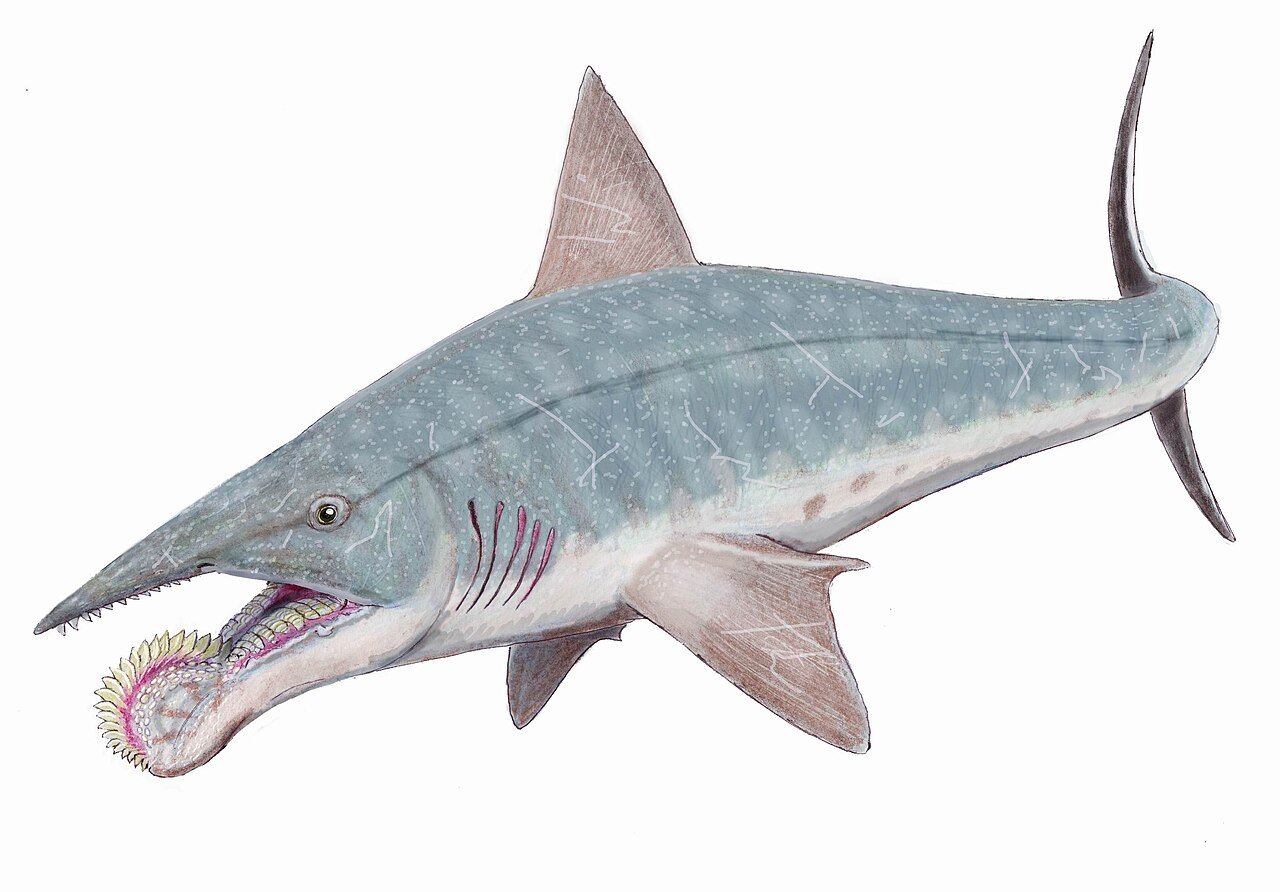
The Permian features one of the most disturbing creatures that ever roamed the Earth. The oceans were building toward the biggest apocalypse in history — packed with reefs, thick-shelled mollusks, and every kind of shark relative imaginable — and one specific shark-like animal took Edestus’ teeth concept to a horrifying extreme. Its name was Helicoprion.
Instead of a straight line, it coiled its teeth into a tight spiral whirl inside its jaw, just like a living buzzsaw. When biting down, it pressed those sharp, serrated teeth against a cartilaginous pad in its upper jaw, causing catastrophic lacerations; its blades were angled like cutting hooks, suggesting it targeted fast, agile prey by slashing deep, fatal wounds. Some estimates put Helicoprion at an astonishing 40 feet long, making it one of the largest predators of its time. It ruled the seas for millions of years before going extinct — sometime before the Great Dying struck and wiped out roughly 96% of all marine species, the closest life on Earth has ever come to being completely erased.
7. Triassic
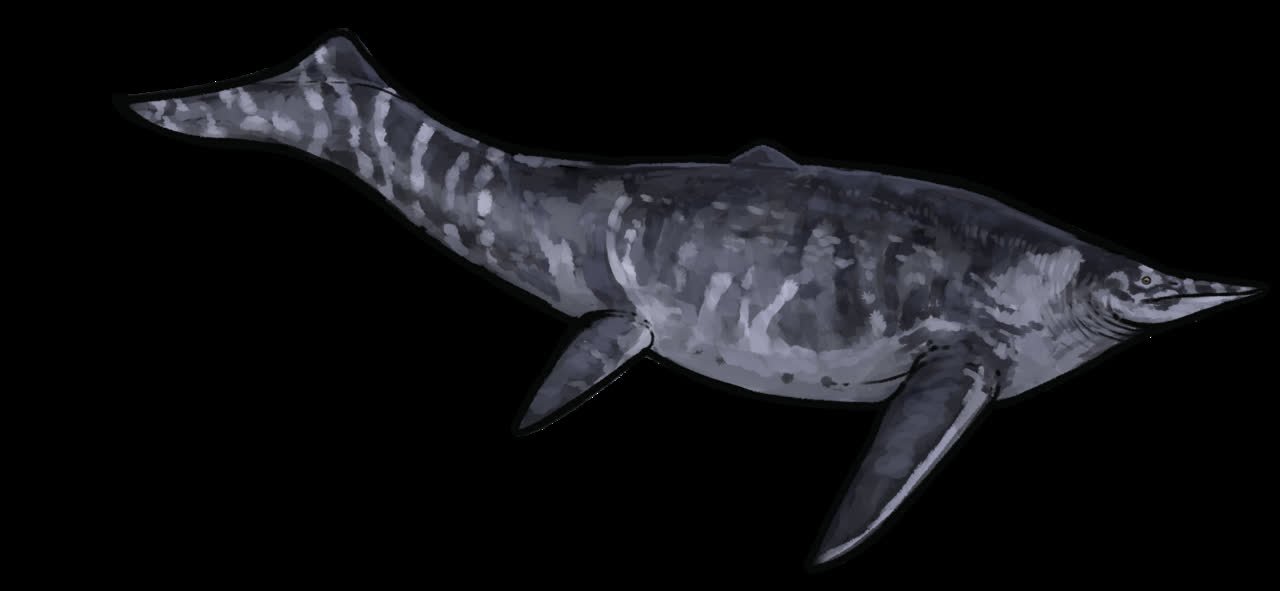
The Triassic saw a new type of animal rise to the top: air-breathing reptiles heading back into the sea. They had adapted to life underwater, evolving dolphin-like bodies while still breathing air at the surface, just like whales do today. Early on they were a pretty normal size, but as the period wore on, one branch became the absolute ruler of the seas — Ichthyotitan.
Based on massive jawbone fossils, scientists estimate it could have stretched to around 82 feet long, roughly the size of a blue whale — making it possibly the largest animal to ever swim in the sea, reptile or not. Fossil evidence even suggests the specific individual we know it from was still growing when it died, meaning full-grown adults may have been even larger. Unlike the armored or blade-tooth hunters before it, its main weapon was simply its size: a huge body that moved fast, covered vast distances while hunting squid and fish in the open ocean, and was so massive it could simply swallow some of its prey whole.
8. Jurassic
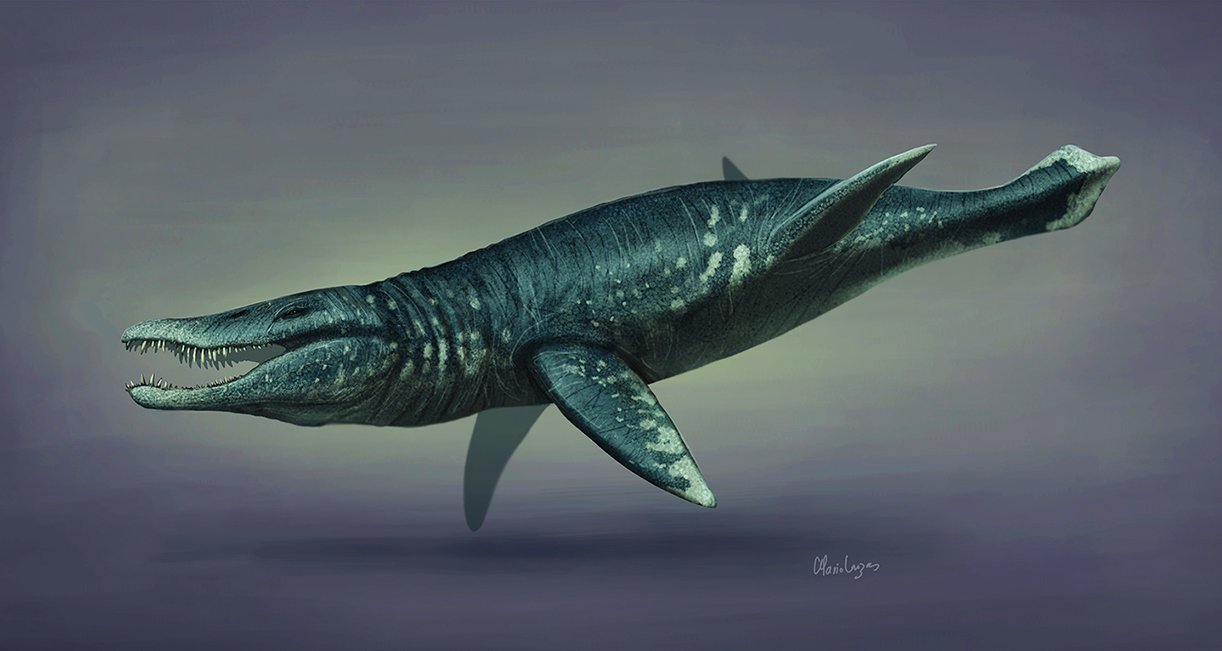
You might think of the Jurassic as the dinosaur era, and you’d be right — but the top predator in the seas wasn’t technically a dinosaur. You might know Plesiosaurus, the famous long-necked creature; you might not know its cousin, Pliosaurus. It could reach up to 43 feet long, with a skull alone stretching around 6 feet, and inside that skull sat more than 100 large, interlocking teeth, some estimated at over 11 inches long.
Here’s the crazy thing: its bite has been calculated at around 33,000 Newtons — imagine taking the entire weight of a massive SUV and balancing all of it onto the tip of a single tooth. (Humans bite with about 700.) Rather than picking off small fish, it likely regularly attacked other large marine reptiles, using that crushing bite to prey on animals almost its own size in a single strike. It even had a highly specialized sensory organ in its snout that could detect small changes in water pressure, letting it hunt in murky, dark, or deep waters. The mid-Cretaceous’s violent surge of underwater volcanism eventually ended the great pliosaurs: eruptions pumped out huge amounts of CO2, triggering warming that made the oceans hotter, acidic, and in many places devoid of oxygen.
9. Cretaceous
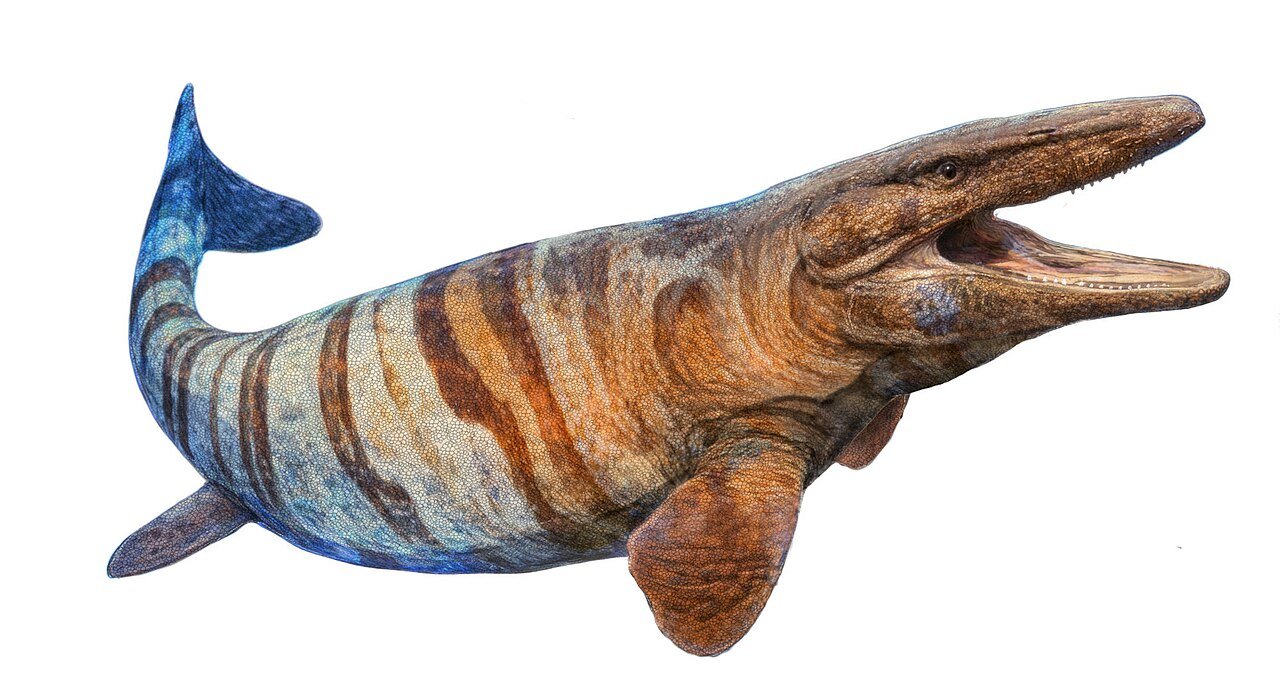
The Cretaceous, with its warm waters, saw a family of former land-dwelling lizards push further and further from shore. They kept adapting until one lineage stopped resembling anything that had ever walked on land. The result was mosasaurus, full-grown adults stretching past 50 feet with a long, muscular body.
What made it especially dangerous wasn’t just the rows of curved teeth lining its jaws, but a second set hidden further back on the roof of its mouth — angled backward to drag anything caught between them straight down its throat with no chance of slipping free. Highly territorial and fearless, it fought other giant apex predators, including its own kind. It was also a global presence: its fossils have been found on virtually every continent, including Antarctica. Then, without warning, its main threat came from the sky — an asteroid struck the planet, and the shockwaves tore through global food chains, starving out the mosasaurus until it went extinct.
10. Paleogene

After hundreds of millions of years of domination, the asteroid impact ended the age of giant marine reptiles incredibly quickly, and for a stretch afterward, no single group stepped in to dominate right away. That gap didn’t last. On land, a group of hoofed mammals began wading into rivers and coastal shallows, and over time it turned into Basilosaurus, a giant early whale that grew close to 60 feet.
Its body was incredibly weird for a whale — long, narrow, and almost snake-like, with tiny legs that still had functioning knee and ankle joints, an evolutionary leftover from its land-dwelling ancestors. At the front of its jaw were sharp cone-shaped teeth for grabbing, while teeth further back had jagged, multi-pointed edges suited to slicing flesh — the most complex teeth of any animal on this list, with canines, incisors, and serrated molars. That allowed it to chew and chop tough, large prey into smaller pieces before swallowing, a trait modern whales don’t have. Fossil stomach contents show it targeted the young of smaller whale species and hunted alone. Eventually, the opening of Drake Passage cooled the planet: ice built up over Antarctica for the first time, sea levels fell, and the warm shallow seas Basilosaurus depended on disappeared.
11. Neogene
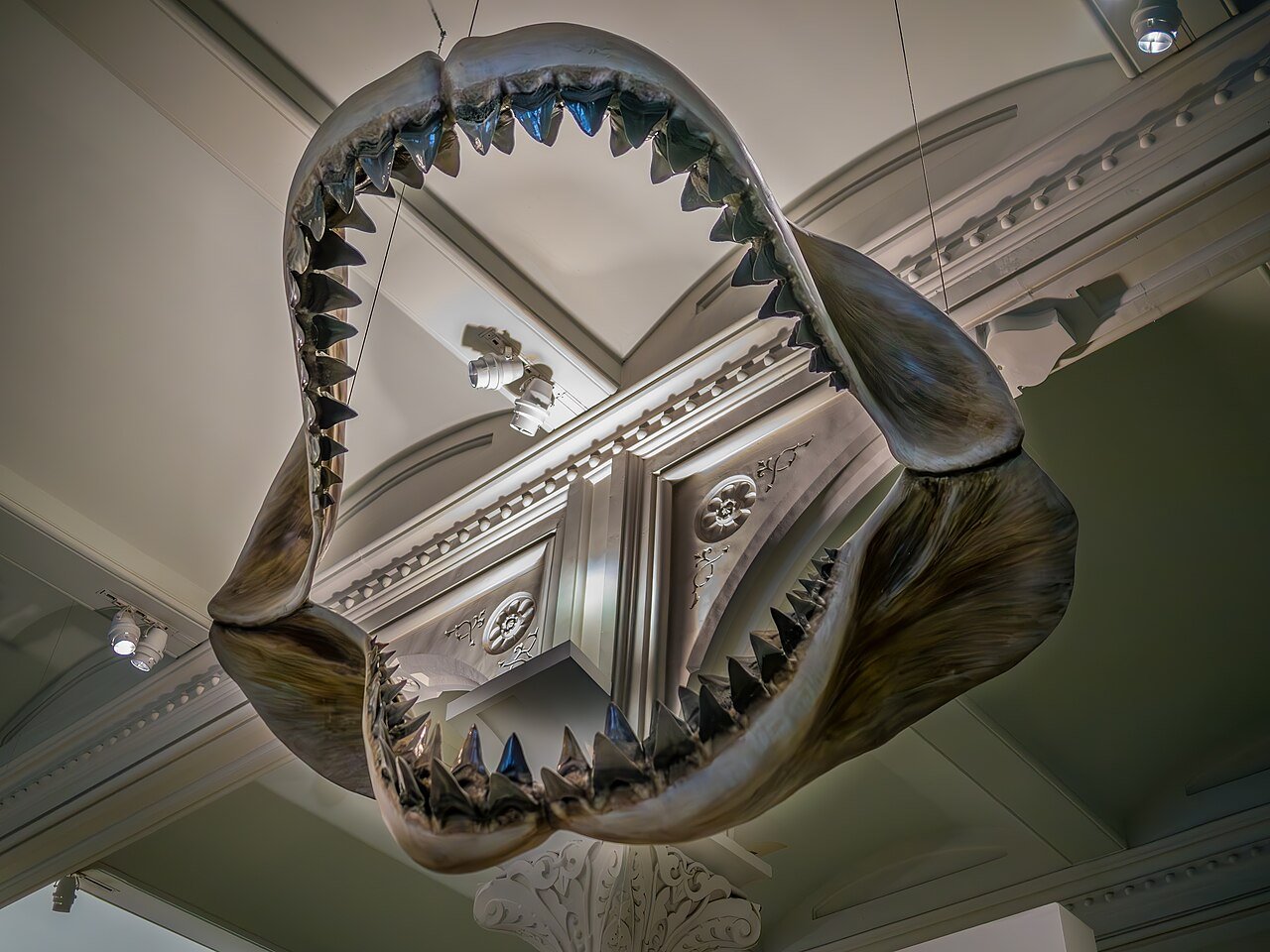
During the Neogene, we finally reach the strongest recorded bite in history: Megalodon. Remember the pliosaurus’ 33,000 N? Megalodon had a 182,000 N bite force — strong enough to break straight through a whale’s bones rather than just its skin. It changed its tactics based on the prey, sometimes biting off the flippers or tails of whales first to immobilize them, or directly targeting the heads of smaller predators.
Its teeth alone are disturbing: 276 palm-sized serrated teeth set inside a mouth wide enough to take in two grown adults side by side. It likely stretched somewhere between 50 and 60 feet, the biggest shark in history, facing no real rival. What eventually broke that dominance was a slow squeeze from several directions at once: global temperatures kept falling, prey whales moved into colder, deeper water it wasn’t built for, and a leaner, faster shark — the newly evolving great white — plus early predatory sperm whales like Livyatan began pulling from the same shrinking food supply. Losing its habitat and food source, Megalodon went extinct.
12. Quaternary

The Quaternary is the period we’re in right now, and its apex predator is vastly different from the ones that came before: a highly social, warm-blooded hunter that has been refining its methods for millions of years — the orca, sometimes called the killer whale, even though it’s actually the largest member of the dolphin family. Adults can grow past 30 feet long, with rows of large interlocking teeth built for gripping rather than slicing.
Here’s the peculiar part: much of an orca’s hunting depends on teamwork and intelligence rather than brute force alone. Orcas travel in tight family groups, and within those groups techniques get taught and passed down across generations — some pods work together to create waves that wash seals off ice floes, while others have learned to isolate and exhaust prey many times their own size, including great white sharks and even blue whales. They’re so intelligent that they have their own distinct cultures with different hunting tactics, diets, and even distinct languages, and those populations are so isolated they don’t even interbreed. Because of all these traits, adults have essentially no natural predators of their own. They are the kings of the seas.
What Comes Next?
Run the list backward and a pattern shows up: every ruler inherits a cleared ocean. The armored fish rise only once the sea scorpions fade; whales fill the gap the mosasaurs leave; the great white gets its share only when the cooling starts squeezing Megalodon. Each extinction is less a removal than a handover — the throne is always empty for a while first.
The second pattern is what the predators keep trading: armor, then blades, then size, then the buzzsaw, then again size — until the final entry breaks the pattern entirely. The orca doesn’t win by being more heavily armed; it wins by coordinating. Twelve periods of escalation end not with the biggest mouth in the water, but with the one hunter that learned to hunt together.
Image Credits
- Megalodon jaw, Tellus Science Museum by JJonahJackalope — CC BY-SA 4.0
- Omnidens reconstruction by Prehistorica CM — CC BY-SA 4.0
- Orthocone nautiloids reconstruction by Antonov — CC BY-SA 4.0
- 20201227 Pterygotus anglicus by Junnn11 — CC BY-SA 4.0
- Dunkleosteus closed mouth by LiterallyMiguel — CC BY 4.0
- Edestus protopirata1DB by Creator: Dmitry Bogdanov — CC BY 3.0
- Helicoprion bessonovi1DB by Creator: Dmitry Bogdanov — CC BY 3.0
- Ichthyotitan severnensis by SeismicShrimp — CC BY 4.0
- Pliosaurus restoration 2019 by Mario Lanzas — CC BY-SA 4.0
- Mosasaurus missouriensis paleoart by Corbin Rainbolt — CC BY 4.0
- Basilosaurus cetoides by Dominik Hammelsbruch — CC BY-SA 4.0
- Megalodon American Museum Natural History-20120521-RM-225233 by Reinhold Möller Ermell — CC BY-SA 4.0
- Killer Whales Hunting a Crabeater Seal by Callan Carpenter — CC BY 4.0