
The Most Disturbing Events in the Deep Ocean

A repeating ping under Arctic ice that made the seals and whales vanish — a sound the Canadian military flew and sailed in to investigate, found nothing behind, and never explained. A cargo ship drifting 600 miles off course with months of supplies aboard and not one of its 25 people. A sonar contact moving at 150 knots, six times faster than any submarine of its era.
The Paint Explainer walks through ten deep-ocean incidents: what was seen or heard, what investigators actually found, and the parts that official reports still list as unidentified. One of them — the Trieste window crack — isn’t a mystery at all. It’s just the most uncomfortable entry here.
1. The 2016 Arctic Ping
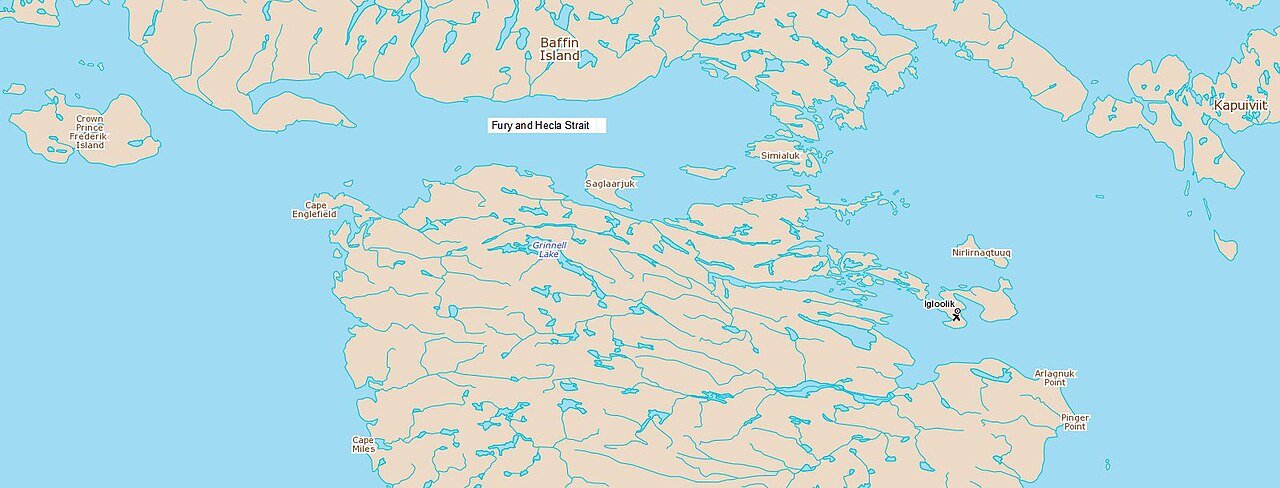
In the fall of 2016, in a narrow channel called the Fury and Hecla Strait in Nunavut, one of Canada’s most remote territories, Inuit hunters began reporting something unusual: a sound from beneath the water — a pinging or humming, repeating and consistent, unlike anything they had heard in those waters before.
- What made it alarming: the strait had long been a reliable spot for seals and whales that local hunters depended on. Around the same time the sound started, the animals disappeared, as if scared off by a huge predator.
- The response: the Canadian military sent both an aircraft and a naval patrol vessel. They surveyed the strait and found nothing — no equipment, no vessels, no anomaly in the animals, no geological activity that could account for it.
- The theories: a mining company active in the region (it denied involvement, no evidence linked it), military submarine sonar (no country confirmed operating one there), or natural seafloor shifts and ice pressure changes. None were ever confirmed.
- The ending: the sound just stopped on its own.
2. The MV Joyita

The MV Joyita set out with 25 people aboard, a mix of crew and passengers, on a voyage supposed to take about two days to Tokelau, a small island group. It never arrived. The search found nothing and was called off.
- Five weeks later, another vessel spotted it drifting in the Pacific, roughly 600 miles from its destination — tilted heavily to one side, partially flooded, but still afloat.
- What was aboard: deck largely intact, food and water enough to last for months. What was not aboard: any of the 25 people. No bodies, no clear signs of a struggle in most areas, no logbook. Medical bandages soaked in blood were found on deck.
- The radio was tuned to the international distress frequency, but had a fault that limited how far its signal could travel.
- The detail that makes it famous: even damaged, the ship was not going to sink — cork insulation in the engine room made it extremely difficult to submerge, and any experienced sailor aboard would have known it. So why would 25 people leave a vessel that was never going to take them under?
- No one was ever found and no explanation was ever confirmed.
3. The Shag Harbour Crash
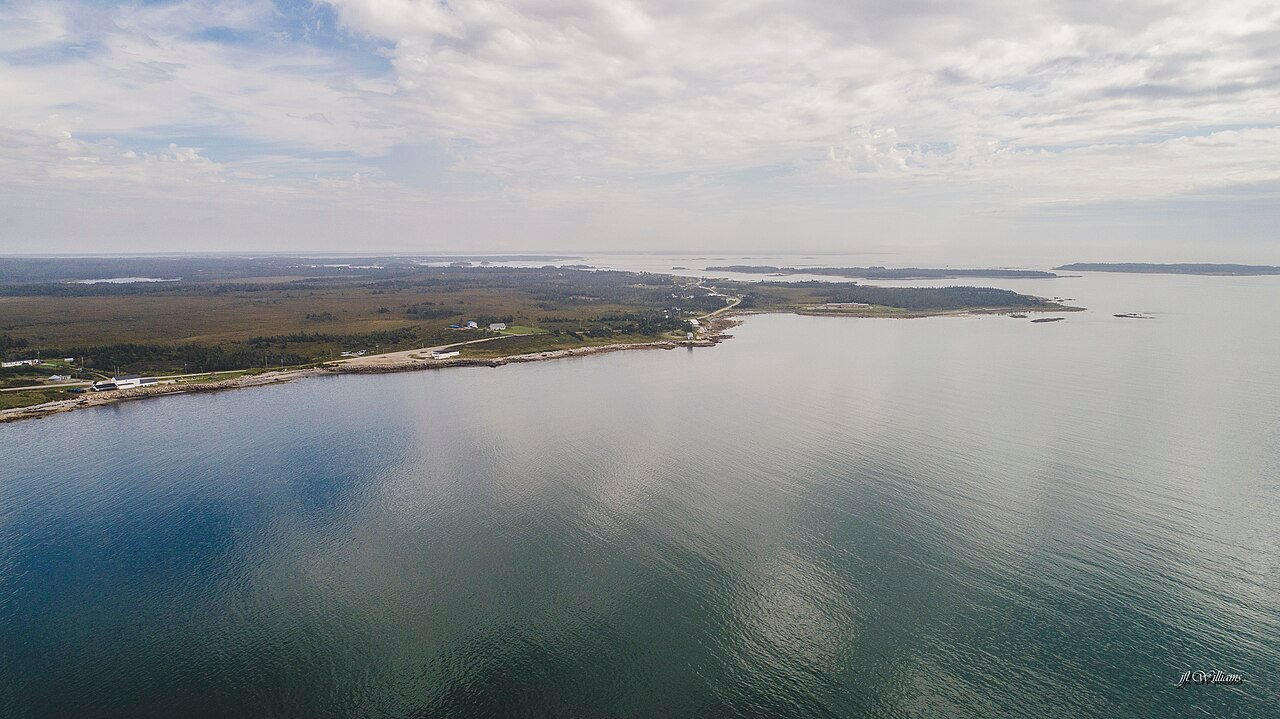
On the night of October 4th, 1967, multiple witnesses along the shore of Shag Harbor — a small fishing village in Nova Scotia — reported a large object with a row of bright lights descending at an angle toward the water. Some saw the lights flash in sequence before the object tilted and struck the surface with a loud impact.
- What followed: a patch of glowing yellow foam sitting on the water where it had gone in.
- The response: the RCMP responded quickly; fishing boats went out expecting a downed aircraft and possibly survivors. They found the foam — and nothing else. No wreckage, no debris, nothing indicating what had hit the water.
- The Navy: the Royal Canadian Navy was called in, and divers searched the seafloor. They came back with nothing.
- The official record: the government report formally described the object as unidentified. Declassified Canadian files confirm the investigation took place and that no explanation was ever reached.
4. The Nimitz Encounter

In November 2004, the USS Nimitz Carrier Strike Group was conducting training off the coast of Southern California. The cruiser USS Princeton had been tracking unusual objects on radar for about two weeks. On November 14th, two Navy fighter jets were sent up to investigate a contact — one of them flown by Commander David Fravor.
- What he saw below: a large area of ocean surface, roughly the size of a Boeing 737, churning and frothing white — as if something just beneath was boiling the water from below.
- Above it: a white, elongated object, roughly 40 ft long, with no wings and no visible means of propulsion, hovering erratically over the exact spot of the disturbance.
- The reaction: when Fravor descended toward it, the object reacted to his approach, then accelerated away at a speed he said was unlike anything he had encountered in his career. When it left, the water disturbance disappeared too.
- There are no official explanations for any of it.
5. Red Devils’ Swarm
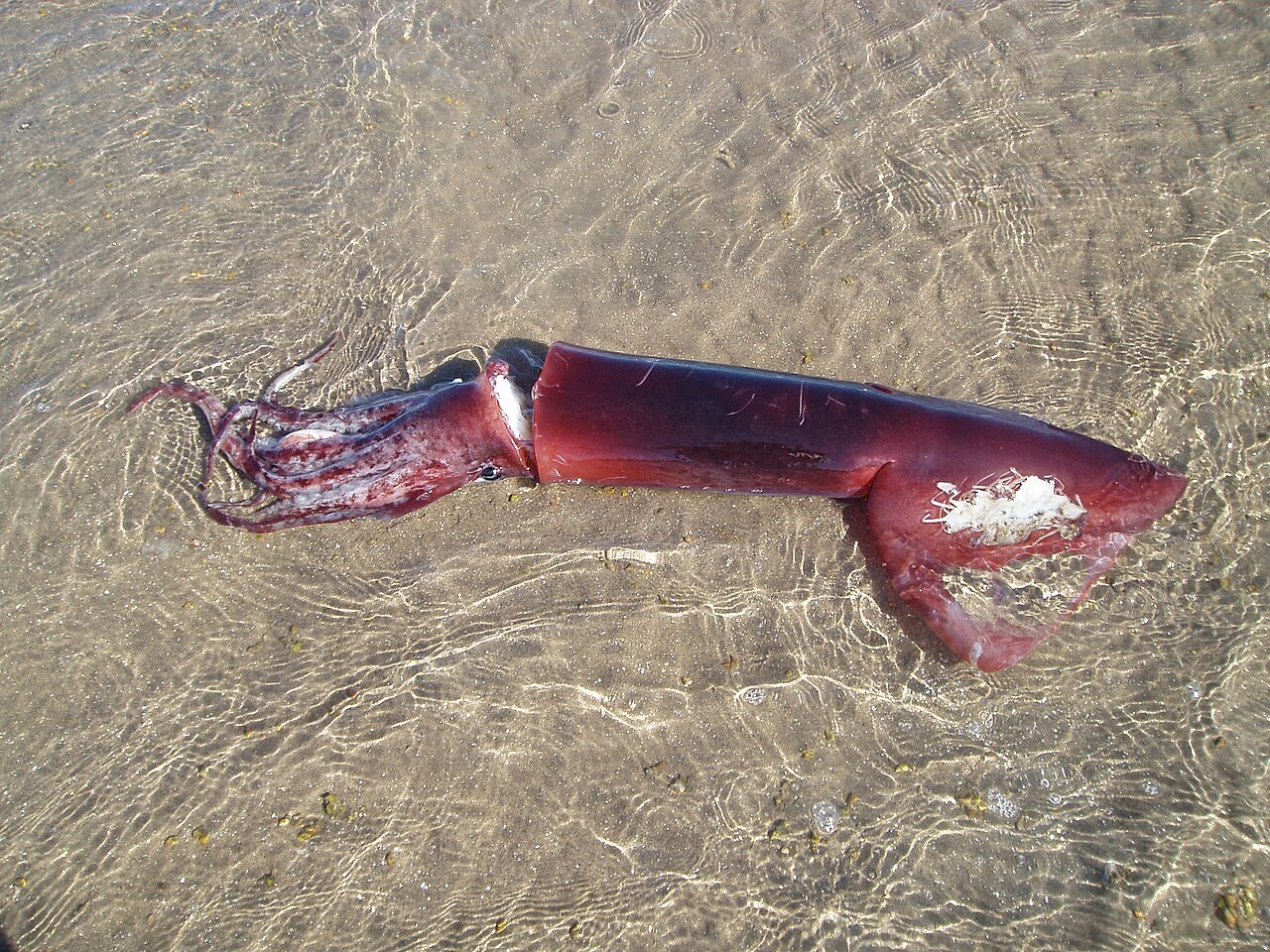
Picture being underwater as the darkness fills with thousands of red flashes moving toward you all at once. In Spanish, locals call them diablos rojos — red devils — for their ability to flash deep red across their entire bodies in an instant when agitated or attacking. They are Humboldt squid, growing up to 6 ft long and 110 lb.
- The weapons: sharp beaks, and sucker rims lined with serrated tooth-like edges that cut into whatever they grab. Fast, strong, and they do not hunt alone.
- The swarms: sometimes numbering in the hundreds or thousands, with coordinated behavior documented during hunts — groups driving fish toward a point while others attack, communicating with rapid pulsing light patterns produced by their own bodies.
- The encounters: divers near active swarms have reported being grabbed, pulled downward, and dragged away from their boats. Equipment torn off; several documented attacks required intervention to escape.
- And they’re moving: now appearing in waters much further north than they were recorded even two decades ago.
6. The Gulf of Khambhat Anomaly
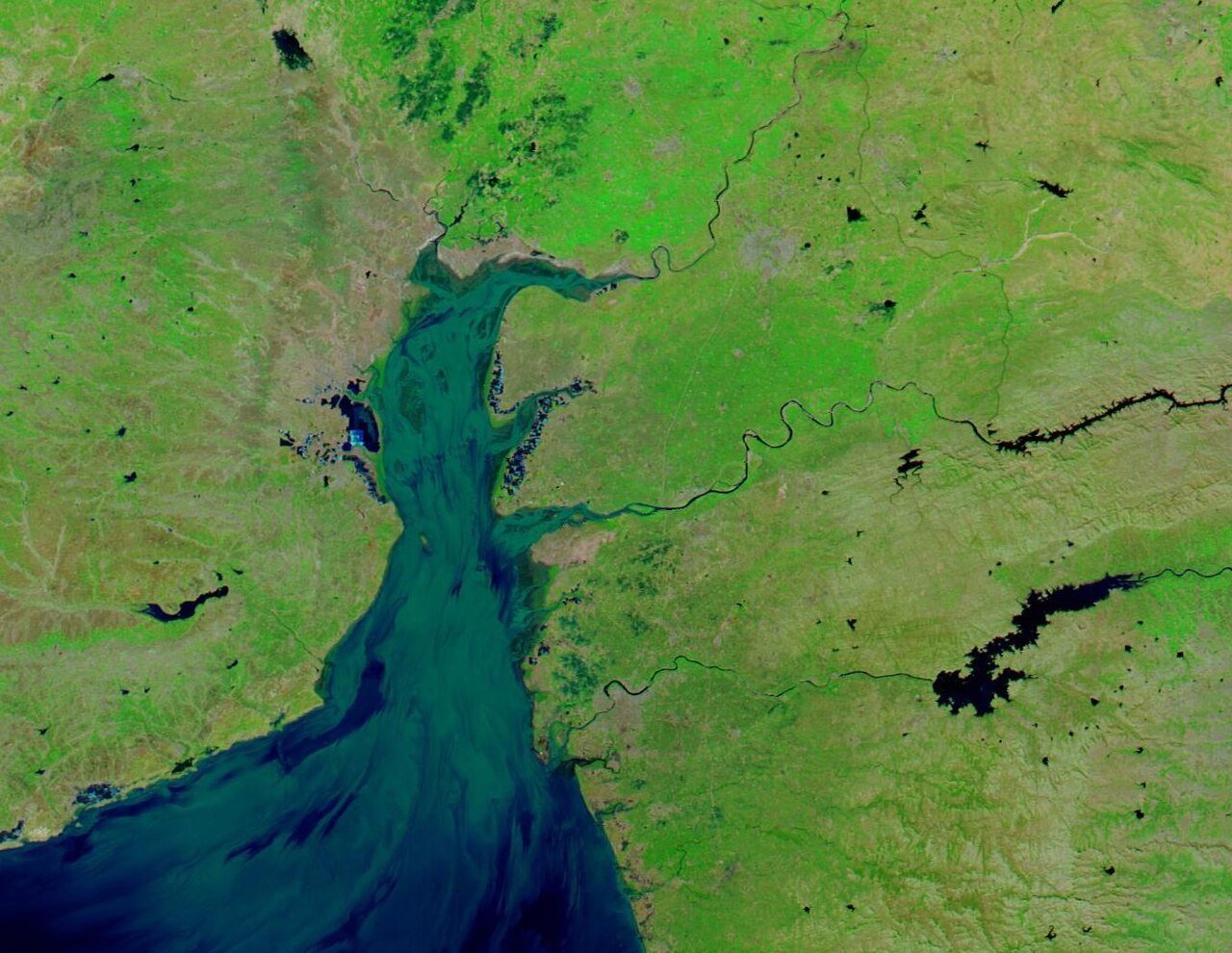
Most underwater discoveries get explained quickly: a shipwreck, a geological formation, a known natural process. This one has been unresolved for over two decades — and if the readings hold up, it could change what we know about human civilization.
- The find: in 2001, a team from India’s NIOT was surveying pollution levels in the Gulf of Khambhat when sonar picked up large structures about 130 ft underwater — organized formations with what looked like walls, open areas, and a layout that didn’t match random natural rock. Two sites, each stretching several miles.
- The samples: pottery fragments, carved pieces, construction materials — and human bones and teeth. Carbon dating on recovered material suggested roughly 9,500 years.
- The implication: if that date is accurate, the structures would predate every known ancient civilization on record, including the earliest cities in Mesopotamia, the oldest confirmed urban settlements.
- The controversy: critics noted the sampling method couldn’t guarantee the artifacts came from the structures themselves, and some geologists argued the formations are natural, shaped by underwater currents.
- Where it stands: no formal excavation has ever been carried out. The structures are still there — never conclusively identified as either man-made or natural.
7. The Baltic Sea Anomaly

In the summer of 2011, a Swedish exploration team called Ocean X was scanning the floor of the Baltic Sea when a peculiar signal stopped them cold.
- The object: roughly 60 m across — about four city buses end to end — circular, with raised edges and a flattened top.
- The track: running behind it along the seafloor, a long trail about 300 m, as if the object had slid or been dragged at the bottom before stopping.
- The interference: when the team returned the following year with divers, electronic devices began malfunctioning near the object — cameras cut out, satellite phones stopped working. Move away, and everything functioned normally again.
- The samples showed materials consistent with certain rock formations, leading to the conclusion it was likely a natural glacial deposit shaped by thousands of years of ice movement — an explanation that doesn’t account for the reported electronic interference.
- It has never been fully excavated or officially closed as a 100% solved case.
8. The 1978 Bass Strait Disappearance

On the night of October 21st, 1978, a 20-year-old pilot named Frederick Valentich took off from Melbourne in a single-engine plane bound for Tasmania, with open water — Bass Strait — beneath him. About halfway through, he contacted air traffic control to ask if any other aircraft were nearby. Controllers checked: none.
- His account: something was above him that was not a plane he recognized — large, fast, shiny metallic, circling him and passing over repeatedly at low altitude. Then his engine was running rough. Then the object was hovering directly above him and was not an aircraft.
- The last transmission: a long, scraping metallic sound, then silence. Days of searching across Bass Strait found nothing — no wreckage, no fuel slick, no debris, no body.
- The leading theory: a graveyard spiral — spatial disorientation over dark water at night with no visible horizon, the plane entering a descending spiral the pilot never realizes. The metallic scraping could have been the engine over-revving in a steep dive, and at impact speed, very little wreckage would remain.
- What he may have seen: Venus, unusually bright and low on the horizon that night, or his own navigation lights disorienting him. But several ground witnesses reported an unusual green light moving over the strait.
- Officially: the Australian Department of Transport investigated and listed the cause as unknown.
9. The Trieste Window Crack

This one is different: not a mystery — but such an uncomfortably real event it earned its place anyway. On January 23rd, 1960, Jacques Piccard and US Navy Lieutenant Don Walsh climbed into the Trieste and descended into the Challenger Deep, the lowest known point of the Mariana Trench, the deepest place on the planet.
- The pressure at their target depth reaches approximately 1,100 times what you feel standing on land. The Trieste was engineered for it: a steel pressure sphere several inches thick around the two men.
- Partway down: a sharp, loud bang shook the vessel. Checking instruments and critical systems, they identified the source — one of the outer plexiglass viewing windows had cracked under the pressure. It was part of the outer structure, not the inner sphere keeping them alive — but a cracked window on a vessel descending into the deepest water on Earth is not a minor detail.
- They did not turn back. They continued the descent and reached the bottom: the first humans ever to touch the floor of the Challenger Deep.
10. The 1963 Puerto Rico Trench USO

The caveat first: this one survives on second or third-hand accounts relayed to a writer, with no public firsthand witnesses. But it remains one of the most popular USO anecdotes ever told.
- The scene: 1963, a large US Navy exercise in the Atlantic near Puerto Rico, close to one of the deepest trenches on the planet. Sonar operators across several ships detected something unidentified moving underwater.
- The speed: tracked at approximately 150 knots. The most advanced nuclear submarines of that era managed around 20 to 25 knots submerged — and even today, no publicly known submarine comes close to 150.
- The depth: then tracked descending extremely rapidly to 27,000 ft, where pressure is roughly 12,000 lb per square inch — imagine a fully grown African bull elephant balancing its entire body weight on a single coin.
- Why it persists: multiple sonar systems on multiple vessels tracked the same contact over an extended period, so it isn’t a single reading that could be dismissed as equipment error. But no firsthand witnesses have come forward publicly, and there are no primary documents, Navy logs, after-action reports or declassified files matching the details.
| Event | When | Status |
|---|---|---|
| The 2016 Arctic Ping | Fall 2016 | Silenced on its own, unexplained |
| The MV Joyita | 5 weeks adrift | 25 missing, no confirmed explanation |
| The Shag Harbour Crash | October 4, 1967 | Officially “unidentified” |
| The Nimitz Encounter | November 2004 | No official explanation |
| Red Devils’ Swarm | Ongoing | Documented, range expanding |
| Gulf of Khambhat Anomaly | Found 2001 | Never excavated |
| The Baltic Sea Anomaly | Found 2011 | Natural likely, case not closed |
| Bass Strait Disappearance | October 21, 1978 | Cause listed as unknown |
| The Trieste Window Crack | January 23, 1960 | Explained — and survived |
| Puerto Rico Trench USO | Reported 1963 | No primary documents exist |
What Comes Next?
Notice how uneven the evidence is. Some entries have declassified files, radar tracks, military aircraft launched and a government report that says only “unidentified.” Others rest on a writer being told a story years later. The Trieste sits at the opposite end — fully documented, everything explained, and still the one where a window cracked under 1,100 atmospheres of pressure and the crew chose to keep going.
The pattern worth taking seriously is the silence. A ping that stopped. A ship that couldn’t sink, abandoned anyway. A sonar contact that dove where nothing publicly known can dive. Even the ordinary explanations here — glacial deposits, graveyard spirals, currents on ancient stone — arrive with unfinished edges: malfunctioning cameras, green lights over the strait, artifacts nobody has been allowed to re-examine. The ocean isn’t hiding these stories. It just hasn’t finished giving them back.
Image Credits
- Rare Storm over Mediterranean Sea (MODIS 2019-10-26) by MODIS Land Rapid Response Team, NASA GSFC — Public domain
- Fury and Hecla Strait by Natural Resources Canada — OGL-C 2.0
- MV Joyita 1955 port by Unknown photographer — Public domain
- Shag Harbour by J5255 — CC BY-SA 4.0
- USS Princeton (CG-59) 2003 by U.S. Navy photo by Airman Angel G Hilbrands. (RELEASED) — Public domain
- Dosidicus gigas 113088824 by Steven Bodzin — CC BY 4.0
- Gulf of Khambhat (MODIS) by MODIS Land Rapid Response Team, NASA GSFC — Public domain
- Plankton blooms swirling in the Baltic Sea image by Suomi NPP satellite (2268-633) by NOAA — Public domain
- Cessna 182N Skylane by Felix König — CC BY 3.0
- Bathyscaphe Trieste with USS Lewis (DE-535) over the Marianas Trench, 23 January 1960 (NH 96797) by Unknown — Public domain
- Bathymetry of the northeast corner of the Caribbean Plate showing the major faults and plate boundaries by NOAA — Public domain