The 5 Times the World Ended, Explained

An ice age with no trees to make it, an algae bloom that suffocated entire oceans, and an afternoon that ended 150 million years of dinosaurs. Five times life on Earth was nearly erased — and every one of them finished the job differently.
The Paint Explainer walks through all five in the video’s order, from the Late Ordovician to the asteroid at Chicxulub: what triggered each collapse, how much died, and how the survivors changed what came next.
1. Late Ordovician

445 million years ago, the world looked nothing like it does today. No trees, no flowers, not even a blade of grass — almost all of life was packed into the oceans, in one of the richest times for sea life the planet had ever seen. The sea floor was covered in creatures that looked almost alien: small armored bugs crawling along the bottom, giant shells related to squids stretching several meters through the water, and coral reefs forming for some of the first times ever.
But the climate was quietly setting a trap. After a long warm stretch, temperatures began to drop, and a large landmass near the South Pole started building thick sheets of ice. As water froze into those sheets, sea levels around the whole planet fell. Many ocean creatures depended on shallow coastal water; as it pulled back, those zones shrank or vanished entirely. Species that had thrived for millions of years suddenly had nowhere to go.
- Then the double blow: after the cold peaked, the ice melted again and sea levels rose back up — and the melt likely changed ocean chemistry and cut oxygen in certain areas.
- Toll: close to 85% of all marine species were wiped out, the second most severe extinction Earth has ever experienced.
What makes it different: no asteroid, no giant explosion — just climate and sea level, flipping twice.
2. Late Devonian
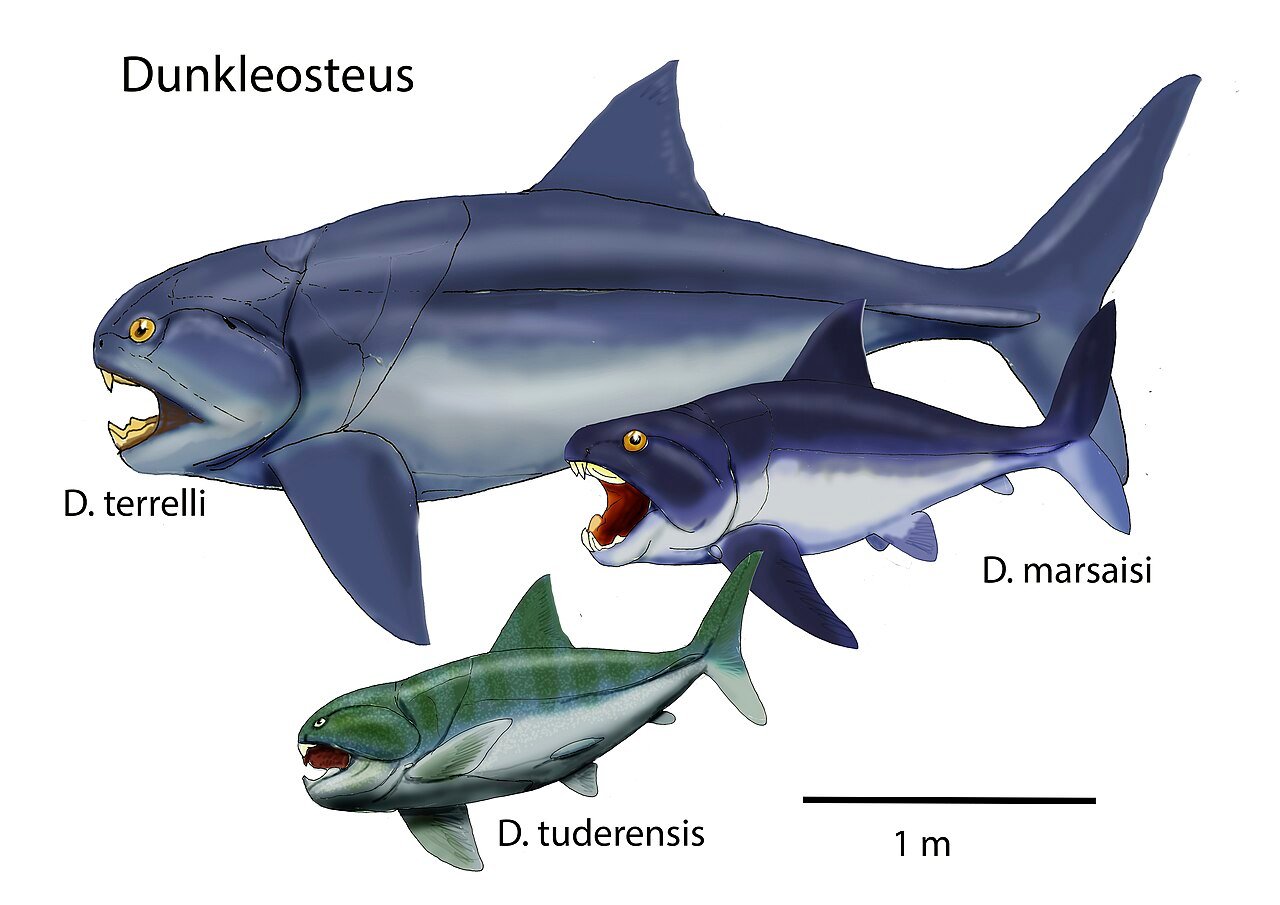
370 million years ago, Earth was starting to feel familiar: plants covered the land, some growing into real trees for the first time, forming the very first forests. But the real action was still in the water. Oceans and coastlines were bursting with more types of fish than ever existed before — the age of fishes — with massive reefs, some of the largest Earth has ever built, patrolled by armored fish in thick bony plates, plus early sharks and countless smaller fish.
The killer was the forests themselves. As roots broke down rock and soil on an unprecedented scale, they pulled large amounts of nutrients into rivers and out to sea. More nutrients usually means more food — but too much triggered massive algae blooms.
- The chain: the blooms grew, died, and decomposed, using up huge amounts of water-borne oxygen. As oxygen disappeared, other creatures suffocated.
- The pace: this played out over nearly 20 million years — a slow mass extinction. Reefs built over millions of years were hit hardest, and many reef-building coral and sponge-like organisms never came back in the same form.
- Toll: around 75% of all species on Earth had gone extinct by the end.
3. Permian-Triassic

252 million years ago, life on land had really taken hold — long before dinosaurs. The land was ruled by strange reptile-like creatures, some a cross between a lizard and a mammal, including the therapsids, the group that would eventually give rise to actual mammals. Then, in what is now Siberia, something started happening deep underground.
Massive cracks in the crust began releasing enormous amounts of lava — not one volcano, but huge, long-lasting eruptions across an area roughly the size of Europe. The lava released huge amounts of carbon dioxide, spiking global temperatures, and the oceans absorbed much of that CO₂, making the water more acidic, like a carbonated drink. Acidic water made it incredibly hard for creatures with shells or calcium skeletons to build and maintain them.
- At the same time, rising temperatures dropped ocean oxygen — the same mechanism as the earlier extinctions, but far more intense. Huge sections of ocean became low in oxygen or completely lifeless.
- On land: extreme heat and unstable climates expanded deserts and made many regions too hot and dry for their inhabitants.
- Toll: around 90 to 96% of all species disappeared — by far the most severe extinction in Earth’s entire history, known simply as the Great Dying.
Unlike earlier extinctions, ecosystems didn’t bounce back quickly: it took millions of years for biodiversity to rebuild. When life did recover, it eventually produced entirely new groups of animals.
4. Triassic-Jurassic

201 million years ago, Earth was filling back up, and the very first dinosaurs had finally arrived — but they were still small and not in charge. Land belonged to large crocodile-like reptiles called pseudosuchians, some standing upright on two legs. All continents were joined into one giant landmass, Pangaea, so animals could wander freely across what are now separate parts of the world — which is exactly what made the coming catastrophe global.
Deep underground, pressure built again as Pangaea began to split. As it tore in two, magma pushed up through massive cracks — the Central Atlantic Magmatic Province — pouring lava along the lines where the continents were separating, and once more releasing massive amounts of CO₂ into the atmosphere. Temperatures spiked, and the same chain reaction as the previous extinction played out on both sea and land.
- The losers: pseudosuchians were hit especially hard — many were larger, needed more food, and couldn’t handle the sudden climate instability. One by one, entire groups disappeared.
- The winners: the small, overlooked dinosaurs survived. Nobody knows exactly why — possibly warm-blooded bodies through freezing volcanic winters, fast growth, or more agile body types.
- Toll: around 76% of species died out. With competitors gone, the path was clear for the age of dinosaurs.
5. Cretaceous-Paleogene
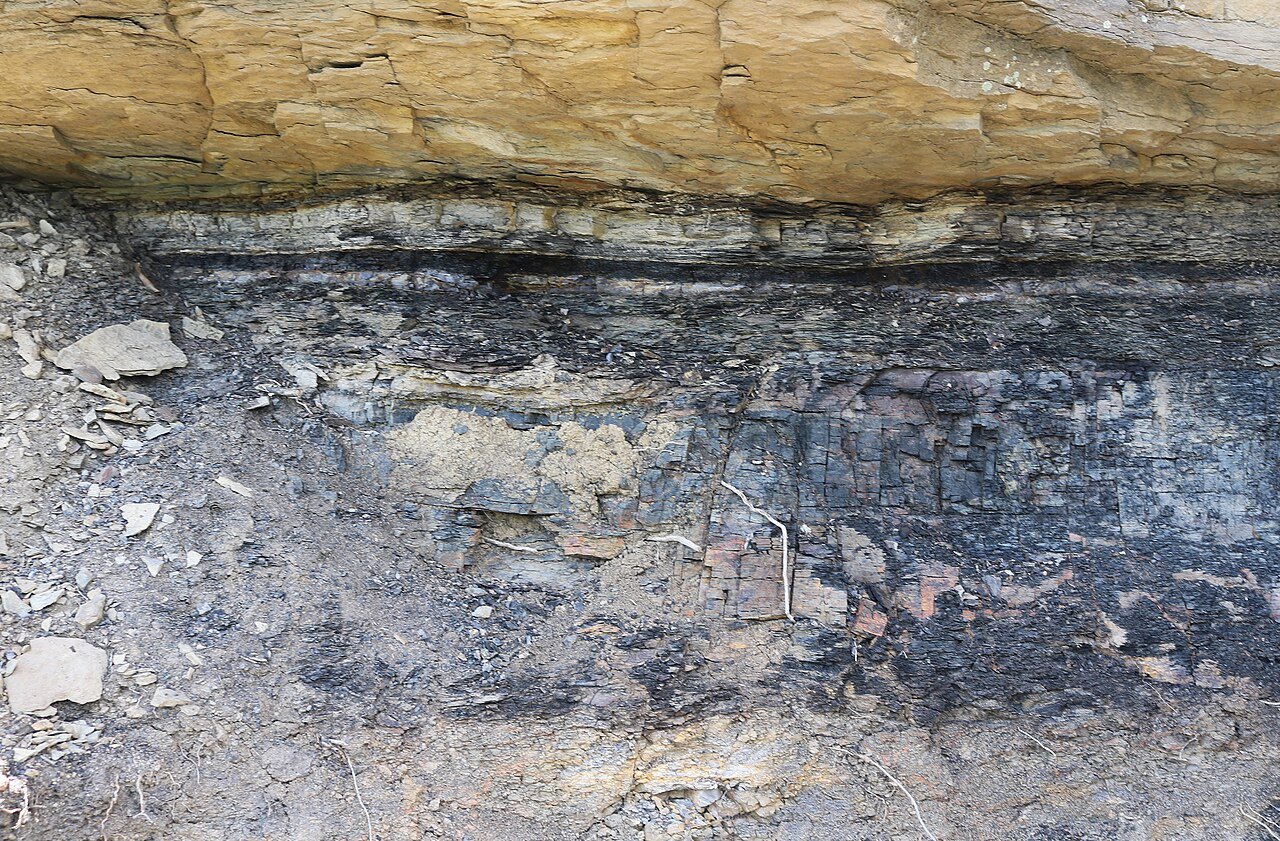
66 million years ago, Earth finally belonged to the dinosaurs. Triceratops grazed in herds across what is now North America, Tyrannosaurus Rex hunted the coastlines, giant pterosaurs spread wings wider than a small airplane, and in the oceans the Mosasaurus reached a staggering 42 feet. Then, on an ordinary day, a point of light appeared in the daytime sky — sharper than any star, slowly growing, hour by hour, into a streak, then a huge ball of light.
It was an asteroid roughly 6 to 9 miles wide, slamming into shallow waters near the coast of Mexico at what we now call Chicxulub. The impact released energy equivalent to billions of nuclear bombs at once. Within minutes, a wave of heat swept across entire continents, igniting forests thousands of miles away.
- The long aftermath: so much dust, ash, and debris was thrown skyward that sunlight was blocked across most of the planet — for months, maybe years. Plants died, plant-eaters starved, predators died off.
- The toll: around 75% of all species gone, and every single non-bird dinosaur had vanished completely.
- The survivors: tiny mammals, some no bigger than a rat, hiding in burrows. With their giant competitors gone, they finally had room to grow and spread.
One single point of light in the sky ended one era and started the path toward our own.
| Extinction | When | Cause | Species lost |
|---|---|---|---|
| Late Ordovician | 445 million years ago | Ice sheets, sea-level swing | ~85% (marine) |
| Late Devonian | 370 million years ago | Nutrient runoff, algae blooms, ocean oxygen loss | ~75% |
| Permian-Triassic | 252 million years ago | Siberian Traps volcanism | ~90–96% |
| Triassic-Jurassic | 201 million years ago | Pangaea breakup, Central Atlantic volcanism | ~76% |
| Cretaceous-Paleogene | 66 million years ago | Chicxulub asteroid impact | ~75% |
What Comes Next?
Read back to back, the five extinctions rhyme: two driven by ice and sea level, two by volcanic CO₂ that overheated the planet and acidified or deoxygenated the oceans, and one by an asteroid that blocked out the sun. The slow ones stretched over millions of years; the Chicxulub impact ended an era within a single afternoon. And every time, the survivors were the small, adaptable, underrated ones — fish in the age of fishes, tiny dinosaurs at the end of the Triassic, rats in burrows at the end of the Cretaceous.
What makes this list more than history is that the mechanisms — rapid warming, ocean acidification, oxygen loss, habitat shifting faster than species can follow — are not all safely in the past. The same playbook that killed 90 to 96% of species at the end of the Permian is the one scientists keep mapping onto what’s happening in the oceans now. The record shows life always rebuilds, but it took millions of years every single time.
Image Credits
- Chicxulub impact – artist impression by Donald E. Davis — Public domain
- Isotelus Solo Reconstruction by Prehistorica CM — CC BY 4.0
- Dunkleosteus spp by ДиБгд — CC BY 4.0
- Native iron in basalt (Siberian Traps Flood Basalt, Permian-Triassic boundary times, 251 Ma; Putoran Plateau, Siberia, Russia) 1 (17151514269) by James St. John — CC BY 2.0
- Postosuchus by Dallas Krentzel — CC BY 2.0
- K–Pg boundary in Colorado by Jeffrey Beall — CC BY 4.0