How You’d Die in Every Prehistoric Era
Land on Earth before it was Earth and the first thing that kills you is the ground itself — a glowing ocean of melted rock, air with zero oxygen, and asteroids falling hard enough to wipe out everything nearby. Survive that and the next chapter is worse in a quieter way: a sun with no ozone layer to stop it, blistering your skin in a single hour.
The Paint Explainer walks through an even dozen eras, from the Precambrian to the Quaternary (the Ordovician sits this one out to keep the list at a round twelve), ending each one the same way: with the specific, era-defining thing that kills you first.
1. Precambrian (Hadean)
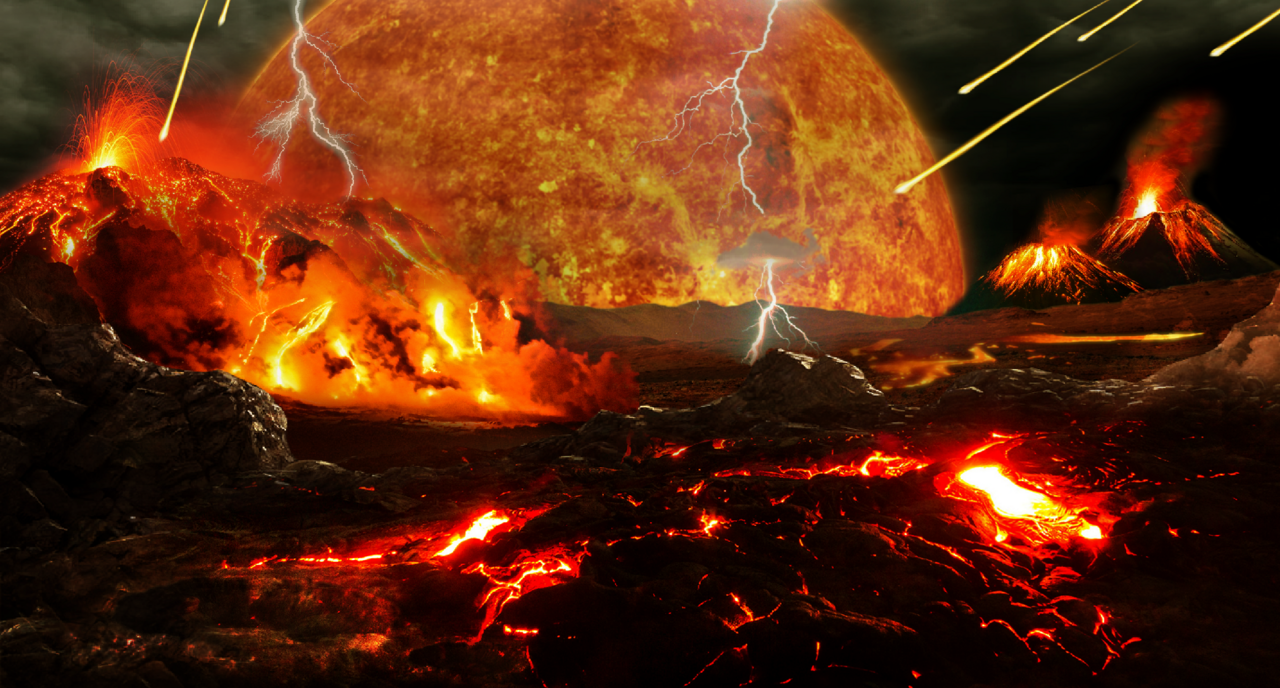
No solid ground, just a glowing ocean of melted rock stretching to the horizon. The heat blisters skin on contact, and one breath of the atmosphere — no oxygen at all, just a thick mix of poison gases — burns the lungs instantly.
- The sky isn’t a sky: a dark haze lit by streaks of fire, because asteroids and comets are slamming into the planet constantly. One close enough finishes everything in an instant.
- How you go: legs give out within seconds, then the brain shuts off from oxygen deprivation. You never wake up.
2. Cambrian

You can finally breathe, sort of — oxygen is still lower than your body expects. The ground is gray rock and dust with nothing green anywhere, and the sun hits harder than anything you’ve felt, because the ozone layer that blocks ultraviolet radiation hasn’t properly formed yet.
- Hour one: arms and face bright red and swelling, skin tightening and blistering. Hour three: blisters split into raw patches that sting with every breath.
- The water doesn’t help: salt hits open blisters like fire, and drinking only makes it worse.
- The wildlife: Anomalocaris, drawn by movement, clamps spiny appendages against your leg and opens several cuts — not enough to do serious damage, just enough to keep you from thinking straight.
- How you go: a slow death, as if cooked alive.
3. Silurian
For the first time there’s real greenery — patches of low moss-like plants across the rocks. They’re tough and fibrous, nothing your body can digest, and there’s no fruit, no seeds, nothing on land built for you to eat.
- The tide pools look safer than the open ocean. Small fish-like creatures dart between the rocks — then a sharp sting hits your ankle.
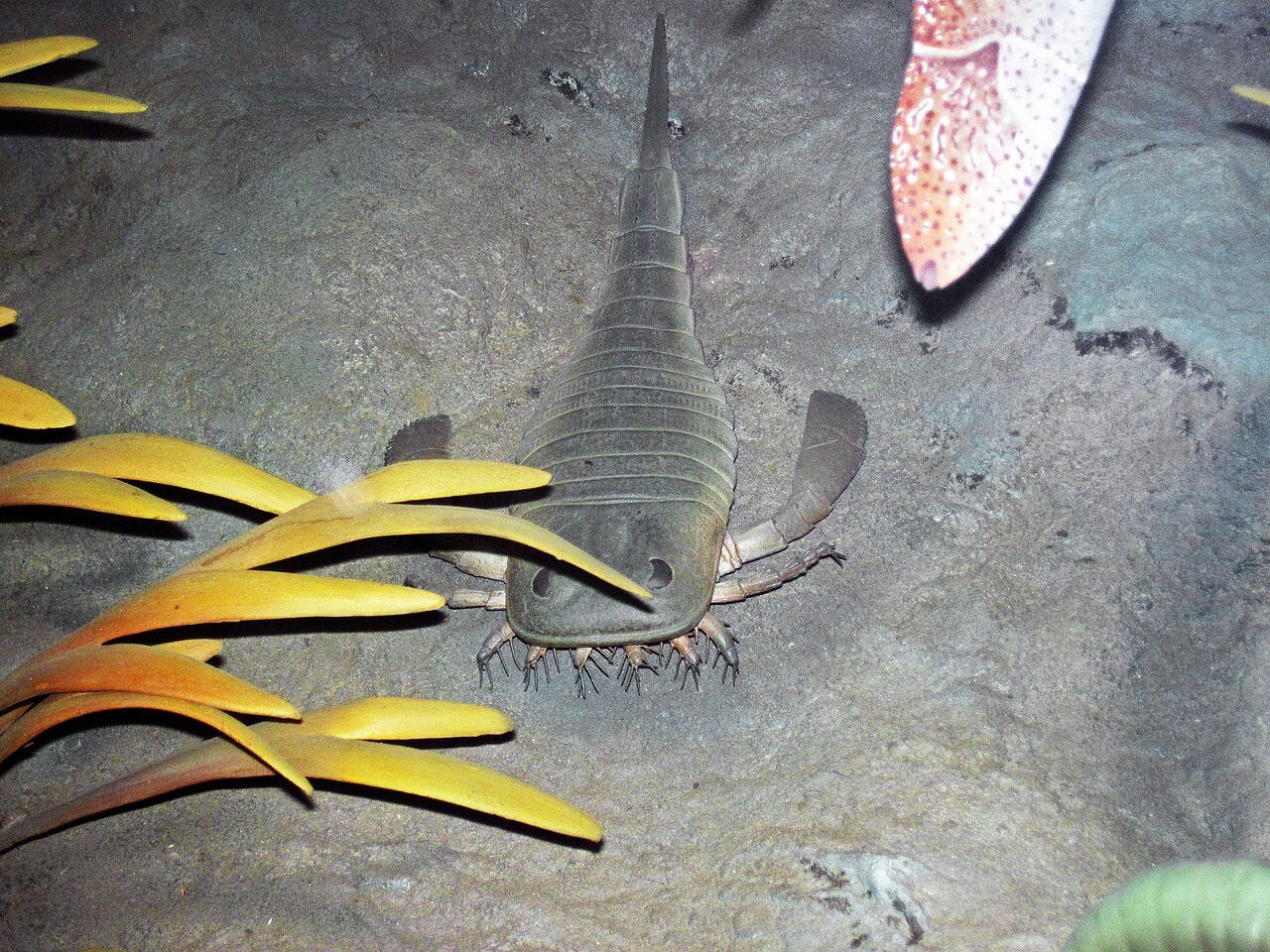
- The culprit: a long segmented tail ending in a pointed spike, attached to a massive armored creature with paddle-like legs gripping the rocks. Venom spreads heat up your leg immediately.
- How you go: racing heartbeat, tingling hands going numb, dizziness and muscle spasms that drop you. Breathing turns shallow, vision blurs at the edges, darkness.
4. Devonian
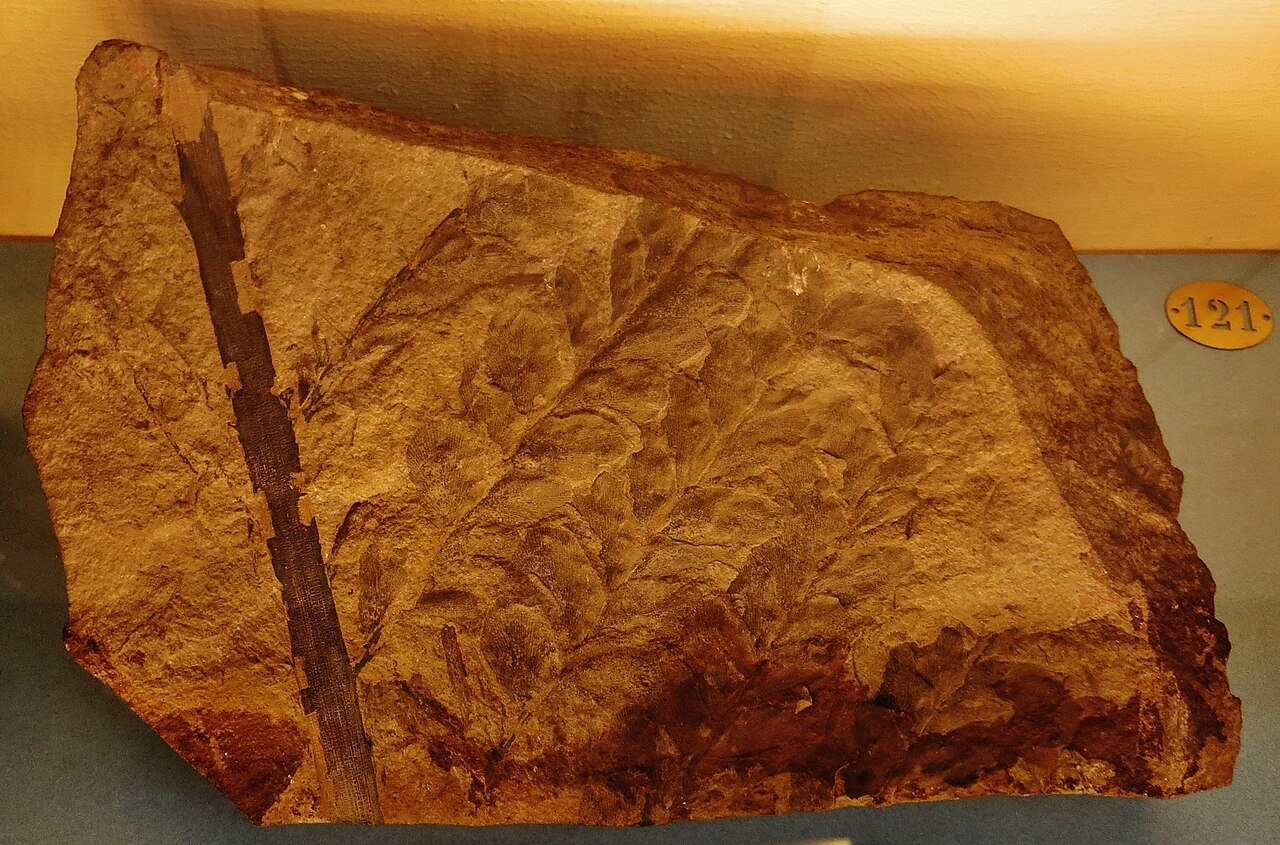
You’re at the edge of something that almost looks like a forest — tall, thin trees with strange branching tops instead of leaves, one of the first real forests on Earth. Deeper in, a bizarre spire-like fungus grows up to 26 ft, and the ground is buried in dry, unrotted branches that snap under your feet.
- The smell of smoke starts far off and grows fast. Flames are already spreading low across the forest floor, moving faster than you’d expect.
- Why: oxygen levels are rising rapidly during this period, so fires burn hotter and faster than anything you’ve seen.
- How you go: smoke thickens, fills your lungs, kills visibility. Your legs go heavy as heat closes in from all sides, you collapse onto the forest floor, and fire catches you.
5. Carboniferous
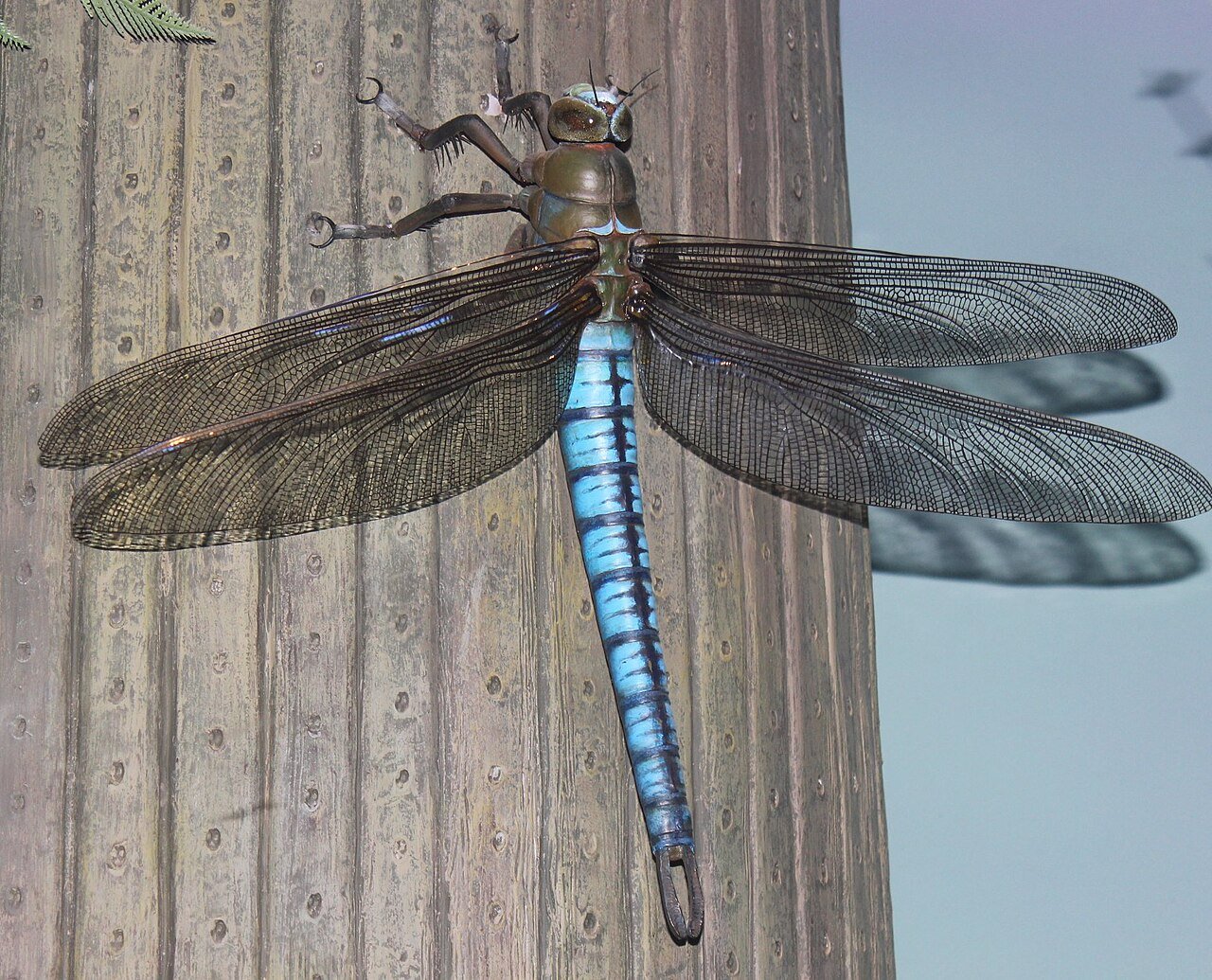
The air feels thick and damp, surrounded by endless tropical swamps. Oxygen levels are at their highest point in Earth’s history, and everything looks oversized — a buzzing sound resolves into a dragonfly the size of a bird gliding past you.
- The trap: the ground softens with every step. One foot sinks deep, then the other — you’ve wandered into a hidden bog pit of thick peat that’s been building up for ages. Legs locked, you sink to your waist.
- The worse part: thrashing disturbs the deep rotting layers, and a massive bubble of trapped hydrogen sulfide and methane erupts right beneath your face.
- How you go: at that concentration the gas paralyzes your sense of smell instantly, then blocks your cells from absorbing oxygen. Ringing ears, tunnel vision, limbs like lead — the central nervous system shuts down before you can take a second breath.
- Somewhat fitting: the spot where you’re stuck waist-deep becomes, millions of years later, a seam of coal.
6. Permian
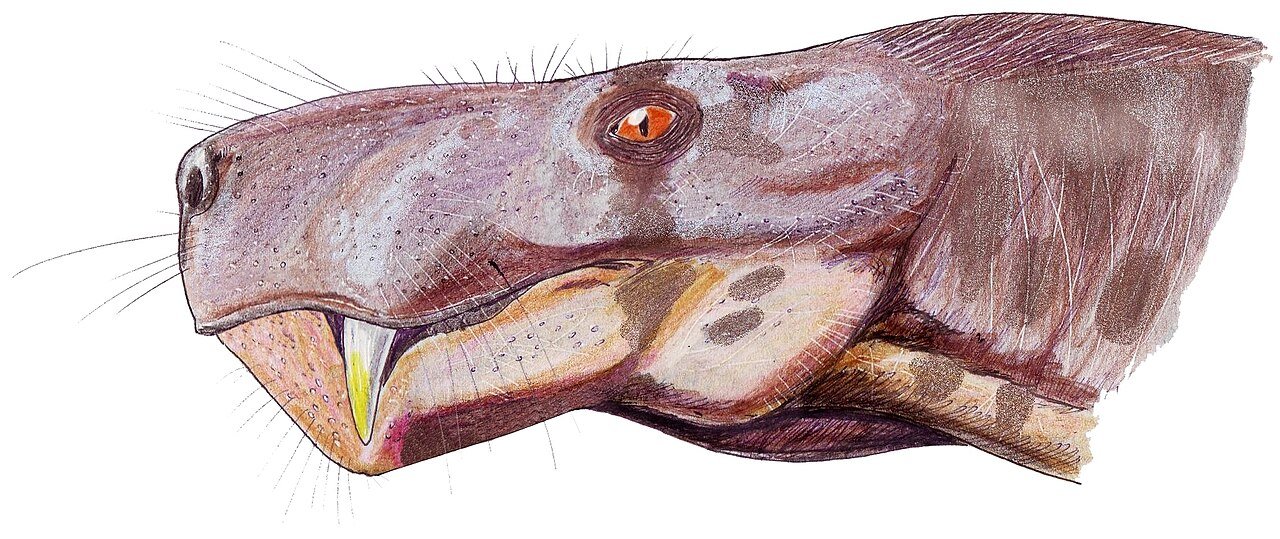
The opposite of the last era: dry, open, reddish dirt and scattered rock, warm and much drier. Oxygen dropped to 16%, so breathing feels like you’re standing on top of a mountain — you need a water source fast.
- The riverbed: you crouch near the water, hear movement behind you, then a low growl. Two long curved teeth jut down past the jaw of a saber-toothed gorgonopsid, one of the top predators of the time.
- How you go: you take one step back and it lunges, crossing the gap in seconds. Teeth sink into your shoulder, muscle crushes under the pressure, you hit the ground. Shock sets in fast as blood loss does the rest — you become its meal.
7. Triassic
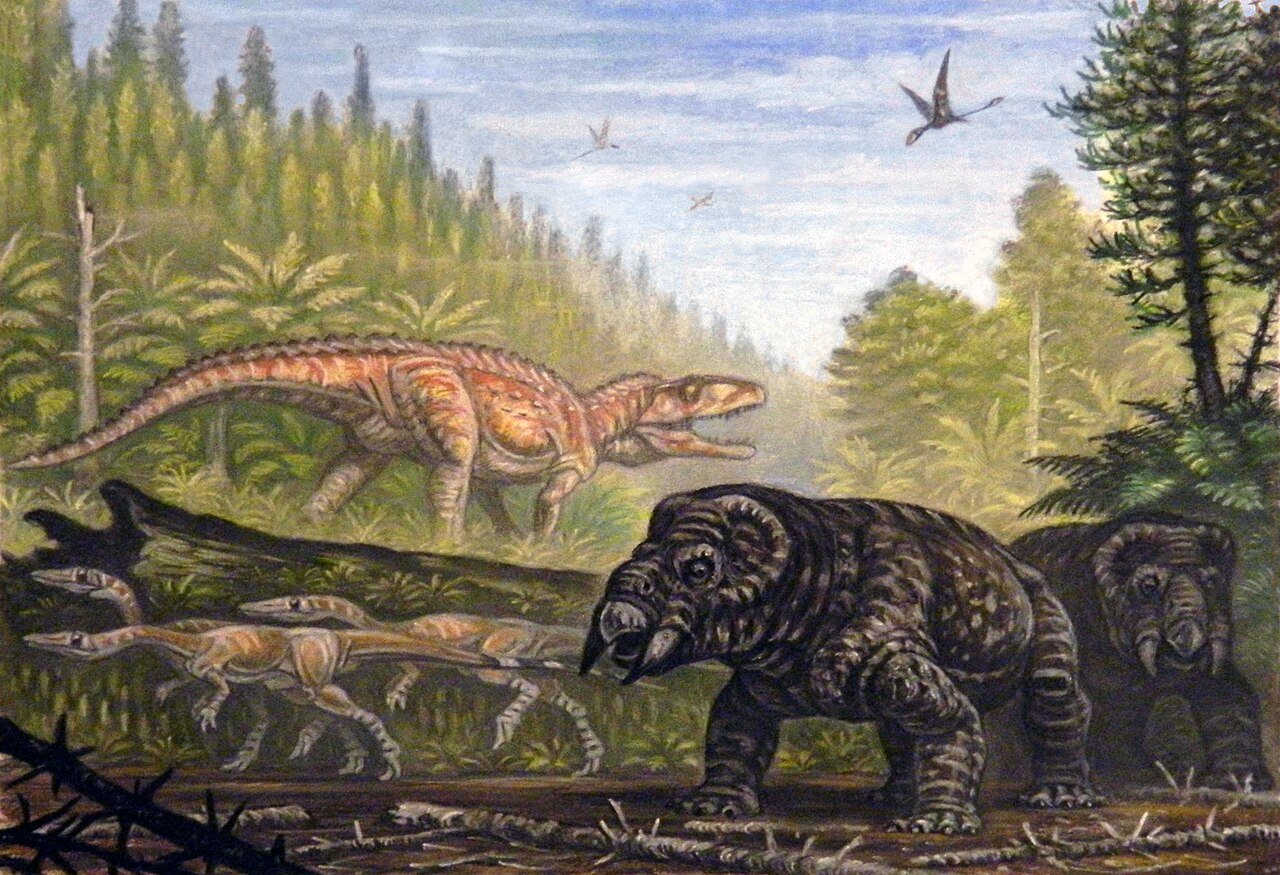
Dinosaurs technically exist now — but they’re small and forgettable next to the massive armored crocodiles dominating the rivers. Phytosaurs reach 20 ft, and the landscape is still hot and dry, so every scarce water source is both vital and lethal.
- The setting: an empty, post-apocalyptic vibe, because the Permian just ended with the Great Dying — roughly 90% of all life wiped out.
- The ambush: you scan the river for threats and look in the wrong direction. Postosuchus, a 20-ft land predator, sprints 30 ft in under 2 seconds, slams into you from the side, and closes its jaws around your leg hard enough to break bone on contact.
- How you go: it pins you with clawed feet and whips its head side to side. The pain is more than the body can process — which works in your favor, since shock shuts things down first.
8. Jurassic

Breathing gets easier as oxygen climbs, and the landscape returns to something like a real forest. This is where dinosaurs stop being background animals and start being the rulers.
- The trail: the ground is torn up with deep gouges and broken ferns, leading to the remains of something large, mostly bone, with bite marks already in it.
- The watcher: an Allosaurus, around 30 ft long, watching from 40 ft away on two thick muscular legs, mouth full of curved serrated teeth. It’s not hiding — it’s deciding whether you’re worth the effort.
- How you go: backing away is the wrong move. It comes low and fast, bites down on your upper back in a slashing strike — teeth built to tear chunks, not crush bone — pulls back, strikes again before you hit the ground. Blood loss ends the attempt to crawl.
9. Cretaceous

The final stretch of the dinosaur age, and flowering plants have shown up for the first time, dotting the landscape with actual color instead of endless green conifers and ferns. You’re crossing a wide flood plain when something steps out from behind the trees.
- Tyrannosaurus rex, over 40 ft long — basically twice the Allosaurus. Its head alone is bigger than your entire body, with a bite force that crushes bone like it’s nothing.
- How you go: you run, but its stride eats up the distance. The bite comes across your torso and bone gives way instantly; it lifts its head and shakes you once. The Cretaceous belongs to the most efficient killing machine the dinosaurs ever produced.
10. Paleogene

An asteroid has just wiped out the dinosaurs. Forests are thick and humid, and mammals are finally getting their chance to grow — though nothing looks familiar, more like strange experimental versions of animals you’d recognize.
- The silence: walking the swamp edge, no birds calling, no rustling. You step over a fallen log — except the log isn’t where you remember it. It’s a snake.
- Titanoboa, the largest snake to ever exist: longer than a bus, thick enough that you could barely wrap both arms around it, built for a warmer world that lets cold-blooded animals reach enormous sizes.
- How you go: coils wrap your legs, then your torso, tightening with mechanical force. Every exhale leaves less room to breathe back in. Ribs strain, then crack — and you pass out forever.
11. Neogene

The world finally looks familiar enough to feel safe: grasslands, scattered trees, dry warm air. You’re on a cliff edge overlooking what should be the Mediterranean Sea — except there’s no water, just a vast empty basin coated in white crust of salt reflecting the sun like a mirror.
- The Messinian Salinity Crisis: the Mediterranean got cut off from the Atlantic Ocean and slowly evaporated over thousands of years, leaving the largest salt desert that has ever existed on Earth.
- The descent: hours down to the floor, and it gets hotter the lower you go — well past 122° Fahrenheit. There is no shade, just flat white salt in every direction.
- How you go: sweating stops working in air this hot and dry, so the body loses water faster than it can process. Head pounding, mouth like chalk within an hour; legs stop cooperating within two. You lie down on the salt and your body quietly shuts down in the lowest, driest, hottest place on Earth.
12. Quaternary

The air is cold, much colder than anything before. You’re at the edge of a massive glacier — a wall of blue-white ice taller than a building, stretching in both directions as far as you can see.
- The invisible trap: the snow-covered ground isn’t ground at all. It’s a snow bridge — a thin layer of ice and packed snow spanning a crevasse that drops straight down for hundreds of feet, identical to everything around it, completely solid right up until it isn’t.
- How you go: no warning, then falling. You hit a ledge of ice maybe 60 ft down, the impact knocking the wind out of you. You’re alive but wedged into a crack in the glacier — and the cold does the rest, quietly and slowly.
What Comes Next?
Run the list back to back and the killers change shape every time: a poison atmosphere, an unfiltered sun, venom, fire, toxic gas, predators, constriction, heat, ice. The only era with no new way to die is the one you’re watching this in — and the pattern the video leans on is that in every period, the thing that finishes you is something you barely noticed until it was already too late: soft ground, still air, a log that moved.
It also quietly illustrates how strange the baseline once was. Oxygen at its highest point in Earth’s history made dragonflies the size of birds and turned forests into tinder. A Mediterranean without an Atlantic inlet created a salt floor hot enough to kill in two hours. The rules of “normal” have never been fixed — they just happen to be the ones you woke up in today.
Image Credits
- Tyrannosaurus rex from above by TheUltimateGrass — CC0
- Hadean by Tim Bertelink — CC BY-SA 4.0
- Anomalocaris life restoration by Sebastian Brandt (Reco-Brandt) by TB0815 — CC BY 4.0
- Diorama of a Silurian seafloor – eurypterid (sea scorpion) (44993945804) by James St. John — CC BY 2.0
- Archaeopteris hibernica 380 maf Irlanda by Ghedo — CC BY-SA 4.0
- Gfp-giant-dragonfly-meganeura by Yinan Chen — Public Domain
- Gorgonops torvus1DB by Dmitry Bogdanov — CC BY 3.0
- Postosuchus, Coelophysis, and Placerias by ABelov2014 — CC BY-SA 3.0
- Allosaurus Life Reconstruction by Fred Wierum — CC BY 3.0
- Tyrannosaurus rex life restoration by Anonymous Dinonerd — CC BY-SA 4.0
- Titanoboa OC Harfa Praha by Mojmir Churavy — CC BY-SA 4.0
- Yesares gypsum by Verisimilus — CC BY 3.0
- Mountaineer Crevasse 2 by Loïc Perrin — CC BY 3.0