
What Dying on Every Planet Would Be Like

Mercury swings between 430 °C and −180 °C, Venus crushes anything at 92 bars under sulfuric-acid clouds, and Jupiter’s core runs at 24,000 °C. Seven planets, seven ways to die — each one breaking a different line of defense: the suit, the air, the bones.
The Paint Explainer works outward from the Sun, planet by planet — from a world too hot to land on by day and too cold to survive by night, to twin ice giants where it rains diamond and the wind outruns sound.
1. Mercury
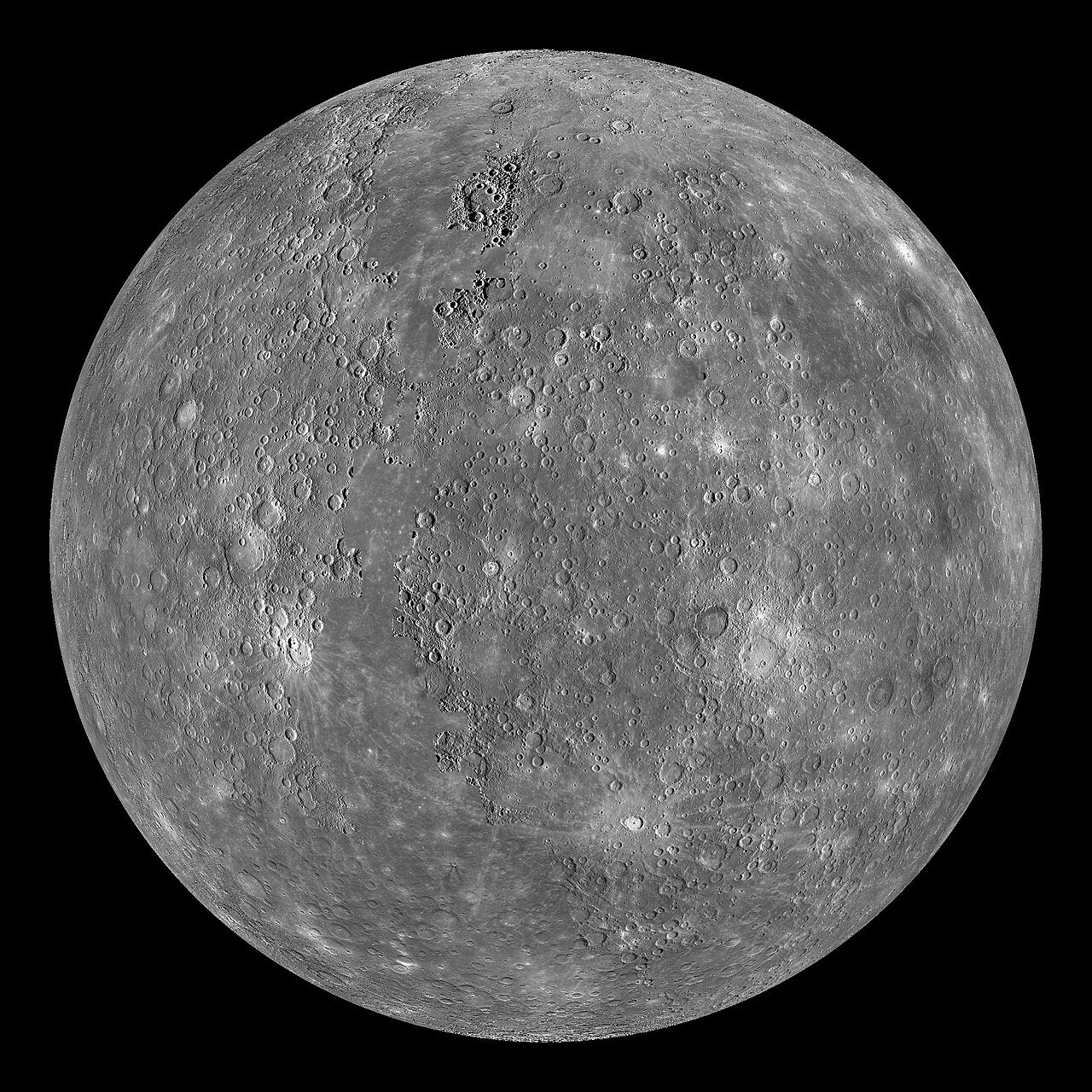
Mercury is the closest planet to the Sun, but if you think that means it’s hot all the time, you’re wrong. At night, temperatures plummet to an icy −180 °C; during the day they skyrocket to 430 °C. The extreme imbalance happens because Mercury doesn’t have a proper atmosphere to regulate temperature — only a very thin exosphere that doesn’t maintain heat.
Apart from temperature, the real dangers are solar radiation and the lack of breathable air: Mercury gets almost seven times the solar irradiance Earth receives. As the smallest planet it is full of craters, cliffs, and bumpy terrain, and the low air resistance doesn’t help either — it would make slowing down a spaceship much harder, increasing the chances of a high-speed crash landing.
Daytime is out of the question: the latest NASA space suits can only handle up to 121 °C, nowhere near Mercury’s 430 °C, and its day lasts about half a year thanks to the slow rotation. Night isn’t much better — −180 °C far exceeds the suits’ lower limit of −157 °C, so you’d freeze solid. Your best bet would be the Terminator Zone, the strip between day and night where temperatures are more moderate — though even there they can change relatively quickly.
2. Venus
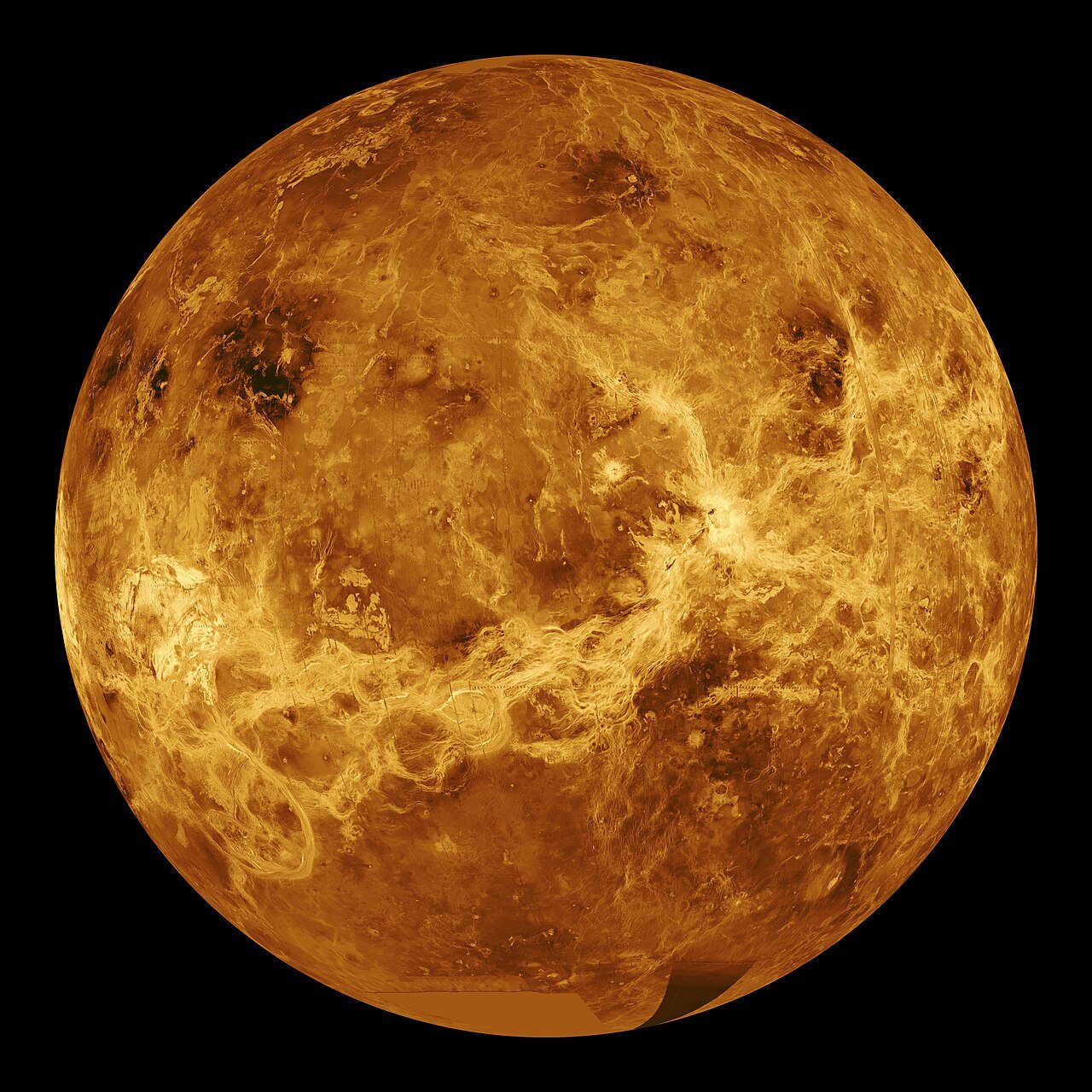
Venus is the closest planet to Earth, sitting just 40 million km away, so the journey would be relatively short — about four months — and its size and gravity wouldn’t pose much of a problem, since they’re pretty similar to Earth’s. The first real issue would be those beautiful yellow clouds you’d see as you approached: they’re made of sulfuric acid, a highly corrosive substance that would destroy your lungs in seconds.
As you descend, visibility would drop drastically — the atmosphere is incredibly thick and made mostly of carbon dioxide — and then comes the heat, an unbearable 450 °C. Only about 10% of the sunlight reaches the surface, so it would be pretty dark down there. Moving your arms and legs would be a serious struggle: even though gravity is nearly the same as on Earth’s, the air is so dense you’d feel like you were wading through a heavy liquid.
With a good pressurized suit you might last a few seconds — but before long, the pressure, about 92 bars compared to Earth’s one, would crush your suit. And if that didn’t kill you, the sulfuric acid you’d start breathing once the suit broke definitely would.
3. Mars

Mars is the second closest planet to Earth and the most habitable of all eight planets, with daytime temperatures reaching up to a relatively comfortable 20 °C. The real challenge comes at night and in certain parts of the planet, where temperatures drop far below freezing. Then there’s the atmosphere — incredibly thin, mostly carbon dioxide, with only trace amounts of oxygen, so there’s not much breathable air.
That thin air also means low pressure and heavy radiation: the average natural radiation level on Mars is 24 to 30 rads, about 40 to 50 times the average on Earth. On top of that, Mars experiences frequent and extremely violent dust storms with wind speeds reaching up to 100 km/h. Any attempt at habitation would require a sustainable, airtight, and well-insulated life support system.
4. Jupiter
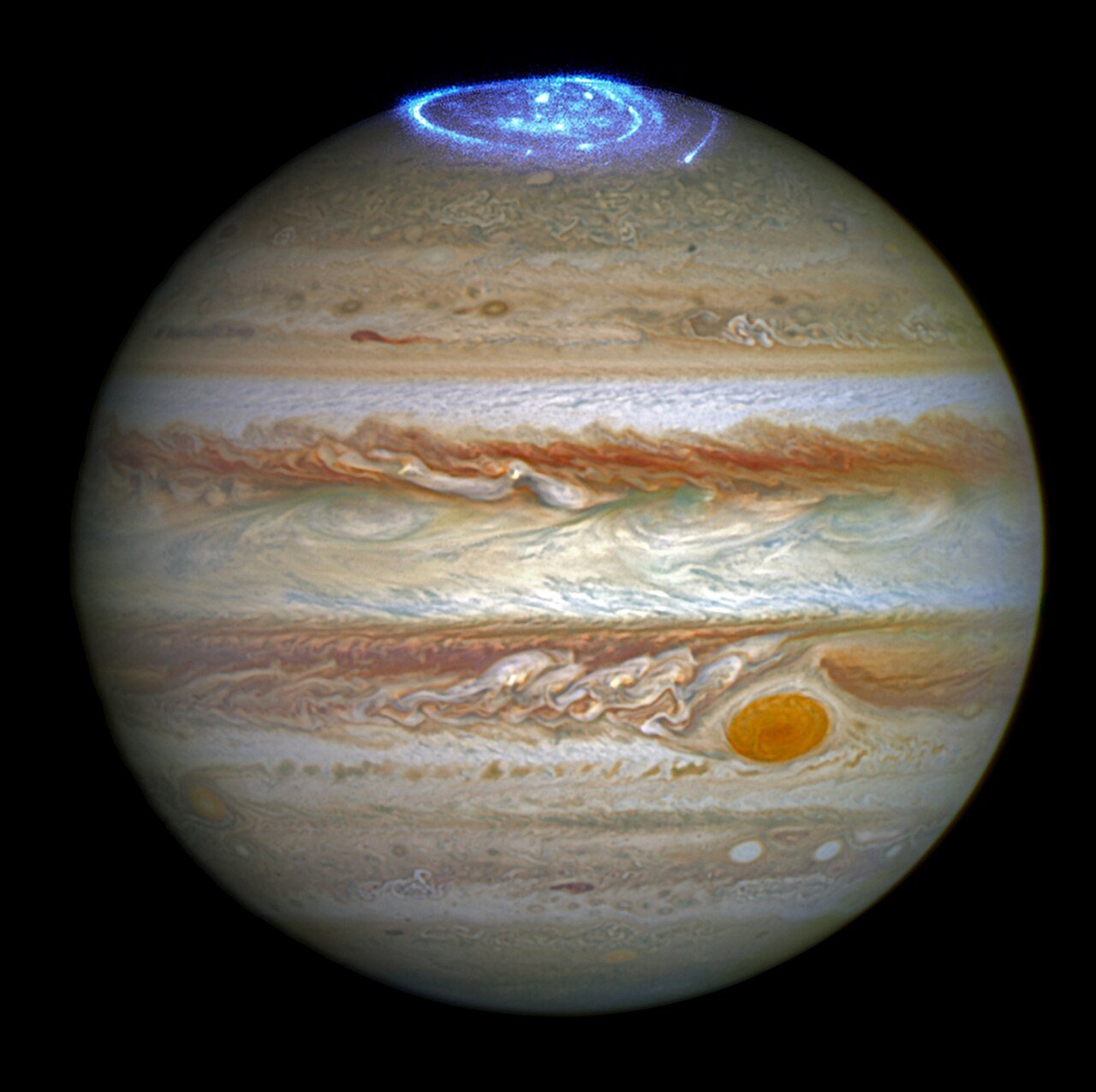
Jupiter is the biggest planet out of the eight, and one of the hardest to land on — primarily because of its extreme radiation. Even 300,000 km away, the radiation would start penetrating your suit and you’d be done for. Assume a hypothetical suit that can block it, though, and you’d meet the gravity: 2.4 times stronger than Earth’s, pulling you down incredibly fast as you enter the first layers of the atmosphere.
Those first layers are white clouds made of frozen ammonia crystals, at temperatures around −150 °C, with winds reaching speeds of up to 482 km/h. Descend about 150 km and you’d reach the deepest point ever explored — how far NASA’s Galileo probe got back in 1995. Beyond that point things get darker while temperature and pressure increase rapidly: near Jupiter’s center, the pressure is estimated at about 100 million times Earth’s atmospheric pressure.
After hours of falling, you might reach the inner layers and a supercritical fluid — a state that’s not quite liquid and not quite gas — where you’d kind of be swimming in a bizarre substance. Push further toward the center and you’d meet metallic hydrogen, an extremely dense liquid that would trap you; get through that, and you’d reach the core, where temperatures would be about 24,000 °C, roughly 4.5 times hotter than the Sun’s surface.
5. Saturn

Saturn is the second largest planet in the solar system, with an atmosphere primarily made of hydrogen and helium. The first challenge would be avoiding a crash with one of its 146 orbiting moons; the second, its iconic rings — debris from old moons, ice pellets, comets, and asteroids. Let’s assume you’re either an incredibly skilled pilot or your spaceship is indestructible, because as you approach the equator you’d witness an incredible spectacle of red and purple auras caused by highly energetic hydrogen in the atmosphere.
But that beauty comes with a catch: hurricane-force winds blasting at around 1,800 km/h would make it nearly impossible to stay steady. Trying to enter from the North Pole wouldn’t be any better — up there you’d face a storm so large you could fit two Earths inside it, ammonia clouds like Jupiter’s, and temperatures that can plummet to a bone-chilling −250 °C.
Fall deeper and the temperatures climb back up, eventually reaching 0 °C — at which point the cold stops mattering and pressure becomes your biggest enemy, rising to levels comparable to the deepest parts of Earth’s oceans. The gases around you transition into a liquid state, and if you somehow survived long enough to reach the center, you’d find a molten rocky core about 10 times the size of Earth, at 11,700 °C — more than twice as hot as the Sun’s surface — with pressure roughly 1,000 times greater than Earth’s.
6. Uranus
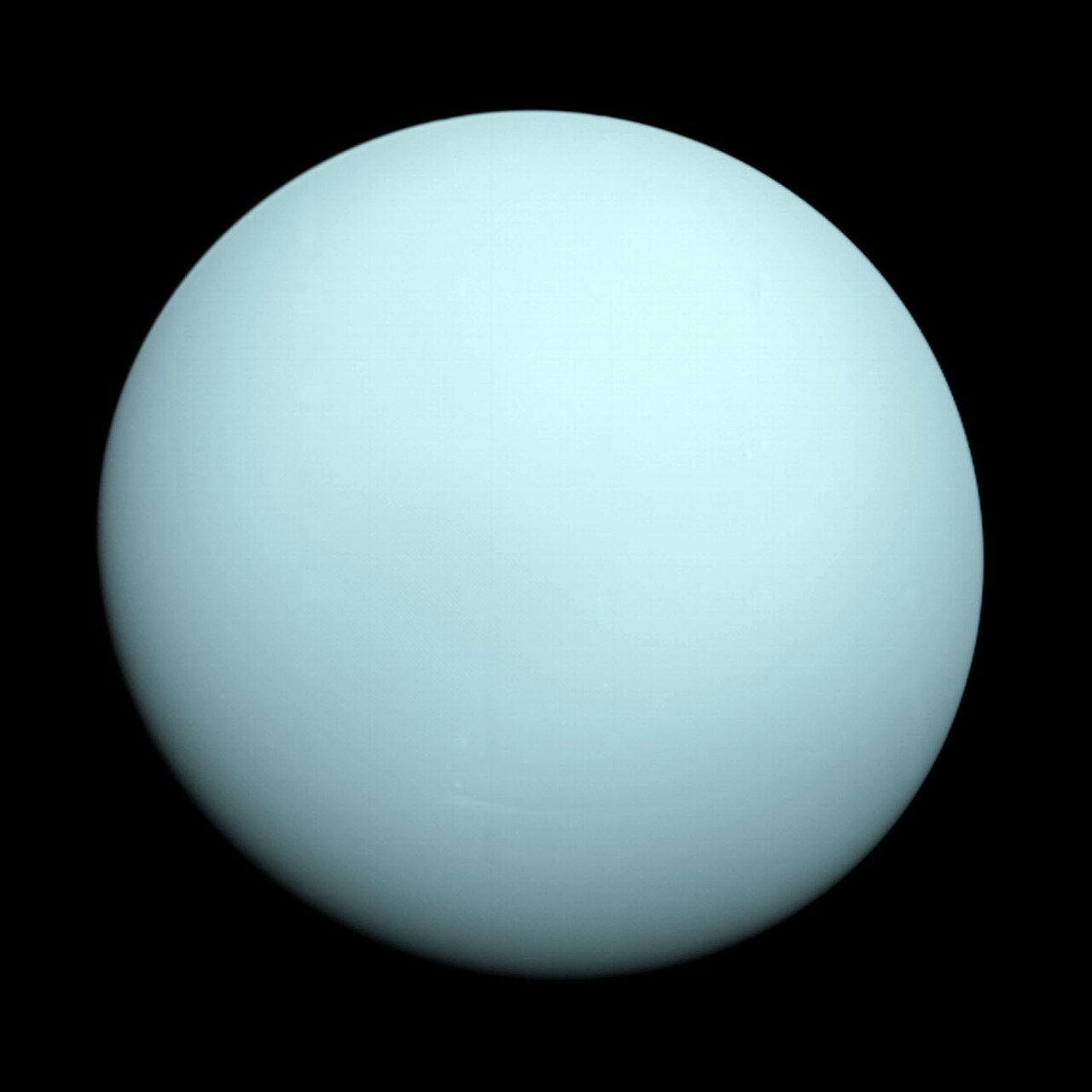
This is where planets start getting really far from Earth, making the journey incredibly long. Uranus is one of the two ice giants and the only planet in the solar system that spins on its side, rotating faster than Earth with a day lasting just 17 Earth hours. Being an ice giant doesn’t mean a solid ball of ice — it means the planet is primarily composed of elements heavier than hydrogen and helium.
Like Saturn, you’d need to avoid crashing into rings — and once past them you’d find yourself surrounded by toxic gas while the temperature drops rapidly to below −220 °C, the coldest planet in the solar system. Descend through the first layer and it gets worse: the air becomes dense and you’d be pelted by ice pellets — until you’d reach something truly spectacular, a rain of diamonds, driven by winds of up to 900 km/h. The catch? The pressure here is about 100 times greater than Earth’s, which would ultimately crush you.
7. Neptune

Neptune is the second ice giant after Uranus, with a very similar composition, and being the farthest planet from the Sun — 30 times farther than Earth — it’s incredibly dark. Like Uranus, its outer layers are extremely cold while the inner layers are intensely hot from the immense pressure and the heat of its core: about 7,000 °C, hotter than the Sun’s surface.
Neptune also experiences the famous diamond rain — high pressure breaking down methane and forming solid diamonds — and its winds are among the strongest in the solar system, reaching supersonic speeds. In many ways it’s basically a twin of Uranus, so there isn’t much more to add.
What Comes Next?
Lined up from the Sun outward, the seven planets read like a catalogue of limits: heat and radiation on Mercury, acid and pressure on Venus, dust and radiation on Mars, gravity and crushing air on Jupiter and Saturn, frozen poison on Uranus and Neptune. Each world attacks a different layer of survival, and none of them negotiates — only Earth holds all the conditions at once.
What every stop on the tour has in common is a set of numbers the human body cannot renegotiate: 430 °C, 92 bars, 24 to 30 rads, winds of 1,800 km/h. Cross one of those thresholds and no amount of engineering inside the suit matters. The planets aren’t hostile — they’re indifferent, and indifference is what would finish the job.
Image Credits
- NASA astronaut Jack Hathaway assists NASA astronaut Jessica Meir as she tries on a spacesuit (iss074e0375660) by NASA Johnson Space Center — Public domain
- Mercury Globe-MESSENGER mosaic centered at 0degN-0degE by NASA/JHUAPL — Public domain
- Venus globe by NASA/JPL — Public domain
- Mars globe by NASA/USGS — Public domain
- Hubble Captures Vivid Auroras in Jupiter’s Atmosphere by NASA, ESA, and J. Nichols (University of Leicester) — Public domain
- Saturn during Equinox by NASA / JPL / Space Science Institute — Public domain
- Uranus2 by NASA/JPL-Caltech — Public domain
- Neptune Full by NASA — Public domain